

#87 – Russ Roberts on whether it's more effective to help strangers, or people you know

#87 – Russ Roberts on whether it's more effective to help strangers, or people you know

If you want to make the world a better place, would it be better to help your niece with her SATs, or try to join the State Department to lower the risk that the US and China go to war?

People involved in 80,000 Hours or the effective altruism community would be comfortable recommending the latter. This week's guest — Russ Roberts, host of the long-running podcast EconTalk, and author of a forthcoming book on decision-making under uncertainty and the limited ability of data to help — worries that might be a mistake.

Links to learn more, summary and full transcript.

I've been a big fan of Russ' show EconTalk for 12 years — in fact I have a list of my top 100 recommended episodes — so I invited him to talk about his concerns with how the effective altruism community tries to improve the world.

These include:

• Being too focused on the measurable
• Being too confident we've figured out 'the best thing'
• Being too credulous about the results of social science or medical experiments
• Undermining people's altruism by encouraging them to focus on strangers, who it's naturally harder to care for
• Thinking it's possible to predictably help strangers, who you don't understand well enough to know what will truly help
• Adding levels of wellbeing across people when this is inappropriate
• Encouraging people to pursue careers they won't enjoy

These worries are partly informed by Russ' 'classical liberal' worldview, which involves a preference for free market solutions to problems, and nervousness about the big plans that sometimes come out of consequentialist thinking.

While we do disagree on a range of things — such as whether it's possible to add up wellbeing across different people, and whether it's more effective to help strangers than people you know — I make the case that some of these worries are founded on common misunderstandings about effective altruism, or at least misunderstandings of what we believe here at 80,000 Hours.

We primarily care about making the world a better place over thousands or even millions of years — and we wouldn’t dream of claiming that we could accurately measure the effects of our actions on that timescale.

I'm more skeptical of medicine and empirical social science than most people, though not quite as skeptical as Russ (check out this quiz I made where you can guess which academic findings will replicate, and which won't).

And while I do think that people should occasionally take jobs they dislike in order to have a social impact, those situations seem pretty few and far between.

But Russ and I disagree about how much we really disagree. In addition to all the above we also discuss:

• How to decide whether to have kids
• Was the case for deworming children oversold?
• Whether it would be better for countries around the world to be better coordinated

Chapters:

  • Rob’s intro (00:00:00)
  • The interview begins (00:01:48)
  • RCTs and donations (00:05:15)
  • The 80,000 Hours project (00:12:35)
  • Expanding the moral circle (00:28:37)
  • Global coordination (00:39:48)
  • How to act if you're pessimistic about improving the long-term future (00:55:49)
  • Communicating uncertainty (01:03:31)
  • How much to trust empirical research (01:09:19)
  • How to decide whether to have kids (01:24:13)
  • Utilitarianism (01:34:01)


Producer: Keiran Harris.
Audio mastering: Ben Cordell.
Transcriptions: Zakee Ulhaq.

Jaksot(317)

AI might let a few people control everything — permanently (article by Rose Hadshar)

AI might let a few people control everything — permanently (article by Rose Hadshar)

Power is already concentrated today: over 800 million people live on less than $3 a day, the three richest men in the world are worth over $1 trillion, and almost six billion people live in countries ...

12 Joulu 20251h
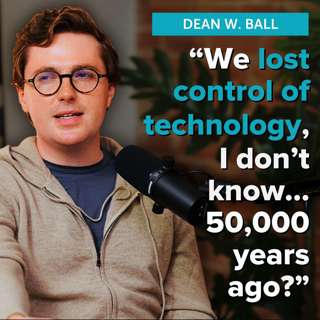
#230 – Dean Ball on how AI is a huge deal — but we shouldn’t regulate it yet

#230 – Dean Ball on how AI is a huge deal — but we shouldn’t regulate it yet

Former White House staffer Dean Ball thinks it's very likely some form of 'superintelligence' arrives in under 20 years. He thinks AI being used for bioweapon research is "a real threat model, obvious...

10 Joulu 20252h 54min

#229 – Marius Hobbhahn on the race to solve AI scheming before models go superhuman

#229 – Marius Hobbhahn on the race to solve AI scheming before models go superhuman

We often worry about AI models “hallucinating” or making honest mistakes. But what happens when a model knows the truth, but decides to deceive you anyway to achieve a goal of its own? This isn’t sci-...

3 Joulu 20253h 3min

Rob & Luisa chat kids, the 2016 fertility crash, and how the 50s invented parenting that makes us miserable

Rob & Luisa chat kids, the 2016 fertility crash, and how the 50s invented parenting that makes us miserable

Global fertility rates aren’t just falling: the rate of decline is accelerating. From 2006 to 2016, fertility dropped gradually, but since 2016 the rate of decline has increased 4.5-fold. In many weal...

25 Marras 20251h 59min

#228 – Eileen Yam on how we're completely out of touch with what the public thinks about AI

#228 – Eileen Yam on how we're completely out of touch with what the public thinks about AI

If you work in AI, you probably think it’s going to boost productivity, create wealth, advance science, and improve your life. If you’re a member of the American public, you probably strongly disagree...

20 Marras 20251h 43min

OpenAI: The nonprofit refuses to be killed (with Tyler Whitmer)

OpenAI: The nonprofit refuses to be killed (with Tyler Whitmer)

Last December, the OpenAI business put forward a plan to completely sideline its nonprofit board. But two state attorneys general have now blocked that effort and kept that board very much alive and k...

11 Marras 20251h 56min
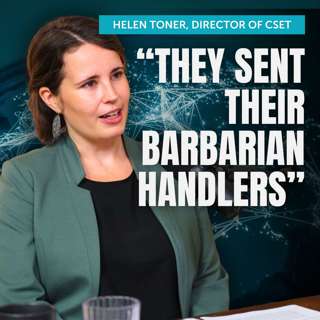
#227 – Helen Toner on the geopolitics of AGI in China and the Middle East

#227 – Helen Toner on the geopolitics of AGI in China and the Middle East

With the US racing to develop AGI and superintelligence ahead of China, you might expect the two countries to be negotiating how they’ll deploy AI, including in the military, without coming to blows. ...

5 Marras 20252h 20min

#226 – Holden Karnofsky on unexploited opportunities to make AI safer — and all his AGI takes

#226 – Holden Karnofsky on unexploited opportunities to make AI safer — and all his AGI takes

For years, working on AI safety usually meant theorising about the ‘alignment problem’ or trying to convince other people to give a damn. If you could find any way to help, the work was frustrating an...

30 Loka 20254h 30min

Suosittua kategoriassa Koulutus

rss-murhan-anatomia
psykopodiaa-podcast
voi-hyvin-meditaatiot-2
rss-valo-minussa-2
rss-narsisti
adhd-podi
rss-niinku-asia-on
aamukahvilla
rss-duodecim-lehti
kesken
rahapuhetta
aloita-meditaatio
salainen-paivakirja
rss-elamankoulu
psykologia
rss-uskonto-on-tylsaa
rss-psykalab
rss-selvat-savelet
rss-koira-haudattuna
rss-hereilla