#115 – David Wallace on the many-worlds theory of quantum mechanics and its implications
80,000 Hours Podcast12 Marras 2021

#115 – David Wallace on the many-worlds theory of quantum mechanics and its implications

Quantum mechanics — our best theory of atoms, molecules, and the subatomic particles that make them up — underpins most of modern physics. But there are varying interpretations of what it means, all of them controversial in their own way.

Famously, quantum theory predicts that with the right setup, a cat can be made to be alive and dead at the same time. On the face of it, that sounds either meaningless or ridiculous.

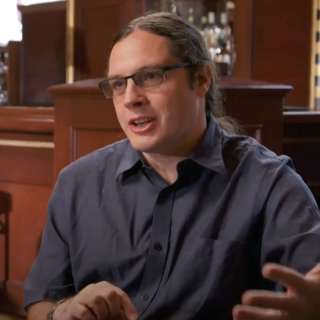
According to today’s guest, David Wallace — professor at the University of Pittsburgh and one of the world's leading philosophers of physics — there are three broad ways experts react to this apparent dilemma:

1. The theory must be wrong, and we need to change our philosophy to fix it.
2. The theory must be wrong, and we need to change our physics to fix it.
3. The theory is OK, and cats really can in some way be alive and dead simultaneously.

(David and Rob do their best to introduce quantum mechanics in the first 35 minutes of the episode, but it isn't the easiest thing to explain via audio alone. So if you need a refresher before jumping in, we recommend checking out our links to learn more, summary and full transcript.)

In 1955, physicist Hugh Everett bit the bullet on Option 3 and proposed Wallace's preferred solution to the puzzle: each time it's faced with a ‘quantum choice,’ the universe 'splits' into different worlds. Anything that has a probability greater than zero (from the perspective of quantum theory) happens in some branch — though more probable things happen in far more branches.

While not a consensus position, the ‘many-worlds’ approach is one of the top three most popular ways to make sense of what's going on, according to surveys of relevant experts.

Setting aside whether it's correct for a moment, one thing that's not often spelled out is what this approach would concretely imply if it were right.

Is there a world where Rob (the show's host) can roll a die a million times, and it comes up 6 every time?

As David explains in this episode: absolutely, that’s completely possible — and if Rob rolled a die a million times, there would be a world like that.

Is there a world where Rob becomes president of the US?

David thinks probably not. The things stopping Rob from becoming US president don’t seem down to random chance at the quantum level.

Is there a world where Rob deliberately murdered someone this morning?

Only if he’s already predisposed to murder — becoming a different person in that way probably isn’t a matter of random fluctuations in our brains.

Is there a world where a horse-version of Rob hosts the 80,000 Horses Podcast?

Well, due to the chance involved in evolution, it’s plausible that there are worlds where humans didn’t evolve, and intelligent horses have in some sense taken their place. And somewhere, fantastically distantly across the vast multiverse, there might even be a horse named Rob Wiblin who hosts a podcast, and who sounds remarkably like Rob. Though even then — it wouldn’t actually be Rob in the way we normally think of personal identity.

Rob and David also cover:

• If the many-worlds interpretation is right, should that change how we live our lives?
• Are our actions getting more (or less) important as the universe splits into finer and finer threads?
• Could we conceivably influence other branches of the multiverse?
• Alternatives to the many-worlds interpretation
• The practical value of physics today
• And much more

Chapters:

  • Rob’s intro (00:00:00)
  • The interview begins (00:02:15)
  • Introduction to quantum mechanics (00:08:10)
  • Why does quantum mechanics need an interpretation? (00:19:42)
  • Quantum mechanics in basic language (00:30:37)
  • Quantum field theory (00:33:13)
  • Different theories of quantum mechanics (00:38:49)
  • Many-worlds theory (00:43:14)
  • What stuff actually happens (00:52:09)
  • Can we count the worlds? (00:59:55)
  • Why anyone believes any of these (01:05:01)
  • Changing the physics (01:10:41)
  • Changing the philosophy (01:14:21)
  • Instrumentalism vs. realism (01:21:42)
  • Objections to many-worlds (01:35:26)
  • Why a consensus hasn’t emerged (01:50:59)
  • Practical implications of the many-worlds theory (01:57:11)
  • Are our actions getting more or less important? (02:04:21)
  • Does utility increase? (02:12:02)
  • Could we influence other branches? (02:17:01)
  • Should you do unpleasant things first? (02:19:52)
  • Progress in physics over the last 50 years (02:30:55)
  • Practical value of physics today (02:35:24)
  • Physics careers (02:43:56)
  • Subjective probabilities (02:48:39)
  • The philosophy of time (02:50:14)
  • David’s experience at Oxford (02:59:51)

Producer: Keiran Harris
Audio mastering: Ben Cordell
Transcriptions: Sofia Davis-Fogel and Katy Moore

Tämä jakso on lisätty Podme-palveluun avoimen RSS-syötteen kautta eikä se ole Podmen omaa tuotantoa. Siksi jakso saattaa sisältää mainontaa.

Jaksot(343)

Jasmine Sun on what the people building AI really believe

Jasmine Sun on what the people building AI really believe

Many AI researchers believe mass job displacement is coming — and some even think there’s a chance their technology will kill everyone. But they’re building it anyway. Writer and journalist Jasmine Su...

21 Heinä 0s

#247 – Anton Leicht on how middle powers avoid losing everything in a post-AI world

#247 – Anton Leicht on how middle powers avoid losing everything in a post-AI world

In a post-AGI world, can a country without access to frontier AI even be considered sovereign anymore?Anton Leicht says once frontier AI becomes a core economic input, the countries that own it will p...

14 Heinä 0s

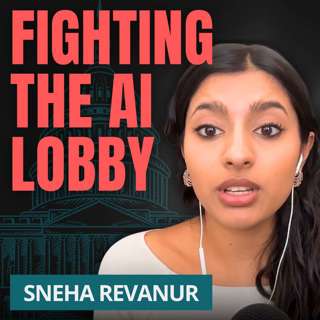
#246 – Sneha Revanur on how a small team of activists helped pass America's landmark AI safety laws

#246 – Sneha Revanur on how a small team of activists helped pass America's landmark AI safety laws

Six years ago, aged just 15, Sneha Revanur founded the AI advocacy nonprofit Encode AI — back when AI felt like a niche issue. Now the world’s caught up with her, and she’s ready to share everything s...

8 Heinä 52min
We can guess what intergalactic war would look like. And strangely, it matters.

We can guess what intergalactic war would look like. And strangely, it matters.

Intergalactic war is probably billions of years away — yet physics can already tell us how it ends. And strangely that conclusion is relevant to decisions people have to make today.In this video, Rob ...

18 Kesä 15min
How AI could create the world’s biggest problems (article by Zershaaneh Qureshi)

How AI could create the world’s biggest problems (article by Zershaaneh Qureshi)

Imagine you’re living 15,000 years ago. Your people are hunter-gatherers and you sleep under the stars. If someone told you humans would one day build cities with millions of people, fly through the a...

11 Kesä 1h 29min
#245 – Rohin Shah on what it's really like to run AGI safety at Google DeepMind (and where I disagree with 'doomers')

#245 – Rohin Shah on what it's really like to run AGI safety at Google DeepMind (and where I disagree with 'doomers')

Most people working on AI safety think without a massive effort AI systems will probably end up with goals catastrophically different from humanity’s. Today’s guest, Rohin Shah — head of AGI Safety an...

2 Kesä 2h 48min

What makes for a dream job? | Benjamin Todd

What makes for a dream job? | Benjamin Todd

What actually makes a job fulfilling? It's not what most career advice tells you. "Follow your passion" sounds inspiring, but it's misleading — and the research backs that up.Drawing on hundreds of st...

28 Touko 28min

#244 – Benjamin Todd on how we’re updating our career advice for the strangest time in history

#244 – Benjamin Todd on how we’re updating our career advice for the strangest time in history

The average career is 80,000 hours long. With AI advancing so rapidly, the hours you have left in your career matter more than ever.Some leading AI researchers think there’s a 10% chance that AI syste...

26 Touko 1h 6min

Suosittua kategoriassa Koulutus

rss-murhan-anatomia
psykopodiaa-podcast
voi-hyvin-meditaatiot-2
rss-arkea-ja-aurinkoa-podcast-espanjasta
aamukahvilla
kesken
rss-luonnollinen-synnytys-podcast
rss-koira-haudattuna
rss-narsisti
rss-rahataito-podcast
ihminen-tavattavissa-tommy-hellsten-instituutti
rss-hereilla
rahapuhetta
solu-ja-molekyylibiologian-perusteet
mielipaivakirja
rss-liian-kuuma-peruna
rss-perho-rajoilla
ilona-rauhala
rss-niinku-asia-on
rss-suomen-aa-podcast