
#121 – Matthew Yglesias on avoiding the pundit's fallacy and how much military intervention can be used for good

#121 – Matthew Yglesias on avoiding the pundit's fallacy and how much military intervention can be used for good

If you read polls saying that the public supports a carbon tax, should you believe them? According to today's guest — journalist and blogger Matthew Yglesias — it's complicated, but probably not.

Links to learn more, summary and full transcript.

Interpreting opinion polls about specific policies can be a challenge, and it's easy to trick yourself into believing what you want to believe. Matthew invented a term for a particular type of self-delusion called the 'pundit's fallacy': "the belief that what a politician needs to do to improve his or her political standing is do what the pundit wants substantively."

If we want to advocate not just for ideas that would be good if implemented, but ideas that have a real shot at getting implemented, we should do our best to understand public opinion as it really is.

The least trustworthy polls are published by think tanks and advocacy campaigns that would love to make their preferred policy seem popular. These surveys can be designed to nudge respondents toward the desired result — for example, by tinkering with question wording and order or shifting how participants are sampled. And if a poll produces the 'wrong answer', there's no need to publish it at all, so the 'publication bias' with these sorts of surveys is large.

Matthew says polling run by firms or researchers without any particular desired outcome can be taken more seriously. But the results that we ought to give by far the most weight are those from professional political campaigns trying to win votes and get their candidate elected because they have both the expertise to do polling properly, and a very strong incentive to understand what the public really thinks.

The problem is, campaigns run these expensive surveys because they think that having exclusive access to reliable information will give them a competitive advantage. As a result, they often don’t publish the findings, and instead use them to shape what their candidate says and does.

Journalists like Matthew can call up their contacts and get a summary from people they trust. But being unable to publish the polling itself, they're unlikely to be able to persuade sceptics.

When assessing what ideas are winners, one thing Matthew would like everyone to keep in mind is that politics is competitive, and politicians aren't (all) stupid. If advocating for your pet idea were a great way to win elections, someone would try it and win, and others would copy.

One other thing to check that's more reliable than polling is real-world experience. For example, voters may say they like a carbon tax on the phone — but the very liberal Washington State roundly rejected one in ballot initiatives in 2016 and 2018.

Of course you may want to advocate for what you think is best, even if it wouldn't pass a popular vote in the face of organised opposition. The public's ideas can shift, sometimes dramatically and unexpectedly. But at least you'll be going into the debate with your eyes wide open.

In this extensive conversation, host Rob Wiblin and Matthew also cover:

• How should a humanitarian think about US military interventions overseas?
• From an 'effective altruist' perspective, was the US wrong to withdraw from Afghanistan?
• Has NATO ultimately screwed over Ukrainians by misrepresenting the extent of its commitment to their independence?
• What philosopher does Matthew think is underrated?
• How big a risk is ubiquitous surveillance?
• What does Matthew think about wild animal suffering, anti-ageing research, and autonomous weapons?
• And much more

Chapters:

  • Rob’s intro (00:00:00)
  • The interview begins (00:02:05)
  • Autonomous weapons (00:04:42)
  • India and the US (00:07:25)
  • Evidence-backed interventions for reducing the harm done by racial prejudices (00:08:38)
  • Factory farming (00:10:44)
  • Wild animal suffering (00:12:41)
  • Vaccine development (00:15:20)
  • Anti-ageing research (00:16:27)
  • Should the US develop a semiconductor industry? (00:19:13)
  • What we should do about various existential risks (00:21:58)
  • What governments should do to stop the next pandemic (00:24:00)
  • Comets and supervolcanoes (00:31:30)
  • Nuclear weapons (00:34:25)
  • Advances in AI (00:35:46)
  • Surveillance systems (00:38:45)
  • How Matt thinks about public opinion research (00:43:22)
  • Issues with trusting public opinion polls (00:51:18)
  • The influence of prior beliefs (01:05:53)
  • Loss aversion (01:12:19)
  • Matt's take on military adventurism (01:18:54)
  • How military intervention looks as a humanitarian intervention (01:29:12)
  • Where Matt does favour military intervention (01:38:27)
  • Why smart people disagree (01:44:24)
  • The case for NATO taking an active stance in Ukraine (01:57:34)
  • One Billion Americans (02:08:02)
  • Matt’s views on the effective altruism community (02:11:46)
  • Matt’s views on the longtermist community (02:19:48)
  • Matt’s struggle to become more of a rationalist (02:22:42)
  • Megaprojects (02:26:20)
  • The impact of Matt’s work (02:32:28)
  • Matt’s philosophical views (02:47:58)
  • The value of formal education (02:56:59)
  • Worst thing Matt’s ever advocated for (03:02:25)
  • Rob’s outro (03:03:22)


Producer: Keiran Harris
Audio mastering: Ben Cordell
Transcriptions: Katy Moore

Jaksot(322)

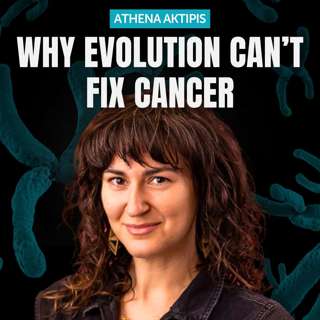
#144 Classic episode – Athena Aktipis on why cancer is a fundamental universal phenomena

#144 Classic episode – Athena Aktipis on why cancer is a fundamental universal phenomena

What’s the opposite of cancer? If you answered “cure,” “antidote,” or “antivenom” — you’ve obviously been reading the antonym section at www.merriam-webster.com/thesaurus/cancer.But today’s guest Athe...

9 Tammi 3h 30min
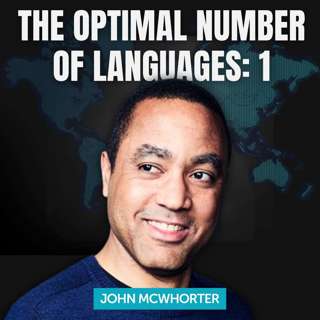
#142 Classic episode – John McWhorter on why the optimal number of languages might be one, and other provocative claims about language

#142 Classic episode – John McWhorter on why the optimal number of languages might be one, and other provocative claims about language

John McWhorter is a linguistics professor at Columbia University specialising in research on creole languages. He's also a content-producing machine, never afraid to give his frank opinion on anything...

6 Tammi 1h 35min

2025 Highlight-o-thon: Oops! All Bests

2025 Highlight-o-thon: Oops! All Bests

It’s that magical time of year once again — highlightapalooza! Stick around for one top bit from each episode we recorded this year, including:Kyle Fish explaining how Anthropic’s AI Claude descends i...

29 Joulu 20251h 40min

#232 – Andreas Mogensen on what we owe 'philosophical Vulcans' and unconscious beings

#232 – Andreas Mogensen on what we owe 'philosophical Vulcans' and unconscious beings

Most debates about the moral status of AI systems circle the same question: is there something that it feels like to be them? But what if that’s the wrong question to ask? Andreas Mogensen — a senior ...

19 Joulu 20252h 37min
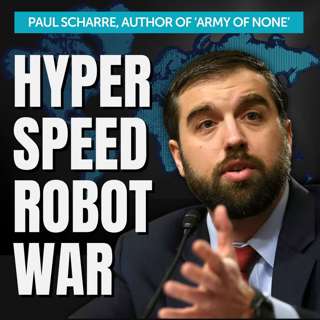
#231 – Paul Scharre on how AI-controlled robots will and won't change war

#231 – Paul Scharre on how AI-controlled robots will and won't change war

In 1983, Stanislav Petrov, a Soviet lieutenant colonel, sat in a bunker watching a red screen flash “MISSILE LAUNCH.” Protocol demanded he report it to superiors, which would very likely trigger a ret...

17 Joulu 20252h 45min

AI might let a few people control everything — permanently (article by Rose Hadshar)

AI might let a few people control everything — permanently (article by Rose Hadshar)

Power is already concentrated today: over 800 million people live on less than $3 a day, the three richest men in the world are worth over $1 trillion, and almost six billion people live in countries ...

12 Joulu 20251h
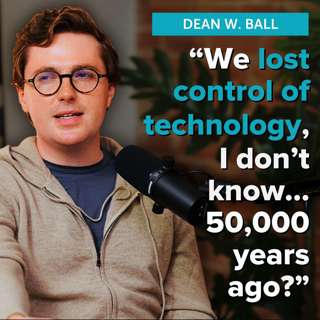
#230 – Dean Ball on how AI is a huge deal — but we shouldn’t regulate it yet

#230 – Dean Ball on how AI is a huge deal — but we shouldn’t regulate it yet

Former White House staffer Dean Ball thinks it's very likely some form of 'superintelligence' arrives in under 20 years. He thinks AI being used for bioweapon research is "a real threat model, obvious...

10 Joulu 20252h 54min

#229 – Marius Hobbhahn on the race to solve AI scheming before models go superhuman

#229 – Marius Hobbhahn on the race to solve AI scheming before models go superhuman

We often worry about AI models “hallucinating” or making honest mistakes. But what happens when a model knows the truth, but decides to deceive you anyway to achieve a goal of its own? This isn’t sci-...

3 Joulu 20253h 3min

Suosittua kategoriassa Koulutus

rss-murhan-anatomia
voi-hyvin-meditaatiot-2
psykopodiaa-podcast
rss-narsisti
rss-vapaudu-voimaasi
rss-liian-kuuma-peruna
psykologia
kesken
rss-niinku-asia-on
rss-uskonto-on-tylsaa
rahapuhetta
rss-valo-minussa-2
rss-luonnollinen-synnytys-podcast
rss-hereilla
ihminen-tavattavissa-tommy-hellsten-instituutti
rss-duodecim-lehti
rss-tietoinen-yhteys-podcast-2
rss-sielun-aani-podcast
avara-mieli
rss-arkea-ja-aurinkoa-podcast-espanjasta