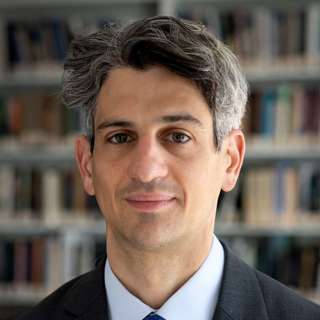
#123 – Samuel Charap on why Putin invaded Ukraine, the risk of escalation, and how to prevent disaster
80,000 Hours Podcast14 Maalis 2022

#123 – Samuel Charap on why Putin invaded Ukraine, the risk of escalation, and how to prevent disaster

Russia's invasion of Ukraine is devastating the lives of Ukrainians, and so long as it continues there's a risk that the conflict could escalate to include other countries or the use of nuclear weapons. It's essential that NATO, the US, and the EU play their cards right to ideally end the violence, maintain Ukrainian sovereignty, and discourage any similar invasions in the future.

But how? To pull together the most valuable information on how to react to this crisis, we spoke with Samuel Charap — a senior political scientist at the RAND Corporation, one of the US's foremost experts on Russia's relationship with former Soviet states, and co-author of Everyone Loses: The Ukraine Crisis and the Ruinous Contest for Post-Soviet Eurasia.

Links to learn more, summary and full transcript.

Samuel believes that Putin views the alignment of Ukraine with NATO as an existential threat to Russia — a perhaps unreasonable view, but a sincere one nevertheless. Ukraine has been drifting further into Western Europe's orbit and improving its defensive military capabilities, so Putin has concluded that if Russia wants to put a stop to that, there will never be a better time to act in the future.

Despite early successes holding off the Russian military, Samuel is sceptical that time is on the Ukrainian side. If the war is to end before much of Ukraine is reduced to rubble, it will likely have to be through negotiation, rather than Russian defeat.

The US policy response has so far been largely good, successfully balancing the need to punish Russia to dissuade large nations from bullying small ones in the future, while preventing NATO from being drawn into the war directly — which would pose a horrifying risk of escalation to a full nuclear exchange. The pressure from the general public to 'do something' might eventually cause national leaders to confront Russia more directly, but so far they are sensibly showing no interest in doing so.

However, use of nuclear weapons remains a low but worrying possibility.

Samuel is also worried that Russia may deploy chemical and biological weapons and blame it on the Ukrainians.

Before war broke out, it's possible Russia could have been satisfied if Ukraine followed through on the Minsk agreements and committed not to join the EU and NATO. Or it might not have, if Putin was committed to war, come what may. In any case, most Ukrainians found those terms intolerable.

At this point, the situation is even worse, and it's hard to see how an enduring ceasefire could be agreed upon. On top of the above, Russia is also demanding recognition that Crimea is part of Russia, and acceptance of the independence of the so-called Donetsk and Luhansk People's Republics. These conditions — especially the second — are entirely unacceptable to the Ukrainians. Hence the war continues, and could grind on for months or even years until one side is sufficiently beaten down to compromise on their core demands.

Rob and Samuel discuss all of the above and also:

• The chances that this conflict leads to a nuclear exchange
• The chances of regime change in Russia
• Whether the West should deliver MiG fighter jets to Ukraine
• What are the implications if Sweden and/or Finland decide to join NATO?
• What should NATO do now, and did it make any mistakes in the past?
• What's the most likely situation for us to be looking at in three months' time?
• Can Ukraine effectively win the war?

Chapters:

  • Rob’s intro (00:00:00)
  • The interview begins (00:01:40)
  • Putin's true motive (00:02:29)
  • What the West could have done differently (00:07:44)
  • Chances of Ukraine holding out (00:11:40)
  • Chances of regime change in Russia (00:14:59)
  • The good and the bad from the West so far (00:17:55)
  • Should the West deliver MiG fighter jets to Ukraine? (00:19:57)
  • "No-fly zones" (00:21:32)
  • Chances that this conflict leads to a nuclear exchange (00:26:06)
  • What listeners should do (00:36:01)
  • Chances of biological or chemical weapons use (00:37:59)
  • Best realistic outcome from here (00:39:29)
  • Keeping the broader conversation sane (00:49:29)
  • Why not promise to remove sanctions? (00:51:05)
  • Pros and cons of Sweden and FInland joining NATO (00:52:53)
  • The most likely situation in 3 months (00:53:58)

Producer: Keiran Harris
Audio mastering: Ben Cordell
Transcriptions: Katy Moore

Jaksot(320)

#15 - Phil Tetlock on how chimps beat Berkeley undergrads and when it’s wise to defer to the wise

#15 - Phil Tetlock on how chimps beat Berkeley undergrads and when it’s wise to defer to the wise

Prof Philip Tetlock is a social science legend. Over forty years he has researched whose predictions we can trust, whose we can’t and why - and developed methods that allow all of us to be better at p...

20 Marras 20171h 24min
#14 - Sharon Nunez & Jose Valle on going undercover to expose animal abuse

#14 - Sharon Nunez & Jose Valle on going undercover to expose animal abuse

What if you knew that ducks were being killed with pitchforks? Rabbits dumped alive into containers? Or pigs being strangled with forklifts? Would you be willing to go undercover to expose the crime? ...

13 Marras 20171h 25min
#13 - Claire Walsh on testing which policies work & how to get governments to listen to the results

#13 - Claire Walsh on testing which policies work & how to get governments to listen to the results

In both rich and poor countries, government policy is often based on no evidence at all and many programs don’t work. This has particularly harsh effects on the global poor - in some countries governm...

31 Loka 201752min
#12 - Beth Cameron works to stop you dying in a pandemic. Here’s what keeps her up at night.

#12 - Beth Cameron works to stop you dying in a pandemic. Here’s what keeps her up at night.

“When you're in the middle of a crisis and you have to ask for money, you're already too late.” That’s Dr Beth Cameron, who leads Global Biological Policy and Programs at the Nuclear Threat Initiative...

25 Loka 20171h 45min

#11 - Spencer Greenberg on speeding up social science 10-fold & why plenty of startups cause harm

#11 - Spencer Greenberg on speeding up social science 10-fold & why plenty of startups cause harm

Do most meat eaters think it’s wrong to hurt animals? Do Americans think climate change is likely to cause human extinction? What is the best, state-of-the-art therapy for depression? How can we make ...

17 Loka 20171h 29min

#10 - Nick Beckstead on how to spend billions of dollars preventing human extinction

#10 - Nick Beckstead on how to spend billions of dollars preventing human extinction

What if you were in a position to give away billions of dollars to improve the world? What would you do with it? This is the problem facing Program Officers at the Open Philanthropy Project - people l...

11 Loka 20171h 51min
#9 - Christine Peterson on how insecure computers could lead to global disaster, and how to fix it

#9 - Christine Peterson on how insecure computers could lead to global disaster, and how to fix it

Take a trip to Silicon Valley in the 70s and 80s, when going to space sounded like a good way to get around environmental limits, people started cryogenically freezing themselves, and nanotechnology l...

4 Loka 20171h 45min
#8 - Lewis Bollard on how to end factory farming in our lifetimes

#8 - Lewis Bollard on how to end factory farming in our lifetimes

Every year tens of billions of animals are raised in terrible conditions in factory farms before being killed for human consumption. Over the last two years Lewis Bollard – Project Officer for Farm An...

27 Syys 20173h 16min

Suosittua kategoriassa Koulutus

rss-murhan-anatomia
psykopodiaa-podcast
rss-narsisti
voi-hyvin-meditaatiot-2
aamukahvilla
rss-niinku-asia-on
rss-liian-kuuma-peruna
adhd-podi
psykologia
kesken
rss-vapaudu-voimaasi
rss-valo-minussa-2
dear-ladies
rss-koira-haudattuna
jari-sarasvuo-podcast
esa-saarinen-filosofia-ja-systeemiajattelu
leveli
rss-duodecim-lehti
rss-luonnollinen-synnytys-podcast
rss-ihana-elamani