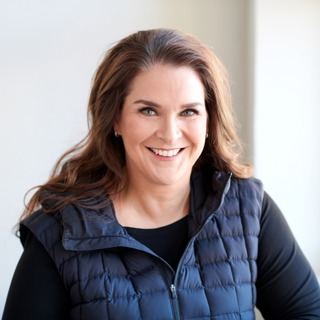
#124 – Karen Levy on fads and misaligned incentives in global development, and scaling deworming to reach hundreds of millions
80,000 Hours Podcast21 Maalis 2022

#124 – Karen Levy on fads and misaligned incentives in global development, and scaling deworming to reach hundreds of millions

If someone said a global health and development programme was sustainable, participatory, and holistic, you'd have to guess that they were saying something positive. But according to today's guest Karen Levy — deworming pioneer and veteran of Innovations for Poverty Action, Evidence Action, and Y Combinator — each of those three concepts has become so fashionable that they're at risk of being seriously overrated and applied where they don't belong.

Links to learn more, summary and full transcript.

Such concepts might even cause harm — trying to make a project embody all three is as likely to ruin it as help it flourish.

First, what do people mean by 'sustainability'? Usually they mean something like the programme will eventually be able to continue without needing further financial support from the donor. But how is that possible? Governments, nonprofits, and aid agencies aim to provide health services, education, infrastructure, financial services, and so on — and all of these require ongoing funding to pay for materials and staff to keep them running.

Given that someone needs to keep paying, Karen tells us that in practice, 'sustainability' is usually a euphemism for the programme at some point being passed on to someone else to fund — usually the national government. And while that can be fine, the national government of Kenya only spends $400 per person to provide each and every government service — just 2% of what the US spends on each resident. Incredibly tight budgets like that are typical of low-income countries.

'Participatory' also sounds nice, and inasmuch as it means leaders are accountable to the people they're trying to help, it probably is. But Karen tells us that in the field, ‘participatory’ usually means that recipients are expected to be involved in planning and delivering services themselves.

While that might be suitable in some situations, it's hardly something people in rich countries always want for themselves. Ideally we want government healthcare and education to be high quality without us having to attend meetings to keep it on track — and people in poor countries have as many or more pressures on their time. While accountability is desirable, an expectation of participation can be as much a burden as a blessing.

Finally, making a programme 'holistic' could be smart, but as Karen lays out, it also has some major downsides. For one, it means you're doing lots of things at once, which makes it hard to tell which parts of the project are making the biggest difference relative to their cost. For another, when you have a lot of goals at once, it's hard to tell whether you're making progress, or really put your mind to focusing on making one thing go extremely well. And finally, holistic programmes can be impractically expensive — Karen tells the story of a wonderful 'holistic school health' programme that, if continued, was going to cost 3.5 times the entire school's budget.

In today's in-depth conversation, Karen Levy and I chat about the above, as well as:

• Why it pays to figure out how you'll interpret the results of an experiment ahead of time
• The trouble with misaligned incentives within the development industry
• Projects that don't deliver value for money and should be scaled down
• How Karen accidentally became a leading figure in the push to deworm tens of millions of schoolchildren
• Logistical challenges in reaching huge numbers of people with essential services
• Lessons from Karen's many-decades career
• And much more

Get this episode by subscribing to our podcast on the world’s most pressing problems and how to solve them: type 80,000 Hours into your podcasting app.

Producer: Keiran Harris
Audio mastering: Ben Cordell and Ryan Kessler
Transcriptions: Katy Moore

Jaksot(320)

2025 Highlight-o-thon: Oops! All Bests

2025 Highlight-o-thon: Oops! All Bests

It’s that magical time of year once again — highlightapalooza! Stick around for one top bit from each episode we recorded this year, including:Kyle Fish explaining how Anthropic’s AI Claude descends i...

29 Joulu 20251h 40min

#232 – Andreas Mogensen on what we owe 'philosophical Vulcans' and unconscious beings

#232 – Andreas Mogensen on what we owe 'philosophical Vulcans' and unconscious beings

Most debates about the moral status of AI systems circle the same question: is there something that it feels like to be them? But what if that’s the wrong question to ask? Andreas Mogensen — a senior ...

19 Joulu 20252h 37min
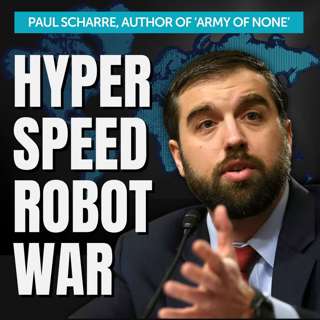
#231 – Paul Scharre on how AI-controlled robots will and won't change war

#231 – Paul Scharre on how AI-controlled robots will and won't change war

In 1983, Stanislav Petrov, a Soviet lieutenant colonel, sat in a bunker watching a red screen flash “MISSILE LAUNCH.” Protocol demanded he report it to superiors, which would very likely trigger a ret...

17 Joulu 20252h 45min

AI might let a few people control everything — permanently (article by Rose Hadshar)

AI might let a few people control everything — permanently (article by Rose Hadshar)

Power is already concentrated today: over 800 million people live on less than $3 a day, the three richest men in the world are worth over $1 trillion, and almost six billion people live in countries ...

12 Joulu 20251h
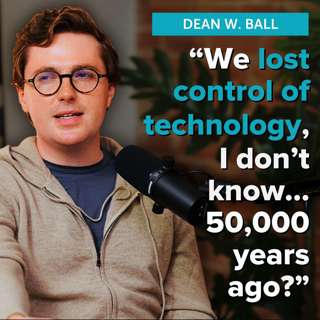
#230 – Dean Ball on how AI is a huge deal — but we shouldn’t regulate it yet

#230 – Dean Ball on how AI is a huge deal — but we shouldn’t regulate it yet

Former White House staffer Dean Ball thinks it's very likely some form of 'superintelligence' arrives in under 20 years. He thinks AI being used for bioweapon research is "a real threat model, obvious...

10 Joulu 20252h 54min

#229 – Marius Hobbhahn on the race to solve AI scheming before models go superhuman

#229 – Marius Hobbhahn on the race to solve AI scheming before models go superhuman

We often worry about AI models “hallucinating” or making honest mistakes. But what happens when a model knows the truth, but decides to deceive you anyway to achieve a goal of its own? This isn’t sci-...

3 Joulu 20253h 3min

Rob & Luisa chat kids, the 2016 fertility crash, and how the 50s invented parenting that makes us miserable

Rob & Luisa chat kids, the 2016 fertility crash, and how the 50s invented parenting that makes us miserable

Global fertility rates aren’t just falling: the rate of decline is accelerating. From 2006 to 2016, fertility dropped gradually, but since 2016 the rate of decline has increased 4.5-fold. In many weal...

25 Marras 20251h 59min

#228 – Eileen Yam on how we're completely out of touch with what the public thinks about AI

#228 – Eileen Yam on how we're completely out of touch with what the public thinks about AI

If you work in AI, you probably think it’s going to boost productivity, create wealth, advance science, and improve your life. If you’re a member of the American public, you probably strongly disagree...

20 Marras 20251h 43min

Suosittua kategoriassa Koulutus

rss-murhan-anatomia
psykopodiaa-podcast
rss-narsisti
voi-hyvin-meditaatiot-2
aamukahvilla
rss-vapaudu-voimaasi
psykologia
rss-liian-kuuma-peruna
dear-ladies
leveli
adhd-podi
kesken
rss-duodecim-lehti
aloita-meditaatio
ihminen-tavattavissa-tommy-hellsten-instituutti
rss-koira-haudattuna
rahapuhetta
ilona-rauhala
rss-niinku-asia-on
rss-luonnollinen-synnytys-podcast