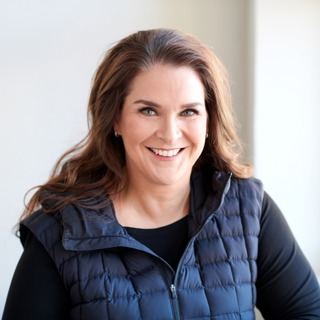

#130 – Will MacAskill on balancing frugality with ambition, whether you need longtermism, & mental health under pressure

#130 – Will MacAskill on balancing frugality with ambition, whether you need longtermism, & mental health under pressure

Imagine you lead a nonprofit that operates on a shoestring budget. Staff are paid minimum wage, lunch is bread and hummus, and you're all bunched up on a few tables in a basement office.

But over a few years, your cause attracts some major new donors. Your funding jumps a thousandfold, from $100,000 a year to $100,000,000 a year. You're the same group of people committed to making sacrifices for the cause — but these days, rather than cutting costs, the right thing to do seems to be to spend serious money and get things done ASAP.

You suddenly have the opportunity to make more progress than ever before, but as well as excitement about this, you have worries about the impacts that large amounts of funding can have.

This is roughly the situation faced by today's guest Will MacAskill — University of Oxford philosopher, author of the forthcoming book What We Owe The Future, and founding figure in the effective altruism movement.

Links to learn more, summary and full transcript.

Years ago, Will pledged to give away more than 50% of his income over his life, and was already donating 10% back when he was a student with next to no income. Since then, the coalition he founded has been super successful at attracting the interest of donors who collectively want to give away billions in the way Will and his colleagues were proposing.

While surely a huge success, it brings with it risks that he's never had to consider before:

• Will and his colleagues might try to spend a lot of money trying to get more things done more quickly — but actually just waste it.
• Being seen as profligate could strike onlookers as selfish and disreputable.
• Folks might start pretending to agree with their agenda just to get grants.
• People working on nearby issues that are less flush with funding may end up resentful.
• People might lose their focus on helping others as they get seduced by the prospect of earning a nice living.
• Mediocre projects might find it too easy to get funding, even when the people involved would be better off radically changing their strategy, or shutting down and launching something else entirely.

But all these 'risks of commission' have to be weighed against 'risk of omission': the failure to achieve all you could have if you'd been truly ambitious.

People looking askance at you for paying high salaries to attract the staff you want is unpleasant.

But failing to prevent the next pandemic because you didn't have the necessary medical experts on your grantmaking team is worse than unpleasant — it's a true disaster. Yet few will complain, because they'll never know what might have been if you'd only set frugality aside.

Will aims to strike a sensible balance between these competing errors, which he has taken to calling judicious ambition. In today's episode, Rob and Will discuss the above as well as:

• Will humanity likely converge on good values as we get more educated and invest more in moral philosophy — or are the things we care about actually quite arbitrary and contingent?
• Why are so many nonfiction books full of factual errors?
• How does Will avoid anxiety and depression with more responsibility on his shoulders than ever?
• What does Will disagree with his colleagues on?
• Should we focus on existential risks more or less the same way, whether we care about future generations or not?
• Are potatoes one of the most important technologies ever developed?
• And plenty more.

Chapters:

  • Rob’s intro (00:00:00)
  • The interview begins (00:02:41)
  • What We Owe The Future preview (00:09:23)
  • Longtermism vs. x-risk (00:25:39)
  • How is Will doing? (00:33:16)
  • Having a life outside of work (00:46:45)
  • Underappreciated people in the effective altruism community (00:52:48)
  • A culture of ambition within effective altruism (00:59:50)
  • Massively scalable projects (01:11:40)
  • Downsides and risks from the increase in funding (01:14:13)
  • Barriers to ambition (01:28:47)
  • The Future Fund (01:38:04)
  • Patient philanthropy (01:52:50)
  • Will’s disagreements with Sam Bankman-Fried and Nick Beckstead (01:56:42)
  • Astronomical risks of suffering (s-risks) (02:00:02)
  • Will’s future plans (02:02:41)
  • What is it with Will and potatoes? (02:08:40)

Producer: Keiran Harris
Audio mastering: Ben Cordell
Transcriptions: Katy Moore

Jaksot(325)

Rob Wiblin on human nature, new technology, and living a happy, healthy & ethical life

Rob Wiblin on human nature, new technology, and living a happy, healthy & ethical life

This is a cross-post of some interviews Rob did recently on two other podcasts — Mission Daily (from 2m) and The Good Life (from 1h13m). Some of the content will be familiar to regular listeners — bu...

13 Touko 20192h 18min
#57 – Tom Kalil on how to do the most good in government

#57 – Tom Kalil on how to do the most good in government

You’re 29 years old, and you’ve just been given a job in the White House. How do you quickly figure out how the US Executive Branch behemoth actually works, so that you can have as much impact as poss...

23 Huhti 20192h 50min

#56 - Persis Eskander on wild animal welfare and what, if anything, to do about it

#56 - Persis Eskander on wild animal welfare and what, if anything, to do about it

Elephants in chains at travelling circuses; pregnant pigs trapped in coffin sized crates at factory farms; deers living in the wild. We should welcome the last as a pleasant break from the horror, rig...

15 Huhti 20192h 57min

#55 – Lutter & Winter on founding charter cities with outstanding governance to end poverty

#55 – Lutter & Winter on founding charter cities with outstanding governance to end poverty

Governance matters. Policy change quickly took China from famine to fortune; Singapore from swamps to skyscrapers; and Hong Kong from fishing village to financial centre. Unfortunately, many governmen...

31 Maalis 20192h 31min

#54 – OpenAI on publication norms, malicious uses of AI, and general-purpose learning algorithms

#54 – OpenAI on publication norms, malicious uses of AI, and general-purpose learning algorithms

OpenAI’s Dactyl is an AI system that can manipulate objects with a human-like robot hand. OpenAI Five is an AI system that can defeat humans at the video game Dota 2. The strange thing is they were bo...

19 Maalis 20192h 53min

#53 - Kelsey Piper on the room for important advocacy within journalism

#53 - Kelsey Piper on the room for important advocacy within journalism

“Politics. Business. Opinion. Science. Sports. Animal welfare. Existential risk.” Is this a plausible future lineup for major news outlets? Funded by the Rockefeller Foundation and given very little ...

27 Helmi 20192h 34min

Julia Galef and Rob Wiblin on an updated view of the best ways to help humanity

Julia Galef and Rob Wiblin on an updated view of the best ways to help humanity

This is a cross-post of an interview Rob did with Julia Galef on her podcast Rationally Speaking. Rob and Julia discuss how the career advice 80,000 Hours gives has changed over the years, and the big...

17 Helmi 201956min
#52 - Glen Weyl on uprooting capitalism and democracy for a just society

#52 - Glen Weyl on uprooting capitalism and democracy for a just society

Pro-market economists love to wax rhapsodic about the capacity of markets to pull together the valuable local information spread across all of society about what people want and how to make it. But wh...

8 Helmi 20192h 44min

Suosittua kategoriassa Koulutus

rss-murhan-anatomia
voi-hyvin-meditaatiot-2
rss-narsisti
psykopodiaa-podcast
adhd-podi
rss-rahamania
rss-valo-minussa-2
rss-vapaudu-voimaasi
rss-niinku-asia-on
mielipaivakirja
rss-uskonto-on-tylsaa
aamukahvilla
rss-duodecim-lehti
ilona-rauhala
kesken
psykologia
rss-eron-alkemiaa
rss-koira-haudattuna
rss-arkea-ja-aurinkoa-podcast-espanjasta
ihminen-tavattavissa-tommy-hellsten-instituutti