#131 – Lewis Dartnell on getting humanity to bounce back faster in a post-apocalyptic world

#131 – Lewis Dartnell on getting humanity to bounce back faster in a post-apocalyptic world

“We’re leaving these 16 contestants on an island with nothing but what they can scavenge from an abandoned factory and apartment block. Over the next 365 days, they’ll try to rebuild as much of civilisation as they can — from glass, to lenses, to microscopes. This is: The Knowledge!”

If you were a contestant on such a TV show, you'd love to have a guide to how basic things you currently take for granted are done — how to grow potatoes, fire bricks, turn wood to charcoal, find acids and alkalis, and so on.

Today’s guest Lewis Dartnell has gone as far compiling this information as anyone has with his bestselling book The Knowledge: How to Rebuild Civilization in the Aftermath of a Cataclysm.

Links to learn more, summary and full transcript.

But in the aftermath of a nuclear war or incredibly deadly pandemic that kills most people, many of the ways we do things today will be impossible — and even some of the things people did in the past, like collect coal from the surface of the Earth, will be impossible the second time around.

As Lewis points out, there’s “no point telling this band of survivors how to make something ultra-efficient or ultra-useful or ultra-capable if it's just too damned complicated to build in the first place. You have to start small and then level up, pull yourself up by your own bootstraps.”

So it might sound good to tell people to build solar panels — they’re a wonderful way of generating electricity. But the photovoltaic cells we use today need pure silicon, and nanoscale manufacturing — essentially the same technology as microchips used in a computer — so actually making solar panels would be incredibly difficult.

Instead, you’d want to tell our group of budding engineers to use more appropriate technologies like solar concentrators that use nothing more than mirrors — which turn out to be relatively easy to make.

A disaster that unravels the complex way we produce goods in the modern world is all too possible. Which raises the question: why not set dozens of people to plan out exactly what any survivors really ought to do if they need to support themselves and rebuild civilisation? Such a guide could then be translated and distributed all around the world.

The goal would be to provide the best information to speed up each of the many steps that would take survivors from rubbing sticks together in the wilderness to adjusting a thermostat in their comfy apartments.

This is clearly not a trivial task. Lewis's own book (at 300 pages) only scratched the surface of the most important knowledge humanity has accumulated, relegating all of mathematics to a single footnote.

And the ideal guide would offer pretty different advice depending on the scenario. Are survivors dealing with a radioactive ice age following a nuclear war? Or is it an eerily intact but near-empty post-pandemic world with mountains of goods to scavenge from the husks of cities?

As a brand-new parent, Lewis couldn’t do one of our classic three- or four-hour episodes — so this is an unusually snappy one-hour interview, where Rob and Lewis are joined by Luisa Rodriguez to continue the conversation from her episode of the show last year.

Chapters:

  • Rob’s intro (00:00:00)
  • The interview begins (00:00:59)
  • The biggest impediments to bouncing back (00:03:18)
  • Can we do a serious version of The Knowledge? (00:14:58)
  • Recovering without much coal or oil (00:29:56)
  • Most valuable pro-resilience adjustments we can make today (00:40:23)
  • Feeding the Earth in disasters (00:47:45)
  • The reality of humans trying to actually do this (00:53:54)
  • Most exciting recent findings in astrobiology (01:01:00)
  • Rob’s outro (01:03:37)

Producer: Keiran Harris
Audio mastering: Ben Cordell
Transcriptions: Katy Moore

Jaksot(326)

#44 - Paul Christiano on how we'll hand the future off to AI, & solving the alignment problem

#44 - Paul Christiano on how we'll hand the future off to AI, & solving the alignment problem

Paul Christiano is one of the smartest people I know. After our first session produced such great material, we decided to do a second recording, resulting in our longest interview so far. While challe...

2 Loka 20183h 51min
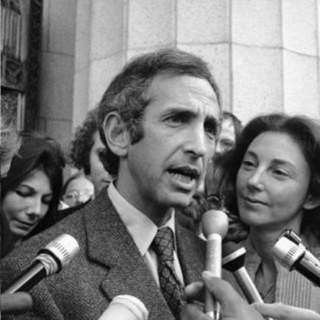
#43 - Daniel Ellsberg on the institutional insanity that maintains nuclear doomsday machines

#43 - Daniel Ellsberg on the institutional insanity that maintains nuclear doomsday machines

In Stanley Kubrick’s iconic film Dr. Strangelove, the American president is informed that the Soviet Union has created a secret deterrence system which will automatically wipe out humanity upon detect...

25 Syys 20182h 44min
#42 - Amanda Askell on moral empathy, the value of information & the ethics of infinity

#42 - Amanda Askell on moral empathy, the value of information & the ethics of infinity

Consider two familiar moments at a family reunion. Our host, Uncle Bill, takes pride in his barbecuing skills. But his niece Becky says that she now refuses to eat meat. A groan goes round the table; ...

11 Syys 20182h 46min
#41 - David Roodman on incarceration, geomagnetic storms, & becoming a world-class researcher

#41 - David Roodman on incarceration, geomagnetic storms, & becoming a world-class researcher

With 698 inmates per 100,000 citizens, the U.S. is by far the leader among large wealthy nations in incarceration. But what effect does imprisonment actually have on crime? According to David Roodman...

28 Elo 20182h 18min
#40 - Katja Grace on forecasting future technology & how much we should trust expert predictions

#40 - Katja Grace on forecasting future technology & how much we should trust expert predictions

Experts believe that artificial intelligence will be better than humans at driving trucks by 2027, working in retail by 2031, writing bestselling books by 2049, and working as surgeons by 2053. But ho...

21 Elo 20182h 11min
#39 - Spencer Greenberg on the scientific approach to solving difficult everyday questions

#39 - Spencer Greenberg on the scientific approach to solving difficult everyday questions

Will Trump be re-elected? Will North Korea give up their nuclear weapons? Will your friend turn up to dinner? Spencer Greenberg, founder of ClearerThinking.org has a process for working out such real...

7 Elo 20182h 17min
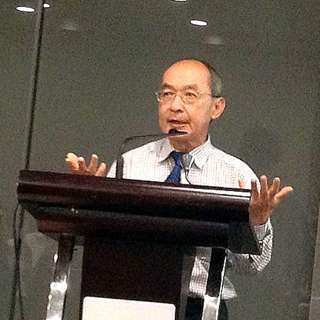
#38 - Yew-Kwang Ng on anticipating effective altruism decades ago & how to make a much happier world

#38 - Yew-Kwang Ng on anticipating effective altruism decades ago & how to make a much happier world

Will people who think carefully about how to maximize welfare eventually converge on the same views? The effective altruism community has spent a lot of time over the past 10 years debating how best t...

26 Heinä 20181h 59min
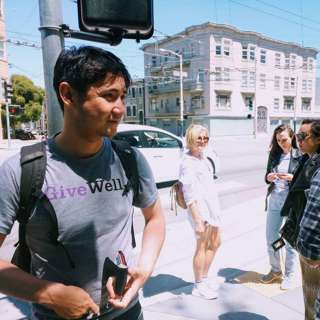
#37 - GiveWell picks top charities by estimating the unknowable. James Snowden on how they do it.

#37 - GiveWell picks top charities by estimating the unknowable. James Snowden on how they do it.

What’s the value of preventing the death of a 5-year-old child, compared to a 20-year-old, or an 80-year-old? The global health community has generally regarded the value as proportional to the numbe...

16 Heinä 20181h 44min

Suosittua kategoriassa Koulutus

rss-murhan-anatomia
voi-hyvin-meditaatiot-2
rss-narsisti
psykopodiaa-podcast
adhd-podi
rahapuhetta
rss-uskonto-on-tylsaa
rss-liian-kuuma-peruna
rss-rahamania
kesken
rss-vapaudu-voimaasi
rss-niinku-asia-on
salainen-paivakirja
rss-duodecim-lehti
rss-tietoinen-yhteys-podcast-2
rss-koira-haudattuna
aloita-meditaatio
mielipaivakirja
esa-saarinen-filosofia-ja-systeemiajattelu
filocast-filosofian-perusteet