#133 – Max Tegmark on how a 'put-up-or-shut-up' resolution led him to work on AI and algorithmic news selection

#133 – Max Tegmark on how a 'put-up-or-shut-up' resolution led him to work on AI and algorithmic news selection

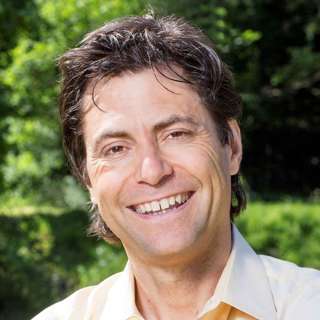
On January 1, 2015, physicist Max Tegmark gave up something most of us love to do: complain about things without ever trying to fix them.

That “put up or shut up” New Year’s resolution led to the first Puerto Rico conference and Open Letter on Artificial Intelligence — milestones for researchers taking the safe development of highly-capable AI systems seriously.

Links to learn more, summary and full transcript.

Max's primary work has been cosmology research at MIT, but his energetic and freewheeling nature has led him into so many other projects that you would be forgiven for forgetting it. In the 2010s he wrote two best-selling books, Our Mathematical Universe: My Quest for the Ultimate Nature of Reality, and Life 3.0: Being Human in the Age of Artificial Intelligence, and in 2014 founded a non-profit, the Future of Life Institute, which works to reduce all sorts of threats to humanity's future including nuclear war, synthetic biology, and AI.

Max has complained about many other things over the years, from killer robots to the impact of social media algorithms on the news we consume. True to his 'put up or shut up' resolution, he and his team went on to produce a video on so-called ‘Slaughterbots’ which attracted millions of views, and develop a website called 'Improve The News' to help readers separate facts from spin.

But given the stunning recent advances in capabilities — from OpenAI’s DALL-E to DeepMind’s Gato — AI itself remains top of his mind.

You can now give an AI system like GPT-3 the text: "I'm going to go to this mountain with the faces on it. What is the capital of the state to the east of the state that that's in?" And it gives the correct answer (Saint Paul, Minnesota) — something most AI researchers would have said was impossible without fundamental breakthroughs just seven years ago.

So back at MIT, he now leads a research group dedicated to what he calls “intelligible intelligence.” At the moment, AI systems are basically giant black boxes that magically do wildly impressive things. But for us to trust these systems, we need to understand them.

He says that training a black box that does something smart needs to just be stage one in a bigger process. Stage two is: “How do we get the knowledge out and put it in a safer system?”

Today’s conversation starts off giving a broad overview of the key questions about artificial intelligence: What's the potential? What are the threats? How might this story play out? What should we be doing to prepare?

Rob and Max then move on to recent advances in capabilities and alignment, the mood we should have, and possible ways we might misunderstand the problem.

They then spend roughly the last third talking about Max's current big passion: improving the news we consume — where Rob has a few reservations.

They also cover:

• Whether we could understand what superintelligent systems were doing
• The value of encouraging people to think about the positive future they want
• How to give machines goals
• Whether ‘Big Tech’ is following the lead of ‘Big Tobacco’
• Whether we’re sleepwalking into disaster
• Whether people actually just want their biases confirmed
• Why Max is worried about government-backed fact-checking
• And much more

Chapters:

  • Rob’s intro (00:00:00)
  • The interview begins (00:01:19)
  • How Max prioritises (00:12:33)
  • Intro to AI risk (00:15:47)
  • Superintelligence (00:35:56)
  • Imagining a wide range of possible futures (00:47:45)
  • Recent advances in capabilities and alignment (00:57:37)
  • How to give machines goals (01:13:13)
  • Regulatory capture (01:21:03)
  • How humanity fails to fulfil its potential (01:39:45)
  • Are we being hacked? (01:51:01)
  • Improving the news (02:05:31)
  • Do people actually just want their biases confirmed? (02:16:15)
  • Government-backed fact-checking (02:37:00)
  • Would a superintelligence seem like magic? (02:49:50)


Producer: Keiran Harris
Audio mastering: Ben Cordell
Transcriptions: Katy Moore

Jaksot(320)

#197 – Nick Joseph on whether Anthropic's AI safety policy is up to the task

#197 – Nick Joseph on whether Anthropic's AI safety policy is up to the task

The three biggest AI companies — Anthropic, OpenAI, and DeepMind — have now all released policies designed to make their AI models less likely to go rogue or cause catastrophic damage as they approach...

22 Elo 20242h 29min
#196 – Jonathan Birch on the edge cases of sentience and why they matter

#196 – Jonathan Birch on the edge cases of sentience and why they matter

"In the 1980s, it was still apparently common to perform surgery on newborn babies without anaesthetic on both sides of the Atlantic. This led to appalling cases, and to public outcry, and to campaign...

15 Elo 20242h 1min
#195 – Sella Nevo on who's trying to steal frontier AI models, and what they could do with them

#195 – Sella Nevo on who's trying to steal frontier AI models, and what they could do with them

"Computational systems have literally millions of physical and conceptual components, and around 98% of them are embedded into your infrastructure without you ever having heard of them. And an inordin...

1 Elo 20242h 8min

#194 – Vitalik Buterin on defensive acceleration and how to regulate AI when you fear government

#194 – Vitalik Buterin on defensive acceleration and how to regulate AI when you fear government

"If you’re a power that is an island and that goes by sea, then you’re more likely to do things like valuing freedom, being democratic, being pro-foreigner, being open-minded, being interested in trad...

26 Heinä 20243h 4min

#193 – Sihao Huang on navigating the geopolitics of US–China AI competition

#193 – Sihao Huang on navigating the geopolitics of US–China AI competition

"You don’t necessarily need world-leading compute to create highly risky AI systems. The biggest biological design tools right now, like AlphaFold’s, are orders of magnitude smaller in terms of comput...

18 Heinä 20242h 23min

#192 – Annie Jacobsen on what would happen if North Korea launched a nuclear weapon at the US

#192 – Annie Jacobsen on what would happen if North Korea launched a nuclear weapon at the US

"Ring one: total annihilation; no cellular life remains. Ring two, another three-mile diameter out: everything is ablaze. Ring three, another three or five miles out on every side: third-degree burns ...

12 Heinä 20241h 54min
#191 (Part 2) – Carl Shulman on government and society after AGI

#191 (Part 2) – Carl Shulman on government and society after AGI

This is the second part of our marathon interview with Carl Shulman. The first episode is on the economy and national security after AGI. You can listen to them in either order!If we develop artificia...

5 Heinä 20242h 20min

#191 (Part 1) – Carl Shulman on the economy and national security after AGI

#191 (Part 1) – Carl Shulman on the economy and national security after AGI

This is the first part of our marathon interview with Carl Shulman. The second episode is on government and society after AGI. You can listen to them in either order!The human brain does what it does ...

27 Kesä 20244h 14min

Suosittua kategoriassa Koulutus

rss-murhan-anatomia
psykopodiaa-podcast
rss-narsisti
voi-hyvin-meditaatiot-2
aamukahvilla
rss-vapaudu-voimaasi
psykologia
rss-liian-kuuma-peruna
dear-ladies
leveli
adhd-podi
kesken
rss-duodecim-lehti
aloita-meditaatio
ihminen-tavattavissa-tommy-hellsten-instituutti
rss-koira-haudattuna
rahapuhetta
ilona-rauhala
rss-niinku-asia-on
rss-luonnollinen-synnytys-podcast