
#133 – Max Tegmark on how a 'put-up-or-shut-up' resolution led him to work on AI and algorithmic news selection

#133 – Max Tegmark on how a 'put-up-or-shut-up' resolution led him to work on AI and algorithmic news selection

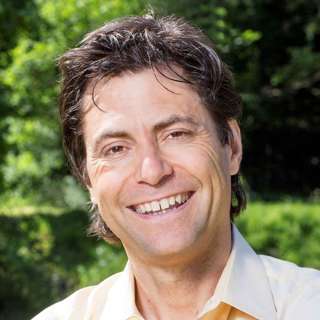
On January 1, 2015, physicist Max Tegmark gave up something most of us love to do: complain about things without ever trying to fix them.

That “put up or shut up” New Year’s resolution led to the first Puerto Rico conference and Open Letter on Artificial Intelligence — milestones for researchers taking the safe development of highly-capable AI systems seriously.

Links to learn more, summary and full transcript.

Max's primary work has been cosmology research at MIT, but his energetic and freewheeling nature has led him into so many other projects that you would be forgiven for forgetting it. In the 2010s he wrote two best-selling books, Our Mathematical Universe: My Quest for the Ultimate Nature of Reality, and Life 3.0: Being Human in the Age of Artificial Intelligence, and in 2014 founded a non-profit, the Future of Life Institute, which works to reduce all sorts of threats to humanity's future including nuclear war, synthetic biology, and AI.

Max has complained about many other things over the years, from killer robots to the impact of social media algorithms on the news we consume. True to his 'put up or shut up' resolution, he and his team went on to produce a video on so-called ‘Slaughterbots’ which attracted millions of views, and develop a website called 'Improve The News' to help readers separate facts from spin.

But given the stunning recent advances in capabilities — from OpenAI’s DALL-E to DeepMind’s Gato — AI itself remains top of his mind.

You can now give an AI system like GPT-3 the text: "I'm going to go to this mountain with the faces on it. What is the capital of the state to the east of the state that that's in?" And it gives the correct answer (Saint Paul, Minnesota) — something most AI researchers would have said was impossible without fundamental breakthroughs just seven years ago.

So back at MIT, he now leads a research group dedicated to what he calls “intelligible intelligence.” At the moment, AI systems are basically giant black boxes that magically do wildly impressive things. But for us to trust these systems, we need to understand them.

He says that training a black box that does something smart needs to just be stage one in a bigger process. Stage two is: “How do we get the knowledge out and put it in a safer system?”

Today’s conversation starts off giving a broad overview of the key questions about artificial intelligence: What's the potential? What are the threats? How might this story play out? What should we be doing to prepare?

Rob and Max then move on to recent advances in capabilities and alignment, the mood we should have, and possible ways we might misunderstand the problem.

They then spend roughly the last third talking about Max's current big passion: improving the news we consume — where Rob has a few reservations.

They also cover:

• Whether we could understand what superintelligent systems were doing
• The value of encouraging people to think about the positive future they want
• How to give machines goals
• Whether ‘Big Tech’ is following the lead of ‘Big Tobacco’
• Whether we’re sleepwalking into disaster
• Whether people actually just want their biases confirmed
• Why Max is worried about government-backed fact-checking
• And much more

Chapters:

  • Rob’s intro (00:00:00)
  • The interview begins (00:01:19)
  • How Max prioritises (00:12:33)
  • Intro to AI risk (00:15:47)
  • Superintelligence (00:35:56)
  • Imagining a wide range of possible futures (00:47:45)
  • Recent advances in capabilities and alignment (00:57:37)
  • How to give machines goals (01:13:13)
  • Regulatory capture (01:21:03)
  • How humanity fails to fulfil its potential (01:39:45)
  • Are we being hacked? (01:51:01)
  • Improving the news (02:05:31)
  • Do people actually just want their biases confirmed? (02:16:15)
  • Government-backed fact-checking (02:37:00)
  • Would a superintelligence seem like magic? (02:49:50)


Producer: Keiran Harris
Audio mastering: Ben Cordell
Transcriptions: Katy Moore

Jaksot(320)

#15 - Phil Tetlock on how chimps beat Berkeley undergrads and when it’s wise to defer to the wise

#15 - Phil Tetlock on how chimps beat Berkeley undergrads and when it’s wise to defer to the wise

Prof Philip Tetlock is a social science legend. Over forty years he has researched whose predictions we can trust, whose we can’t and why - and developed methods that allow all of us to be better at p...

20 Marras 20171h 24min
#14 - Sharon Nunez & Jose Valle on going undercover to expose animal abuse

#14 - Sharon Nunez & Jose Valle on going undercover to expose animal abuse

What if you knew that ducks were being killed with pitchforks? Rabbits dumped alive into containers? Or pigs being strangled with forklifts? Would you be willing to go undercover to expose the crime? ...

13 Marras 20171h 25min

#13 - Claire Walsh on testing which policies work & how to get governments to listen to the results

#13 - Claire Walsh on testing which policies work & how to get governments to listen to the results

In both rich and poor countries, government policy is often based on no evidence at all and many programs don’t work. This has particularly harsh effects on the global poor - in some countries governm...

31 Loka 201752min
#12 - Beth Cameron works to stop you dying in a pandemic. Here’s what keeps her up at night.

#12 - Beth Cameron works to stop you dying in a pandemic. Here’s what keeps her up at night.

“When you're in the middle of a crisis and you have to ask for money, you're already too late.” That’s Dr Beth Cameron, who leads Global Biological Policy and Programs at the Nuclear Threat Initiative...

25 Loka 20171h 45min

#11 - Spencer Greenberg on speeding up social science 10-fold & why plenty of startups cause harm

#11 - Spencer Greenberg on speeding up social science 10-fold & why plenty of startups cause harm

Do most meat eaters think it’s wrong to hurt animals? Do Americans think climate change is likely to cause human extinction? What is the best, state-of-the-art therapy for depression? How can we make ...

17 Loka 20171h 29min

#10 - Nick Beckstead on how to spend billions of dollars preventing human extinction

#10 - Nick Beckstead on how to spend billions of dollars preventing human extinction

What if you were in a position to give away billions of dollars to improve the world? What would you do with it? This is the problem facing Program Officers at the Open Philanthropy Project - people l...

11 Loka 20171h 51min
#9 - Christine Peterson on how insecure computers could lead to global disaster, and how to fix it

#9 - Christine Peterson on how insecure computers could lead to global disaster, and how to fix it

Take a trip to Silicon Valley in the 70s and 80s, when going to space sounded like a good way to get around environmental limits, people started cryogenically freezing themselves, and nanotechnology l...

4 Loka 20171h 45min
#8 - Lewis Bollard on how to end factory farming in our lifetimes

#8 - Lewis Bollard on how to end factory farming in our lifetimes

Every year tens of billions of animals are raised in terrible conditions in factory farms before being killed for human consumption. Over the last two years Lewis Bollard – Project Officer for Farm An...

27 Syys 20173h 16min

Suosittua kategoriassa Koulutus

rss-murhan-anatomia
psykopodiaa-podcast
rss-narsisti
voi-hyvin-meditaatiot-2
aamukahvilla
rss-vapaudu-voimaasi
psykologia
rss-liian-kuuma-peruna
dear-ladies
leveli
adhd-podi
kesken
rss-duodecim-lehti
aloita-meditaatio
ihminen-tavattavissa-tommy-hellsten-instituutti
rss-koira-haudattuna
rahapuhetta
ilona-rauhala
rss-niinku-asia-on
rss-luonnollinen-synnytys-podcast