
#139 – Alan Hájek on puzzles and paradoxes in probability and expected value

#139 – Alan Hájek on puzzles and paradoxes in probability and expected value

A casino offers you a game. A coin will be tossed. If it comes up heads on the first flip you win $2. If it comes up on the second flip you win $4. If it comes up on the third you win $8, the fourth you win $16, and so on. How much should you be willing to pay to play?

The standard way of analysing gambling problems, ‘expected value’ — in which you multiply probabilities by the value of each outcome and then sum them up — says your expected earnings are infinite. You have a 50% chance of winning $2, for '0.5 * $2 = $1' in expected earnings. A 25% chance of winning $4, for '0.25 * $4 = $1' in expected earnings, and on and on. A never-ending series of $1s added together comes to infinity. And that's despite the fact that you know with certainty you can only ever win a finite amount!

Today's guest — philosopher Alan Hájek of the Australian National University — thinks of much of philosophy as “the demolition of common sense followed by damage control” and is an expert on paradoxes related to probability and decision-making rules like “maximise expected value.”

Links to learn more, summary and full transcript.

The problem described above, known as the St. Petersburg paradox, has been a staple of the field since the 18th century, with many proposed solutions. In the interview, Alan explains how very natural attempts to resolve the paradox — such as factoring in the low likelihood that the casino can pay out very large sums, or the fact that money becomes less and less valuable the more of it you already have — fail to work as hoped.

We might reject the setup as a hypothetical that could never exist in the real world, and therefore of mere intellectual curiosity. But Alan doesn't find that objection persuasive. If expected value fails in extreme cases, that should make us worry that something could be rotten at the heart of the standard procedure we use to make decisions in government, business, and nonprofits.

These issues regularly show up in 80,000 Hours' efforts to try to find the best ways to improve the world, as the best approach will arguably involve long-shot attempts to do very large amounts of good.

Consider which is better: saving one life for sure, or three lives with 50% probability? Expected value says the second, which will probably strike you as reasonable enough. But what if we repeat this process and evaluate the chance to save nine lives with 25% probability, or 27 lives with 12.5% probability, or after 17 more iterations, 3,486,784,401 lives with a 0.00000009% chance. Expected value says this final offer is better than the others — 1,000 times better, in fact.

Ultimately Alan leans towards the view that our best choice is to “bite the bullet” and stick with expected value, even with its sometimes counterintuitive implications. Where we want to do damage control, we're better off looking for ways our probability estimates might be wrong.

In today's conversation, Alan and Rob explore these issues and many others:

• Simple rules of thumb for having philosophical insights
• A key flaw that hid in Pascal's wager from the very beginning
• Whether we have to simply ignore infinities because they mess everything up
• What fundamentally is 'probability'?
• Some of the many reasons 'frequentism' doesn't work as an account of probability
• Why the standard account of counterfactuals in philosophy is deeply flawed
• And why counterfactuals present a fatal problem for one sort of consequentialism

Chapters:

  • Rob’s intro (00:00:00)
  • The interview begins (00:01:48)
  • Philosophical methodology (00:02:54)
  • Theories of probability (00:37:17)
  • Everyday Bayesianism (00:46:01)
  • Frequentism (01:04:56)
  • Ranges of probabilities (01:16:23)
  • Implications for how to live (01:21:24)
  • Expected value (01:26:58)
  • The St. Petersburg paradox (01:31:40)
  • Pascal's wager (01:49:44)
  • Using expected value in everyday life (02:03:53)
  • Counterfactuals (02:16:38)
  • Most counterfactuals are false (02:52:25)
  • Relevance to objective consequentialism (03:09:47)
  • Marker 18 (03:10:21)
  • Alan’s best conference story (03:33:37)


Producer: Keiran Harris
Audio mastering: Ben Cordell and Ryan Kessler
Transcriptions: Katy Moore

Jaksot(320)

2025 Highlight-o-thon: Oops! All Bests

2025 Highlight-o-thon: Oops! All Bests

It’s that magical time of year once again — highlightapalooza! Stick around for one top bit from each episode we recorded this year, including:Kyle Fish explaining how Anthropic’s AI Claude descends i...

29 Joulu 20251h 40min

#232 – Andreas Mogensen on what we owe 'philosophical Vulcans' and unconscious beings

#232 – Andreas Mogensen on what we owe 'philosophical Vulcans' and unconscious beings

Most debates about the moral status of AI systems circle the same question: is there something that it feels like to be them? But what if that’s the wrong question to ask? Andreas Mogensen — a senior ...

19 Joulu 20252h 37min
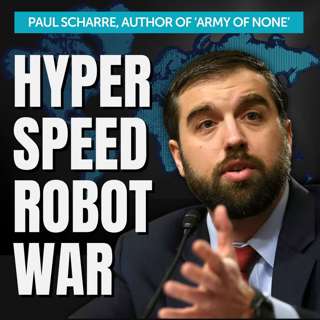
#231 – Paul Scharre on how AI-controlled robots will and won't change war

#231 – Paul Scharre on how AI-controlled robots will and won't change war

In 1983, Stanislav Petrov, a Soviet lieutenant colonel, sat in a bunker watching a red screen flash “MISSILE LAUNCH.” Protocol demanded he report it to superiors, which would very likely trigger a ret...

17 Joulu 20252h 45min

AI might let a few people control everything — permanently (article by Rose Hadshar)

AI might let a few people control everything — permanently (article by Rose Hadshar)

Power is already concentrated today: over 800 million people live on less than $3 a day, the three richest men in the world are worth over $1 trillion, and almost six billion people live in countries ...

12 Joulu 20251h
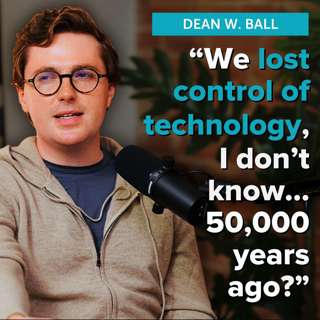
#230 – Dean Ball on how AI is a huge deal — but we shouldn’t regulate it yet

#230 – Dean Ball on how AI is a huge deal — but we shouldn’t regulate it yet

Former White House staffer Dean Ball thinks it's very likely some form of 'superintelligence' arrives in under 20 years. He thinks AI being used for bioweapon research is "a real threat model, obvious...

10 Joulu 20252h 54min

#229 – Marius Hobbhahn on the race to solve AI scheming before models go superhuman

#229 – Marius Hobbhahn on the race to solve AI scheming before models go superhuman

We often worry about AI models “hallucinating” or making honest mistakes. But what happens when a model knows the truth, but decides to deceive you anyway to achieve a goal of its own? This isn’t sci-...

3 Joulu 20253h 3min

Rob & Luisa chat kids, the 2016 fertility crash, and how the 50s invented parenting that makes us miserable

Rob & Luisa chat kids, the 2016 fertility crash, and how the 50s invented parenting that makes us miserable

Global fertility rates aren’t just falling: the rate of decline is accelerating. From 2006 to 2016, fertility dropped gradually, but since 2016 the rate of decline has increased 4.5-fold. In many weal...

25 Marras 20251h 59min

#228 – Eileen Yam on how we're completely out of touch with what the public thinks about AI

#228 – Eileen Yam on how we're completely out of touch with what the public thinks about AI

If you work in AI, you probably think it’s going to boost productivity, create wealth, advance science, and improve your life. If you’re a member of the American public, you probably strongly disagree...

20 Marras 20251h 43min

Suosittua kategoriassa Koulutus

rss-murhan-anatomia
psykopodiaa-podcast
rss-narsisti
voi-hyvin-meditaatiot-2
aamukahvilla
rss-vapaudu-voimaasi
rss-niinku-asia-on
psykologia
rss-liian-kuuma-peruna
adhd-podi
kesken
dear-ladies
leveli
rss-duodecim-lehti
rss-koira-haudattuna
rss-luonnollinen-synnytys-podcast
rahapuhetta
aloita-meditaatio
ihminen-tavattavissa-tommy-hellsten-instituutti
rss-ai-mita-siskopodcast