
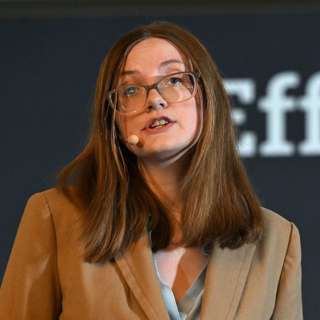
#81 Classic episode - Ben Garfinkel on scrutinising classic AI risk arguments

#81 Classic episode - Ben Garfinkel on scrutinising classic AI risk arguments

Rebroadcast: this episode was originally released in July 2020.

80,000 Hours, along with many other members of the effective altruism movement, has argued that helping to positively shape the development of artificial intelligence may be one of the best ways to have a lasting, positive impact on the long-term future. Millions of dollars in philanthropic spending, as well as lots of career changes, have been motivated by these arguments.

Today’s guest, Ben Garfinkel, Research Fellow at Oxford’s Future of Humanity Institute, supports the continued expansion of AI safety as a field and believes working on AI is among the very best ways to have a positive impact on the long-term future. But he also believes the classic AI risk arguments have been subject to insufficient scrutiny given this level of investment.

In particular, the case for working on AI if you care about the long-term future has often been made on the basis of concern about AI accidents; it’s actually quite difficult to design systems that you can feel confident will behave the way you want them to in all circumstances.

Nick Bostrom wrote the most fleshed out version of the argument in his book, Superintelligence. But Ben reminds us that, apart from Bostrom’s book and essays by Eliezer Yudkowsky, there's very little existing writing on existential accidents.

Links to learn more, summary and full transcript.

There have also been very few skeptical experts that have actually sat down and fully engaged with it, writing down point by point where they disagree or where they think the mistakes are. This means that Ben has probably scrutinised classic AI risk arguments as carefully as almost anyone else in the world.

He thinks that most of the arguments for existential accidents often rely on fuzzy, abstract concepts like optimisation power or general intelligence or goals, and toy thought experiments. And he doesn’t think it’s clear we should take these as a strong source of evidence.

Ben’s also concerned that these scenarios often involve massive jumps in the capabilities of a single system, but it's really not clear that we should expect such jumps or find them plausible. These toy examples also focus on the idea that because human preferences are so nuanced and so hard to state precisely, it should be quite difficult to get a machine that can understand how to obey them.

But Ben points out that it's also the case in machine learning that we can train lots of systems to engage in behaviours that are actually quite nuanced and that we can't specify precisely. If AI systems can recognise faces from images, and fly helicopters, why don’t we think they’ll be able to understand human preferences?

Despite these concerns, Ben is still fairly optimistic about the value of working on AI safety or governance.

He doesn’t think that there are any slam-dunks for improving the future, and so the fact that there are at least plausible pathways for impact by working on AI safety and AI governance, in addition to it still being a very neglected area, puts it head and shoulders above most areas you might choose to work in.

This is the second episode hosted by Howie Lempel, and he and Ben cover, among many other things:

• The threat of AI systems increasing the risk of permanently damaging conflict or collapse
• The possibility of permanently locking in a positive or negative future
• Contenders for types of advanced systems
• What role AI should play in the effective altruism portfolio

Get this episode by subscribing: type 80,000 Hours into your podcasting app. Or read the linked transcript.

Producer: Keiran Harris.
Audio mastering: Ben Cordell.
Transcript for this episode: Zakee Ulhaq.

Jaksot(325)

#207 – Sarah Eustis-Guthrie on why she shut down her charity, and why more founders should follow her lead

#207 – Sarah Eustis-Guthrie on why she shut down her charity, and why more founders should follow her lead

"I think one of the reasons I took [shutting down my charity] so hard is because entrepreneurship is all about this bets-based mindset. So you say, “I’m going to take a bunch of bets. I’m going to tak...

14 Marras 20242h 58min

Parenting insights from Rob and 8 past guests

Parenting insights from Rob and 8 past guests

With kids very much on the team's mind we thought it would be fun to review some comments about parenting featured on the show over the years, then have hosts Luisa Rodriguez and Rob Wiblin react to t...

8 Marras 20241h 35min
#206 – Anil Seth on the predictive brain and how to study consciousness

#206 – Anil Seth on the predictive brain and how to study consciousness

"In that famous example of the dress, half of the people in the world saw [blue and black], half saw [white and gold]. It turns out there’s individual differences in how brains take into account ambie...

1 Marras 20242h 33min
How much does a vote matter? (Article)

How much does a vote matter? (Article)

If you care about social impact, is voting important? In this piece, Rob investigates the two key things that determine the impact of your vote:The chances of your vote changing an election’s outcome....

28 Loka 202432min
#205 – Sébastien Moro on the most insane things fish can do

#205 – Sébastien Moro on the most insane things fish can do

"You have a tank split in two parts: if the fish gets in the compartment with a red circle, it will receive food, and food will be delivered in the other tank as well. If the fish takes the blue trian...

23 Loka 20243h 11min

#204 – Nate Silver on making sense of SBF, and his biggest critiques of effective altruism

#204 – Nate Silver on making sense of SBF, and his biggest critiques of effective altruism

Rob Wiblin speaks with FiveThirtyEight election forecaster and author Nate Silver about his new book: On the Edge: The Art of Risking Everything.Links to learn more, highlights, video, and full transc...

16 Loka 20241h 57min

#203 – Peter Godfrey-Smith on interfering with wild nature, accepting death, and the origin of complex civilisation

#203 – Peter Godfrey-Smith on interfering with wild nature, accepting death, and the origin of complex civilisation

"In the human case, it would be mistaken to give a kind of hour-by-hour accounting. You know, 'I had +4 level of experience for this hour, then I had -2 for the next hour, and then I had -1' — and you...

3 Loka 20241h 25min

Luisa and Keiran on free will, and the consequences of never feeling enduring guilt or shame

Luisa and Keiran on free will, and the consequences of never feeling enduring guilt or shame

In this episode from our second show, 80k After Hours, Luisa Rodriguez and Keiran Harris chat about the consequences of letting go of enduring guilt, shame, anger, and pride.Links to learn more, highl...

27 Syys 20241h 36min

Suosittua kategoriassa Koulutus

rss-murhan-anatomia
voi-hyvin-meditaatiot-2
rss-narsisti
adhd-podi
psykopodiaa-podcast
rss-uskonto-on-tylsaa
rss-rahamania
rss-duodecim-lehti
rss-valo-minussa-2
rss-vapaudu-voimaasi
rss-liian-kuuma-peruna
rahapuhetta
rss-niinku-asia-on
aloita-meditaatio
kesken
dear-ladies
mielipaivakirja
rss-eron-alkemiaa
rss-tietoinen-yhteys-podcast-2
aamukahvilla