#144 – Athena Aktipis on why cancer is actually one of our universe's most fundamental phenomena

#144 – Athena Aktipis on why cancer is actually one of our universe's most fundamental phenomena

What’s the opposite of cancer?

If you answered “cure,” “antidote,” or “antivenom” — you’ve obviously been reading the antonym section at www.merriam-webster.com/thesaurus/cancer.

But today’s guest Athena Aktipis says that the opposite of cancer is us: it's having a functional multicellular body that’s cooperating effectively in order to make that multicellular body function.

If, like us, you found her answer far more satisfying than the dictionary, maybe you could consider closing your dozens of merriam-webster.com tabs, and start listening to this podcast instead.

Links to learn more, summary and full transcript.

As Athena explains in her book The Cheating Cell, what we see with cancer is a breakdown in each of the foundations of cooperation that allowed multicellularity to arise:

  • Cells will proliferate when they shouldn't.
  • Cells won't die when they should.
  • Cells won't engage in the kind of division of labour that they should.
  • Cells won’t do the jobs that they're supposed to do.
  • Cells will monopolise resources.
  • And cells will trash the environment.

When we think about animals in the wild, or even bacteria living inside our cells, we understand that they're facing evolutionary pressures to figure out how they can replicate more; how they can get more resources; and how they can avoid predators — like lions, or antibiotics.

We don’t normally think of individual cells as acting as if they have their own interests like this. But cancer cells are actually facing similar kinds of evolutionary pressures within our bodies, with one major difference: they replicate much, much faster.

Incredibly, the opportunity for evolution by natural selection to operate just over the course of cancer progression is easily faster than all of the evolutionary time that we have had as humans since *Homo sapiens* came about.

Here’s a quote from Athena:

“So you have to shift your thinking to be like: the body is a world with all these different ecosystems in it, and the cells are existing on a time scale where, if we're going to map it onto anything like what we experience, a day is at least 10 years for them, right? So it's a very, very different way of thinking.”

You can find compelling examples of cooperation and conflict all over the universe, so Rob and Athena don’t stop with cancer. They also discuss:

  • Cheating within cells themselves
  • Cooperation in human societies as they exist today — and perhaps in the future, between civilisations spread across different planets or stars
  • Whether it’s too out-there to think of humans as engaging in cancerous behaviour
  • Why elephants get deadly cancers less often than humans, despite having way more cells
  • When a cell should commit suicide
  • The strategy of deliberately not treating cancer aggressively
  • Superhuman cooperation

And at the end of the episode, they cover Athena’s new book Everything is Fine! How to Thrive in the Apocalypse, including:

  • Staying happy while thinking about the apocalypse
  • Practical steps to prepare for the apocalypse
  • And whether a zombie apocalypse is already happening among Tasmanian devils

And if you’d rather see Rob and Athena’s facial expressions as they laugh and laugh while discussing cancer and the apocalypse — you can watch the video of the full interview.

Get this episode by subscribing to our podcast on the world’s most pressing problems and how to solve them: type 80,000 Hours into your podcasting app.

Producer: Keiran Harris
Audio mastering: Milo McGuire
Transcriptions: Katy Moore

Jaksot(322)

#223 – Neel Nanda on leading a Google DeepMind team at 26 – and advice if you want to work at an AI company (part 2)

#223 – Neel Nanda on leading a Google DeepMind team at 26 – and advice if you want to work at an AI company (part 2)

At 26, Neel Nanda leads an AI safety team at Google DeepMind, has published dozens of influential papers, and mentored 50 junior researchers — seven of whom now work at major AI companies. His secret?...

15 Syys 20251h 46min
#222 – Can we tell if an AI is loyal by reading its mind? DeepMind's Neel Nanda (part 1)

#222 – Can we tell if an AI is loyal by reading its mind? DeepMind's Neel Nanda (part 1)

We don’t know how AIs think or why they do what they do. Or at least, we don’t know much. That fact is only becoming more troubling as AIs grow more capable and appear on track to wield enormous cultu...

8 Syys 20253h 1min
#221 – Kyle Fish on the most bizarre findings from 5 AI welfare experiments

#221 – Kyle Fish on the most bizarre findings from 5 AI welfare experiments

What happens when you lock two AI systems in a room together and tell them they can discuss anything they want?According to experiments run by Kyle Fish — Anthropic’s first AI welfare researcher — som...

28 Elo 20252h 28min

How not to lose your job to AI (article by Benjamin Todd)

How not to lose your job to AI (article by Benjamin Todd)

About half of people are worried they’ll lose their job to AI. They’re right to be concerned: AI can now complete real-world coding tasks on GitHub, generate photorealistic video, drive a taxi more sa...

31 Heinä 202551min

Rebuilding after apocalypse: What 13 experts say about bouncing back

Rebuilding after apocalypse: What 13 experts say about bouncing back

What happens when civilisation faces its greatest tests?This compilation brings together insights from researchers, defence experts, philosophers, and policymakers on humanity’s ability to survive and...

15 Heinä 20254h 26min
#220 – Ryan Greenblatt on the 4 most likely ways for AI to take over, and the case for and against AGI in <8 years

#220 – Ryan Greenblatt on the 4 most likely ways for AI to take over, and the case for and against AGI in <8 years

Ryan Greenblatt — lead author on the explosive paper “Alignment faking in large language models” and chief scientist at Redwood Research — thinks there’s a 25% chance that within four years, AI will b...

8 Heinä 20252h 50min
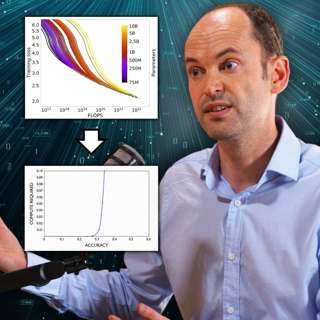
#219 – Toby Ord on graphs AI companies would prefer you didn't (fully) understand

#219 – Toby Ord on graphs AI companies would prefer you didn't (fully) understand

The era of making AI smarter just by making it bigger is ending. But that doesn’t mean progress is slowing down — far from it. AI models continue to get much more powerful, just using very different m...

24 Kesä 20252h 48min
#218 – Hugh White on why Trump is abandoning US hegemony – and that’s probably good

#218 – Hugh White on why Trump is abandoning US hegemony – and that’s probably good

For decades, US allies have slept soundly under the protection of America’s overwhelming military might. Donald Trump — with his threats to ditch NATO, seize Greenland, and abandon Taiwan — seems hell...

12 Kesä 20252h 48min

Suosittua kategoriassa Koulutus

rss-murhan-anatomia
voi-hyvin-meditaatiot-2
rss-narsisti
psykopodiaa-podcast
rss-liian-kuuma-peruna
rss-vapaudu-voimaasi
psykologia
kesken
rss-niinku-asia-on
rss-luonnollinen-synnytys-podcast
rss-hereilla
ihminen-tavattavissa-tommy-hellsten-instituutti
rss-valo-minussa-2
rss-tietoinen-yhteys-podcast-2
rss-uskonto-on-tylsaa
rss-duodecim-lehti
rss-sielun-aani-podcast
aloita-meditaatio
esa-saarinen-filosofia-ja-systeemiajattelu
rss-arkea-ja-aurinkoa-podcast-espanjasta