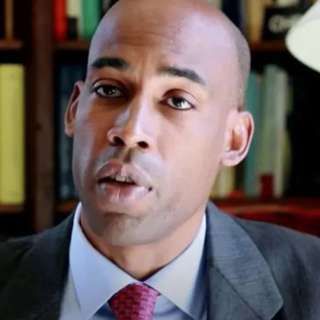

#145 – Christopher Brown on why slavery abolition wasn't inevitable

#145 – Christopher Brown on why slavery abolition wasn't inevitable

In many ways, humanity seems to have become more humane and inclusive over time. While there’s still a lot of progress to be made, campaigns to give people of different genders, races, sexualities, ethnicities, beliefs, and abilities equal treatment and rights have had significant success.

It’s tempting to believe this was inevitable — that the arc of history “bends toward justice,” and that as humans get richer, we’ll make even more moral progress.

But today's guest Christopher Brown — a professor of history at Columbia University and specialist in the abolitionist movement and the British Empire during the 18th and 19th centuries — believes the story of how slavery became unacceptable suggests moral progress is far from inevitable.

Links to learn more, video, highlights, and full transcript.

While most of us today feel that the abolition of slavery was sure to happen sooner or later as humans became richer and more educated, Christopher doesn't believe any of the arguments for that conclusion pass muster. If he's right, a counterfactual history where slavery remains widespread in 2023 isn't so far-fetched.

As Christopher lays out in his two key books, Moral Capital: Foundations of British Abolitionism and Arming Slaves: From Classical Times to the Modern Age, slavery has been ubiquitous throughout history. Slavery of some form was fundamental in Classical Greece, the Roman Empire, in much of the Islamic civilization, in South Asia, and in parts of early modern East Asia, Korea, China.

It was justified on all sorts of grounds that sound mad to us today. But according to Christopher, while there’s evidence that slavery was questioned in many of these civilisations, and periodically attacked by slaves themselves, there was no enduring or successful moral advocacy against slavery until the British abolitionist movement of the 1700s.

That movement first conquered Britain and its empire, then eventually the whole world. But the fact that there's only a single time in history that a persistent effort to ban slavery got off the ground is a big clue that opposition to slavery was a contingent matter: if abolition had been inevitable, we’d expect to see multiple independent abolitionist movements thoroughly history, providing redundancy should any one of them fail.

Christopher argues that this rarity is primarily down to the enormous economic and cultural incentives to deny the moral repugnancy of slavery, and crush opposition to it with violence wherever necessary.

Mere awareness is insufficient to guarantee a movement will arise to fix a problem. Humanity continues to allow many severe injustices to persist, despite being aware of them. So why is it so hard to imagine we might have done the same with forced labour?

In this episode, Christopher describes the unique and peculiar set of political, social and religious circumstances that gave rise to the only successful and lasting anti-slavery movement in human history. These circumstances were sufficiently improbable that Christopher believes there are very nearby worlds where abolitionism might never have taken off.

We also discuss:

  • Various instantiations of slavery throughout human history
  • Signs of antislavery sentiment before the 17th century
  • The role of the Quakers in early British abolitionist movement
  • The importance of individual “heroes” in the abolitionist movement
  • Arguments against the idea that the abolition of slavery was contingent
  • Whether there have ever been any major moral shifts that were inevitable

Get this episode by subscribing to our podcast on the world’s most pressing problems and how to solve them: type 80,000 Hours into your podcasting app.

Producer: Keiran Harris
Audio mastering: Milo McGuire
Transcriptions: Katy Moore

Jaksot(325)

#12 - Beth Cameron works to stop you dying in a pandemic. Here’s what keeps her up at night.

#12 - Beth Cameron works to stop you dying in a pandemic. Here’s what keeps her up at night.

“When you're in the middle of a crisis and you have to ask for money, you're already too late.” That’s Dr Beth Cameron, who leads Global Biological Policy and Programs at the Nuclear Threat Initiative...

25 Loka 20171h 45min

#11 - Spencer Greenberg on speeding up social science 10-fold & why plenty of startups cause harm

#11 - Spencer Greenberg on speeding up social science 10-fold & why plenty of startups cause harm

Do most meat eaters think it’s wrong to hurt animals? Do Americans think climate change is likely to cause human extinction? What is the best, state-of-the-art therapy for depression? How can we make ...

17 Loka 20171h 29min
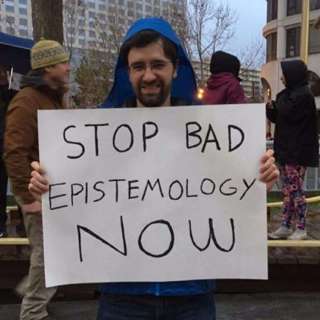
#10 - Nick Beckstead on how to spend billions of dollars preventing human extinction

#10 - Nick Beckstead on how to spend billions of dollars preventing human extinction

What if you were in a position to give away billions of dollars to improve the world? What would you do with it? This is the problem facing Program Officers at the Open Philanthropy Project - people l...

11 Loka 20171h 51min
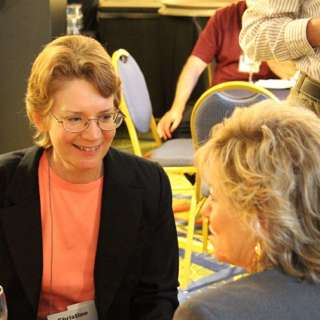
#9 - Christine Peterson on how insecure computers could lead to global disaster, and how to fix it

#9 - Christine Peterson on how insecure computers could lead to global disaster, and how to fix it

Take a trip to Silicon Valley in the 70s and 80s, when going to space sounded like a good way to get around environmental limits, people started cryogenically freezing themselves, and nanotechnology l...

4 Loka 20171h 45min
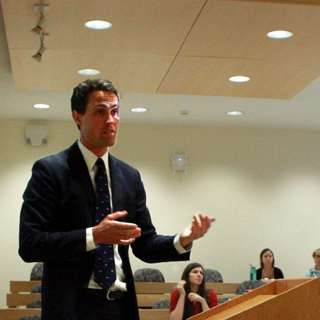
#8 - Lewis Bollard on how to end factory farming in our lifetimes

#8 - Lewis Bollard on how to end factory farming in our lifetimes

Every year tens of billions of animals are raised in terrible conditions in factory farms before being killed for human consumption. Over the last two years Lewis Bollard – Project Officer for Farm An...

27 Syys 20173h 16min

#7 - Julia Galef on making humanity more rational, what EA does wrong, and why Twitter isn’t all bad

#7 - Julia Galef on making humanity more rational, what EA does wrong, and why Twitter isn’t all bad

The scientific revolution in the 16th century was one of the biggest societal shifts in human history, driven by the discovery of new and better methods of figuring out who was right and who was wrong...

13 Syys 20171h 14min

#6 - Toby Ord on why the long-term future matters more than anything else & what to do about it

#6 - Toby Ord on why the long-term future matters more than anything else & what to do about it

Of all the people whose well-being we should care about, only a small fraction are alive today. The rest are members of future generations who are yet to exist. Whether they’ll be born into a world th...

6 Syys 20172h 8min

#5 - Alex Gordon-Brown on how to donate millions in your 20s working in quantitative trading

#5 - Alex Gordon-Brown on how to donate millions in your 20s working in quantitative trading

Quantitative financial trading is one of the highest paying parts of the world’s highest paying industry. 25 to 30 year olds with outstanding maths skills can earn millions a year in an obscure set of...

28 Elo 20171h 45min

Suosittua kategoriassa Koulutus

rss-murhan-anatomia
voi-hyvin-meditaatiot-2
rss-narsisti
psykopodiaa-podcast
adhd-podi
rss-rahamania
rss-valo-minussa-2
rss-vapaudu-voimaasi
rss-niinku-asia-on
mielipaivakirja
rss-uskonto-on-tylsaa
aamukahvilla
rss-duodecim-lehti
ilona-rauhala
kesken
psykologia
rss-eron-alkemiaa
rss-koira-haudattuna
rss-arkea-ja-aurinkoa-podcast-espanjasta
ihminen-tavattavissa-tommy-hellsten-instituutti