
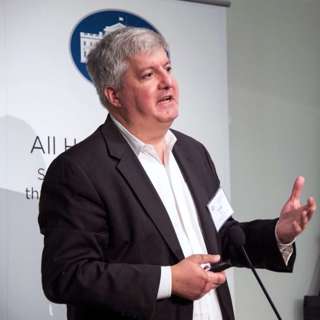
#147 – Spencer Greenberg on stopping valueless papers from getting into top journals
80,000 Hours Podcast24 Maalis 2023

#147 – Spencer Greenberg on stopping valueless papers from getting into top journals

Can you trust the things you read in published scientific research? Not really. About 40% of experiments in top social science journals don't get the same result if the experiments are repeated.

Two key reasons are 'p-hacking' and 'publication bias'. P-hacking is when researchers run a lot of slightly different statistical tests until they find a way to make findings appear statistically significant when they're actually not — a problem first discussed over 50 years ago. And because journals are more likely to publish positive than negative results, you might be reading about the one time an experiment worked, while the 10 times was run and got a 'null result' never saw the light of day. The resulting phenomenon of publication bias is one we've understood for 60 years.

Today's repeat guest, social scientist and entrepreneur Spencer Greenberg, has followed these issues closely for years.

Links to learn more, summary and full transcript.

He recently checked whether p-values, an indicator of how likely a result was to occur by pure chance, could tell us how likely an outcome would be to recur if an experiment were repeated. From his sample of 325 replications of psychology studies, the answer seemed to be yes. According to Spencer, "when the original study's p-value was less than 0.01 about 72% replicated — not bad. On the other hand, when the p-value is greater than 0.01, only about 48% replicated. A pretty big difference."

To do his bit to help get these numbers up, Spencer has launched an effort to repeat almost every social science experiment published in the journals Nature and Science, and see if they find the same results.

But while progress is being made on some fronts, Spencer thinks there are other serious problems with published research that aren't yet fully appreciated. One of these Spencer calls 'importance hacking': passing off obvious or unimportant results as surprising and meaningful.

Spencer suspects that importance hacking of this kind causes a similar amount of damage to the issues mentioned above, like p-hacking and publication bias, but is much less discussed. His replication project tries to identify importance hacking by comparing how a paper’s findings are described in the abstract to what the experiment actually showed. But the cat-and-mouse game between academics and journal reviewers is fierce, and it's far from easy to stop people exaggerating the importance of their work.

In this wide-ranging conversation, Rob and Spencer discuss the above as well as:
• When you should and shouldn't use intuition to make decisions.
• How to properly model why some people succeed more than others.
• The difference between “Soldier Altruists” and “Scout Altruists.”
• A paper that tested dozens of methods for forming the habit of going to the gym, why Spencer thinks it was presented in a very misleading way, and what it really found.
• Whether a 15-minute intervention could make people more likely to sustain a new habit two months later.
• The most common way for groups with good intentions to turn bad and cause harm.
• And Spencer's approach to a fulfilling life and doing good, which he calls “Valuism.”

Here are two flashcard decks that might make it easier to fully integrate the most important ideas they talk about:
• The first covers 18 core concepts from the episode
• The second includes 16 definitions of unusual terms.

Chapters:

  • Rob’s intro (00:00:00)
  • The interview begins (00:02:16)
  • Social science reform (00:08:46)
  • Importance hacking (00:18:23)
  • How often papers replicate with different p-values (00:43:31)
  • The Transparent Replications project (00:48:17)
  • How do we predict high levels of success? (00:55:26)
  • Soldier Altruists vs. Scout Altruists (01:08:18)
  • The Clearer Thinking podcast (01:16:27)
  • Creating habits more reliably (01:18:16)
  • Behaviour change is incredibly hard (01:32:27)
  • The FIRE Framework (01:46:21)
  • How ideology eats itself (01:54:56)
  • Valuism (02:08:31)
  • “I dropped the whip” (02:35:06)
  • Rob’s outro (02:36:40)

Producer: Keiran Harris
Audio mastering: Ben Cordell and Milo McGuire
Transcriptions: Katy Moore

Jaksot(332)

#57 – Tom Kalil on how to do the most good in government

#57 – Tom Kalil on how to do the most good in government

You’re 29 years old, and you’ve just been given a job in the White House. How do you quickly figure out how the US Executive Branch behemoth actually works, so that you can have as much impact as poss...

23 Huhti 20192h 50min

#56 - Persis Eskander on wild animal welfare and what, if anything, to do about it

#56 - Persis Eskander on wild animal welfare and what, if anything, to do about it

Elephants in chains at travelling circuses; pregnant pigs trapped in coffin sized crates at factory farms; deers living in the wild. We should welcome the last as a pleasant break from the horror, rig...

15 Huhti 20192h 57min

#55 – Lutter & Winter on founding charter cities with outstanding governance to end poverty

#55 – Lutter & Winter on founding charter cities with outstanding governance to end poverty

Governance matters. Policy change quickly took China from famine to fortune; Singapore from swamps to skyscrapers; and Hong Kong from fishing village to financial centre. Unfortunately, many governmen...

31 Maalis 20192h 31min

#54 – OpenAI on publication norms, malicious uses of AI, and general-purpose learning algorithms

#54 – OpenAI on publication norms, malicious uses of AI, and general-purpose learning algorithms

OpenAI’s Dactyl is an AI system that can manipulate objects with a human-like robot hand. OpenAI Five is an AI system that can defeat humans at the video game Dota 2. The strange thing is they were bo...

19 Maalis 20192h 53min

#53 - Kelsey Piper on the room for important advocacy within journalism

#53 - Kelsey Piper on the room for important advocacy within journalism

“Politics. Business. Opinion. Science. Sports. Animal welfare. Existential risk.” Is this a plausible future lineup for major news outlets? Funded by the Rockefeller Foundation and given very little ...

27 Helmi 20192h 34min

Julia Galef and Rob Wiblin on an updated view of the best ways to help humanity

Julia Galef and Rob Wiblin on an updated view of the best ways to help humanity

This is a cross-post of an interview Rob did with Julia Galef on her podcast Rationally Speaking. Rob and Julia discuss how the career advice 80,000 Hours gives has changed over the years, and the big...

17 Helmi 201956min
#52 - Glen Weyl on uprooting capitalism and democracy for a just society

#52 - Glen Weyl on uprooting capitalism and democracy for a just society

Pro-market economists love to wax rhapsodic about the capacity of markets to pull together the valuable local information spread across all of society about what people want and how to make it. But wh...

8 Helmi 20192h 44min

#51 - Martin Gurri on the revolt of the public & crisis of authority in the information age

#51 - Martin Gurri on the revolt of the public & crisis of authority in the information age

Politics in rich countries seems to be going nuts. What's the explanation? Rising inequality? The decline of manufacturing jobs? Excessive immigration? Martin Gurri spent decades as a CIA analyst and...

29 Tammi 20192h 31min

Suosittua kategoriassa Koulutus

rss-murhan-anatomia
psykopodiaa-podcast
voi-hyvin-meditaatiot-2
adhd-podi
rss-tietoinen-yhteys-podcast-2
rss-valo-minussa-2
psykologia
rss-liian-kuuma-peruna
rss-rahamania
kesken
rss-niinku-asia-on
rss-arkea-ja-aurinkoa-podcast-espanjasta
rahapuhetta
rss-uskonto-on-tylsaa
rss-vapaudu-voimaasi
jari-sarasvuo-podcast
ihminen-tavattavissa-tommy-hellsten-instituutti
rss-hereilla
aamukahvilla
dear-ladies



















