#148 – Johannes Ackva on unfashionable climate interventions that work, and fashionable ones that don't

#148 – Johannes Ackva on unfashionable climate interventions that work, and fashionable ones that don't

If you want to work to tackle climate change, you should try to reduce expected carbon emissions by as much as possible, right? Strangely, no.

Today's guest, Johannes Ackva — the climate research lead at Founders Pledge, where he advises major philanthropists on their giving — thinks the best strategy is actually pretty different, and one few are adopting.

In reality you don't want to reduce emissions for its own sake, but because emissions will translate into temperature increases, which will cause harm to people and the environment.

Links to learn more, summary and full transcript.

Crucially, the relationship between emissions and harm goes up faster than linearly. As Johannes explains, humanity can handle small deviations from the temperatures we're familiar with, but adjustment gets harder the larger and faster the increase, making the damage done by each additional degree of warming much greater than the damage done by the previous one.

In short: we're uncertain what the future holds and really need to avoid the worst-case scenarios. This means that avoiding an additional tonne of carbon being emitted in a hypothetical future in which emissions have been high is much more important than avoiding a tonne of carbon in a low-carbon world.

That may be, but concretely, how should that affect our behaviour? Well, the future scenarios in which emissions are highest are all ones in which clean energy tech that can make a big difference — wind, solar, and electric cars — don't succeed nearly as much as we are currently hoping and expecting. For some reason or another, they must have hit a roadblock and we continued to burn a lot of fossil fuels.

In such an imaginable future scenario, we can ask what we would wish we had funded now. How could we today buy insurance against the possible disaster that renewables don't work out?

Basically, in that case we will wish that we had pursued a portfolio of other energy technologies that could have complemented renewables or succeeded where they failed, such as hot rock geothermal, modular nuclear reactors, or carbon capture and storage.

If you're optimistic about renewables, as Johannes is, then that's all the more reason to relax about scenarios where they work as planned, and focus one's efforts on the possibility that they don't.

And Johannes notes that the most useful thing someone can do today to reduce global emissions in the future is to cause some clean energy technology to exist where it otherwise wouldn't, or cause it to become cheaper more quickly. If you can do that, then you can indirectly affect the behaviour of people all around the world for decades or centuries to come.

In today's extensive interview, host Rob Wiblin and Johannes discuss the above considerations, as well as:

• Retooling newly built coal plants in the developing world
• Specific clean energy technologies like geothermal and nuclear fusion
• Possible biases among environmentalists and climate philanthropists
• How climate change compares to other risks to humanity
• In what kinds of scenarios future emissions would be highest
• In what regions climate philanthropy is most concentrated and whether that makes sense
• Attempts to decarbonise aviation, shipping, and industrial processes
• The impact of funding advocacy vs science vs deployment
• Lessons for climate change focused careers
• And plenty more

Get this episode by subscribing to our podcast on the world’s most pressing problems and how to solve them: type ‘80,000 Hours’ into your podcasting app. Or read the transcript below.

Producer: Keiran Harris
Audio mastering: Ryan Kessler
Transcriptions: Katy Moore

Jaksot(324)

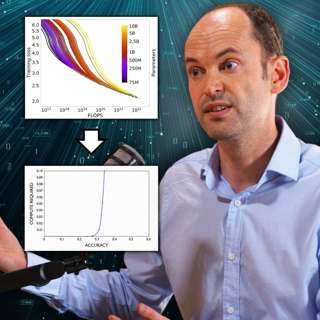
#219 – Toby Ord on graphs AI companies would prefer you didn't (fully) understand

#219 – Toby Ord on graphs AI companies would prefer you didn't (fully) understand

The era of making AI smarter just by making it bigger is ending. But that doesn’t mean progress is slowing down — far from it. AI models continue to get much more powerful, just using very different m...

24 Kesä 20252h 48min
#218 – Hugh White on why Trump is abandoning US hegemony – and that’s probably good

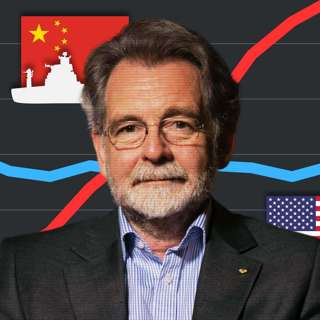
#218 – Hugh White on why Trump is abandoning US hegemony – and that’s probably good

For decades, US allies have slept soundly under the protection of America’s overwhelming military might. Donald Trump — with his threats to ditch NATO, seize Greenland, and abandon Taiwan — seems hell...

12 Kesä 20252h 48min

#217 – Beth Barnes on the most important graph in AI right now — and the 7-month rule that governs its progress

#217 – Beth Barnes on the most important graph in AI right now — and the 7-month rule that governs its progress

AI models today have a 50% chance of successfully completing a task that would take an expert human one hour. Seven months ago, that number was roughly 30 minutes — and seven months before that, 15 mi...

2 Kesä 20253h 47min

Beyond human minds: The bewildering frontier of consciousness in insects, AI, and more

Beyond human minds: The bewildering frontier of consciousness in insects, AI, and more

What if there’s something it’s like to be a shrimp — or a chatbot?For centuries, humans have debated the nature of consciousness, often placing ourselves at the very top. But what about the minds of o...

23 Touko 20253h 34min

Don’t believe OpenAI’s “nonprofit” spin (emergency pod with Tyler Whitmer)

Don’t believe OpenAI’s “nonprofit” spin (emergency pod with Tyler Whitmer)

OpenAI’s recent announcement that its nonprofit would “retain control” of its for-profit business sounds reassuring. But this seemingly major concession, celebrated by so many, is in itself largely me...

15 Touko 20251h 12min

The case for and against AGI by 2030 (article by Benjamin Todd)

The case for and against AGI by 2030 (article by Benjamin Todd)

More and more people have been saying that we might have AGI (artificial general intelligence) before 2030. Is that really plausible? This article by Benjamin Todd looks into the cases for and against...

12 Touko 20251h

Emergency pod: Did OpenAI give up, or is this just a new trap? (with Rose Chan Loui)

Emergency pod: Did OpenAI give up, or is this just a new trap? (with Rose Chan Loui)

When attorneys general intervene in corporate affairs, it usually means something has gone seriously wrong. In OpenAI’s case, it appears to have forced a dramatic reversal of the company’s plans to si...

8 Touko 20251h 2min

#216 – Ian Dunt on why governments in Britain and elsewhere can't get anything done – and how to fix it

#216 – Ian Dunt on why governments in Britain and elsewhere can't get anything done – and how to fix it

When you have a system where ministers almost never understand their portfolios, civil servants change jobs every few months, and MPs don't grasp parliamentary procedure even after decades in office —...

2 Touko 20253h 14min

Suosittua kategoriassa Koulutus

rss-murhan-anatomia
voi-hyvin-meditaatiot-2
rss-narsisti
psykopodiaa-podcast
rss-vapaudu-voimaasi
rss-niinku-asia-on
psykologia
rss-liian-kuuma-peruna
rss-duodecim-lehti
rss-uskonto-on-tylsaa
rss-valo-minussa-2
adhd-podi
aamukahvilla
kesken
koulu-podcast-2
adhd-tyylilla
jari-sarasvuo-podcast
rss-turun-yliopisto
rss-luonnollinen-synnytys-podcast
rss-laiska-joogi