
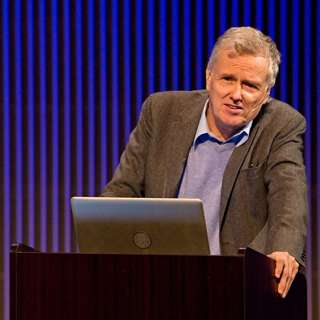
#150 – Tom Davidson on how quickly AI could transform the world

#150 – Tom Davidson on how quickly AI could transform the world

It’s easy to dismiss alarming AI-related predictions when you don’t know where the numbers came from.

For example: what if we told you that within 15 years, it’s likely that we’ll see a 1,000x improvement in AI capabilities in a single year? And what if we then told you that those improvements would lead to explosive economic growth unlike anything humanity has seen before?

You might think, “Congratulations, you said a big number — but this kind of stuff seems crazy, so I’m going to keep scrolling through Twitter.”

But this 1,000x yearly improvement is a prediction based on *real economic models* created by today’s guest Tom Davidson, Senior Research Analyst at Open Philanthropy. By the end of the episode, you’ll either be able to point out specific flaws in his step-by-step reasoning, or have to at least consider the idea that the world is about to get — at a minimum — incredibly weird.

Links to learn more, summary and full transcript.

As a teaser, consider the following:

Developing artificial general intelligence (AGI) — AI that can do 100% of cognitive tasks at least as well as the best humans can — could very easily lead us to an unrecognisable world.

You might think having to train AI systems individually to do every conceivable cognitive task — one for diagnosing diseases, one for doing your taxes, one for teaching your kids, etc. — sounds implausible, or at least like it’ll take decades.

But Tom thinks we might not need to train AI to do every single job — we might just need to train it to do one: AI research.

And building AI capable of doing research and development might be a much easier task — especially given that the researchers training the AI are AI researchers themselves.

And once an AI system is as good at accelerating future AI progress as the best humans are today — and we can run billions of copies of it round the clock — it’s hard to make the case that we won’t achieve AGI very quickly.

To give you some perspective: 17 years ago we saw the launch of Twitter, the release of Al Gore's *An Inconvenient Truth*, and your first chance to play the Nintendo Wii.

Tom thinks that if we have AI that significantly accelerates AI R&D, then it’s hard to imagine not having AGI 17 years from now.

Wild.

Host Luisa Rodriguez gets Tom to walk us through his careful reports on the topic, and how he came up with these numbers, across a terrifying but fascinating three hours.

Luisa and Tom also discuss:

• How we might go from GPT-4 to AI disaster
• Tom’s journey from finding AI risk to be kind of scary to really scary
• Whether international cooperation or an anti-AI social movement can slow AI progress down
• Why it might take just a few years to go from pretty good AI to superhuman AI
• How quickly the number and quality of computer chips we’ve been using for AI have been increasing
• The pace of algorithmic progress
• What ants can teach us about AI
• And much more

Chapters:

  • Rob’s intro (00:00:00)
  • The interview begins (00:04:53)
  • How we might go from GPT-4 to disaster (00:13:50)
  • Explosive economic growth (00:24:15)
  • Are there any limits for AI scientists? (00:33:17)
  • This seems really crazy (00:44:16)
  • How is this going to go for humanity? (00:50:49)
  • Why AI won’t go the way of nuclear power (01:00:13)
  • Can we definitely not come up with an international treaty? (01:05:24)
  • How quickly we should expect AI to “take off” (01:08:41)
  • Tom’s report on AI takeoff speeds (01:22:28)
  • How quickly will we go from 20% to 100% of tasks being automated by AI systems? (01:28:34)
  • What percent of cognitive tasks AI can currently perform (01:34:27)
  • Compute (01:39:48)
  • Using effective compute to predict AI takeoff speeds (01:48:01)
  • How quickly effective compute might increase (02:00:59)
  • How quickly chips and algorithms might improve (02:12:31)
  • How to check whether large AI models have dangerous capabilities (02:21:22)
  • Reasons AI takeoff might take longer (02:28:39)
  • Why AI takeoff might be very fast (02:31:52)
  • Fast AI takeoff speeds probably means shorter AI timelines (02:34:44)
  • Going from human-level AI to superhuman AI (02:41:34)
  • Going from AGI to AI deployment (02:46:59)
  • Were these arguments ever far-fetched to Tom? (02:49:54)
  • What ants can teach us about AI (02:52:45)
  • Rob’s outro (03:00:32)


Producer: Keiran Harris
Audio mastering: Simon Monsour and Ben Cordell
Transcriptions: Katy Moore

Jaksot(320)

#60 - Phil Tetlock on why accurate forecasting matters for everything, and how you can do it better

#60 - Phil Tetlock on why accurate forecasting matters for everything, and how you can do it better

Have you ever been infuriated by a doctor's unwillingness to give you an honest, probabilistic estimate about what to expect? Or a lawyer who won't tell you the chances you'll win your case? Their beh...

28 Kesä 20192h 11min

#59 – Cass Sunstein on how change happens, and why it's so often abrupt & unpredictable

#59 – Cass Sunstein on how change happens, and why it's so often abrupt & unpredictable

It can often feel hopeless to be an activist seeking social change on an obscure issue where most people seem opposed or at best indifferent to you. But according to a new book by Professor Cass Sunst...

17 Kesä 20191h 43min

#58 – Pushmeet Kohli of DeepMind on designing robust & reliable AI systems and how to succeed in AI

#58 – Pushmeet Kohli of DeepMind on designing robust & reliable AI systems and how to succeed in AI

When you're building a bridge, responsibility for making sure it won't fall over isn't handed over to a few 'bridge not falling down engineers'. Making sure a bridge is safe to use and remains standin...

3 Kesä 20191h 30min

Rob Wiblin on human nature, new technology, and living a happy, healthy & ethical life

Rob Wiblin on human nature, new technology, and living a happy, healthy & ethical life

This is a cross-post of some interviews Rob did recently on two other podcasts — Mission Daily (from 2m) and The Good Life (from 1h13m). Some of the content will be familiar to regular listeners — bu...

13 Touko 20192h 18min

#57 – Tom Kalil on how to do the most good in government

#57 – Tom Kalil on how to do the most good in government

You’re 29 years old, and you’ve just been given a job in the White House. How do you quickly figure out how the US Executive Branch behemoth actually works, so that you can have as much impact as poss...

23 Huhti 20192h 50min

#56 - Persis Eskander on wild animal welfare and what, if anything, to do about it

#56 - Persis Eskander on wild animal welfare and what, if anything, to do about it

Elephants in chains at travelling circuses; pregnant pigs trapped in coffin sized crates at factory farms; deers living in the wild. We should welcome the last as a pleasant break from the horror, rig...

15 Huhti 20192h 57min

#55 – Lutter & Winter on founding charter cities with outstanding governance to end poverty

#55 – Lutter & Winter on founding charter cities with outstanding governance to end poverty

Governance matters. Policy change quickly took China from famine to fortune; Singapore from swamps to skyscrapers; and Hong Kong from fishing village to financial centre. Unfortunately, many governmen...

31 Maalis 20192h 31min

#54 – OpenAI on publication norms, malicious uses of AI, and general-purpose learning algorithms

#54 – OpenAI on publication norms, malicious uses of AI, and general-purpose learning algorithms

OpenAI’s Dactyl is an AI system that can manipulate objects with a human-like robot hand. OpenAI Five is an AI system that can defeat humans at the video game Dota 2. The strange thing is they were bo...

19 Maalis 20192h 53min

Suosittua kategoriassa Koulutus

rss-murhan-anatomia
psykopodiaa-podcast
rss-narsisti
voi-hyvin-meditaatiot-2
aamukahvilla
rss-vapaudu-voimaasi
psykologia
rss-liian-kuuma-peruna
dear-ladies
leveli
adhd-podi
kesken
rss-duodecim-lehti
aloita-meditaatio
ihminen-tavattavissa-tommy-hellsten-instituutti
rss-koira-haudattuna
rahapuhetta
ilona-rauhala
rss-niinku-asia-on
rss-luonnollinen-synnytys-podcast