

#152 – Joe Carlsmith on navigating serious philosophical confusion

#152 – Joe Carlsmith on navigating serious philosophical confusion

What is the nature of the universe? How do we make decisions correctly? What differentiates right actions from wrong ones?

Such fundamental questions have been the subject of philosophical and theological debates for millennia. But, as we all know, and surveys of expert opinion make clear, we are very far from agreement. So... with these most basic questions unresolved, what’s a species to do?

In today's episode, philosopher Joe Carlsmith — Senior Research Analyst at Open Philanthropy — makes the case that many current debates in philosophy ought to leave us confused and humbled. These are themes he discusses in his PhD thesis, A stranger priority? Topics at the outer reaches of effective altruism.

Links to learn more, summary and full transcript.

To help transmit the disorientation he thinks is appropriate, Joe presents three disconcerting theories — originating from him and his peers — that challenge humanity's self-assured understanding of the world.

The first idea is that we might be living in a computer simulation, because, in the classic formulation, if most civilisations go on to run many computer simulations of their past history, then most beings who perceive themselves as living in such a history must themselves be in computer simulations. Joe prefers a somewhat different way of making the point, but, having looked into it, he hasn't identified any particular rebuttal to this 'simulation argument.'

If true, it could revolutionise our comprehension of the universe and the way we ought to live...

Other two ideas cut for length — click here to read the full post.

These are just three particular instances of a much broader set of ideas that some have dubbed the "train to crazy town." Basically, if you commit to always take philosophy and arguments seriously, and try to act on them, it can lead to what seem like some pretty crazy and impractical places. So what should we do with this buffet of plausible-sounding but bewildering arguments?

Joe and Rob discuss to what extent this should prompt us to pay less attention to philosophy, and how we as individuals can cope psychologically with feeling out of our depth just trying to make the most basic sense of the world.

In today's challenging conversation, Joe and Rob discuss all of the above, as well as:

  • What Joe doesn't like about the drowning child thought experiment
  • An alternative thought experiment about helping a stranger that might better highlight our intrinsic desire to help others
  • What Joe doesn't like about the expression “the train to crazy town”
  • Whether Elon Musk should place a higher probability on living in a simulation than most other people
  • Whether the deterministic twin prisoner’s dilemma, if fully appreciated, gives us an extra reason to keep promises
  • To what extent learning to doubt our own judgement about difficult questions -- so-called “epistemic learned helplessness” -- is a good thing
  • How strong the case is that advanced AI will engage in generalised power-seeking behaviour

Chapters:

  • Rob’s intro (00:00:00)
  • The interview begins (00:09:21)
  • Downsides of the drowning child thought experiment (00:12:24)
  • Making demanding moral values more resonant (00:24:56)
  • The crazy train (00:36:48)
  • Whether we’re living in a simulation (00:48:50)
  • Reasons to doubt we’re living in a simulation, and practical implications if we are (00:57:02)
  • Rob's explainer about anthropics (01:12:27)
  • Back to the interview (01:19:53)
  • Decision theory and affecting the past (01:23:33)
  • Rob's explainer about decision theory (01:29:19)
  • Back to the interview (01:39:55)
  • Newcomb's problem (01:46:14)
  • Practical implications of acausal decision theory (01:50:04)
  • The hitchhiker in the desert (01:55:57)
  • Acceptance within philosophy (02:01:22)
  • Infinite ethics (02:04:35)
  • Rob's explainer about the expanding spheres approach (02:17:05)
  • Back to the interview (02:20:27)
  • Infinite ethics and the utilitarian dream (02:27:42)
  • Rob's explainer about epicycles (02:29:30)
  • Back to the interview (02:31:26)
  • What to do with all of these weird philosophical ideas (02:35:28)
  • Welfare longtermism and wisdom longtermism (02:53:23)
  • Epistemic learned helplessness (03:03:10)
  • Power-seeking AI (03:12:41)
  • Rob’s outro (03:25:45)

Producer: Keiran Harris

Audio mastering: Milo McGuire and Ben Cordell

Transcriptions: Katy Moore

Jaksot(333)

Emergency episode: Rob & Howie on the menace of COVID-19, and what both governments & individuals might do to help

Emergency episode: Rob & Howie on the menace of COVID-19, and what both governments & individuals might do to help

From home isolation Rob and Howie just recorded an episode on: 1. How many could die in the crisis, and the risk to your health personally. 2. What individuals might be able to do help tackle the coro...

19 Maalis 20201h 52min

#73 – Phil Trammell on patient philanthropy and waiting to do good

#73 – Phil Trammell on patient philanthropy and waiting to do good

To do good, most of us look to use our time and money to affect the world around us today. But perhaps that's all wrong. If you took $1,000 you were going to donate and instead put it in the stock mar...

17 Maalis 20202h 35min
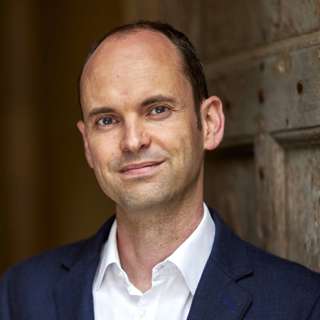
#72 - Toby Ord on the precipice and humanity's potential futures

#72 - Toby Ord on the precipice and humanity's potential futures

This week Oxford academic and 80,000 Hours trustee Dr Toby Ord released his new book The Precipice: Existential Risk and the Future of Humanity. It's about how our long-term future could be better tha...

7 Maalis 20203h 14min
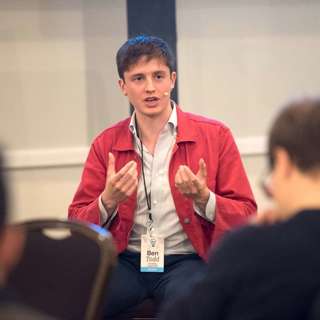
#71 - Benjamin Todd on the key ideas of 80,000 Hours

#71 - Benjamin Todd on the key ideas of 80,000 Hours

The 80,000 Hours Podcast is about “the world’s most pressing problems and how you can use your career to solve them”, and in this episode we tackle that question in the most direct way possible. Las...

2 Maalis 20202h 57min

Arden & Rob on demandingness, work-life balance & injustice (80k team chat #1)

Arden & Rob on demandingness, work-life balance & injustice (80k team chat #1)

Today's bonus episode of the podcast is a quick conversation between me and my fellow 80,000 Hours researcher Arden Koehler about a few topics, including the demandingness of morality, work-life balan...

25 Helmi 202044min

#70 - Dr Cassidy Nelson on the 12 best ways to stop the next pandemic (and limit nCoV)

#70 - Dr Cassidy Nelson on the 12 best ways to stop the next pandemic (and limit nCoV)

nCoV is alarming governments and citizens around the world. It has killed more than 1,000 people, brought the Chinese economy to a standstill, and continues to show up in more and more places. But bad...

13 Helmi 20202h 26min

#69 – Jeffrey Ding on China, its AI dream, and what we get wrong about both

#69 – Jeffrey Ding on China, its AI dream, and what we get wrong about both

The State Council of China's 2017 AI plan was the starting point of China’s AI planning; China’s approach to AI is defined by its top-down and monolithic nature; China is winning the AI arms race; and...

6 Helmi 20201h 37min

Rob & Howie on what we do and don't know about 2019-nCoV

Rob & Howie on what we do and don't know about 2019-nCoV

Two 80,000 Hours researchers, Robert Wiblin and Howie Lempel, record an experimental bonus episode about the new 2019-nCoV virus.See this list of resources, including many discussed in the episode, to...

3 Helmi 20201h 18min

Suosittua kategoriassa Koulutus

rss-murhan-anatomia
psykopodiaa-podcast
voi-hyvin-meditaatiot-2
adhd-podi
rss-niinku-asia-on
rss-rahamania
rss-liian-kuuma-peruna
rss-valo-minussa-2
rss-tietoinen-yhteys-podcast-2
kesken
jari-sarasvuo-podcast
rss-uskonto-on-tylsaa
rss-vapaudu-voimaasi
psykologia
rss-arkea-ja-aurinkoa-podcast-espanjasta
rahapuhetta
ihminen-tavattavissa-tommy-hellsten-instituutti
rss-luonnollinen-synnytys-podcast
rss-narsisti
rss-hereilla