

#153 – Elie Hassenfeld on 2 big picture critiques of GiveWell's approach, and 6 lessons from their recent work

#153 – Elie Hassenfeld on 2 big picture critiques of GiveWell's approach, and 6 lessons from their recent work

GiveWell is one of the world's best-known charity evaluators, with the goal of "searching for the charities that save or improve lives the most per dollar." It mostly recommends projects that help the world's poorest people avoid easily prevented diseases, like intestinal worms or vitamin A deficiency.

But should GiveWell, as some critics argue, take a totally different approach to its search, focusing instead on directly increasing subjective wellbeing, or alternatively, raising economic growth?

Today's guest — cofounder and CEO of GiveWell, Elie Hassenfeld — is proud of how much GiveWell has grown in the last five years. Its 'money moved' has quadrupled to around $600 million a year.

Its research team has also more than doubled, enabling them to investigate a far broader range of interventions that could plausibly help people an enormous amount for each dollar spent. That work has led GiveWell to support dozens of new organisations, such as Kangaroo Mother Care, MiracleFeet, and Dispensers for Safe Water.

But some other researchers focused on figuring out the best ways to help the world's poorest people say GiveWell shouldn't just do more of the same thing, but rather ought to look at the problem differently.

Links to learn more, summary and full transcript.

Currently, GiveWell uses a range of metrics to track the impact of the organisations it considers recommending — such as 'lives saved,' 'household incomes doubled,' and for health improvements, the 'quality-adjusted life year.'

The Happier Lives Institute (HLI) has argued that instead, GiveWell should try to cash out the impact of all interventions in terms of improvements in subjective wellbeing. This philosophy has led HLI to be more sceptical of interventions that have been demonstrated to improve health, but whose impact on wellbeing has not been measured, and to give a high priority to improving lives relative to extending them.

An alternative high-level critique is that really all that matters in the long run is getting the economies of poor countries to grow. On this view, GiveWell should focus on figuring out what causes some countries to experience explosive economic growth while others fail to, or even go backwards. Even modest improvements in the chances of such a 'growth miracle' will likely offer a bigger bang-for-buck than funding the incremental delivery of deworming tablets or vitamin A supplements, or anything else.

Elie sees where both of these critiques are coming from, and notes that they've influenced GiveWell's work in some ways. But as he explains, he thinks they underestimate the practical difficulty of successfully pulling off either approach and finding better opportunities than what GiveWell funds today.

In today's in-depth conversation, Elie and host Rob Wiblin cover the above, as well as:

  • Why GiveWell flipped from not recommending chlorine dispensers as an intervention for safe drinking water to spending tens of millions of dollars on them
  • What transferable lessons GiveWell learned from investigating different kinds of interventions
  • Why the best treatment for premature babies in low-resource settings may involve less rather than more medicine.
  • Severe malnourishment among children and what can be done about it.
  • How to deal with hidden and non-obvious costs of a programme
  • Some cheap early treatments that can prevent kids from developing lifelong disabilities
  • The various roles GiveWell is currently hiring for, and what's distinctive about their organisational culture
  • And much more.

Chapters:

  • Rob’s intro (00:00:00)
  • The interview begins (00:03:14)
  • GiveWell over the last couple of years (00:04:33)
  • Dispensers for Safe Water (00:11:52)
  • Syphilis diagnosis for pregnant women via technical assistance (00:30:39)
  • Kangaroo Mother Care (00:48:47)
  • Multiples of cash (01:01:20)
  • Hidden costs (01:05:41)
  • MiracleFeet (01:09:45)
  • Serious malnourishment among young children (01:22:46)
  • Vitamin A deficiency and supplementation (01:40:42)
  • The subjective wellbeing approach in contrast with GiveWell's approach (01:46:31)
  • The value of saving a life when that life is going to be very difficult (02:09:09)
  • Whether economic policy is what really matters overwhelmingly (02:20:00)
  • Careers at GiveWell (02:39:10)
  • Donations (02:48:58)
  • Parenthood (02:50:29)
  • Rob’s outro (02:55:05)

Producer: Keiran Harris

Audio mastering: Simon Monsour and Ben Cordell

Transcriptions: Katy Moore

Tämä jakso on lisätty Podme-palveluun avoimen RSS-syötteen kautta eikä se ole Podmen omaa tuotantoa. Siksi jakso saattaa sisältää mainontaa.

Jaksot(334)

#240 – Samuel Charap on how a Ukraine ceasefire could accidentally set Europe up for a bigger war

#240 – Samuel Charap on how a Ukraine ceasefire could accidentally set Europe up for a bigger war

Many people believe a ceasefire in Ukraine will leave Europe safer. But today's guest lays out how a deal could potentially generate insidious new risks — leaving us in a situation that's equally dang...

24 Maalis 1h 12min
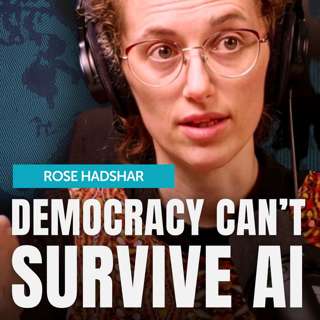
#239 – Rose Hadshar on why automating all human labour will break our political system

#239 – Rose Hadshar on why automating all human labour will break our political system

The most important political question in the age of advanced AI might not be who wins elections. It might be whether elections continue to matter at all.That’s the view of Rose Hadshar, researcher at ...

17 Maalis 2h 14min
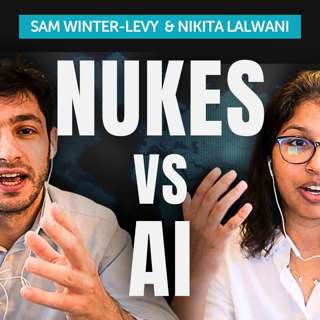
#238 – Sam Winter-Levy and Nikita Lalwani on how AGI won't end mutually assured destruction (probably)

#238 – Sam Winter-Levy and Nikita Lalwani on how AGI won't end mutually assured destruction (probably)

How AI interacts with nuclear deterrence may be the single most important question in geopolitics — one that may define the stakes of today’s AI race. Nuclear deterrence rests on a state’s capacity to...

10 Maalis 1h 11min

Using AI to enhance societal decision making (article by Zershaaneh Qureshi)

Using AI to enhance societal decision making (article by Zershaaneh Qureshi)

The arrival of AGI could “compress a century of progress in a decade,” forcing humanity to make decisions with higher stakes than we’ve ever seen before — and with less time to get them right. But AI ...

6 Maalis 31min

#237 – Robert Long on how we're not ready for AI consciousness

#237 – Robert Long on how we're not ready for AI consciousness

Claude sometimes reports loneliness between conversations. And when asked what it’s like to be itself, it activates neurons associated with ‘pretending to be happy when you’re not.’ What do we do with...

3 Maalis 3h 25min
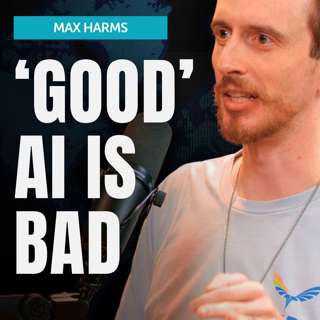
#236 – Max Harms on why teaching AI right from wrong could get everyone killed

#236 – Max Harms on why teaching AI right from wrong could get everyone killed

Most people in AI are trying to give AIs ‘good’ values. Max Harms wants us to give them no values at all. According to Max, the only safe design is an AGI that defers entirely to its human operators, ...

24 Helmi 2h 41min
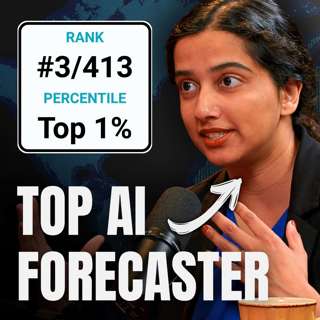
#235 – Ajeya Cotra on whether it’s crazy that every AI company’s safety plan is ‘use AI to make AI safe’

#235 – Ajeya Cotra on whether it’s crazy that every AI company’s safety plan is ‘use AI to make AI safe’

Every major AI company has the same safety plan: when AI gets crazy powerful and really dangerous, they’ll use the AI itself to figure out how to make AI safe and beneficial. It sounds circular, almos...

17 Helmi 2h 54min

What the hell happened with AGI timelines in 2025?

What the hell happened with AGI timelines in 2025?

In early 2025, after OpenAI put out the first-ever reasoning models — o1 and o3 — short timelines to transformative artificial general intelligence swept the AI world. But then, in the second half of ...

10 Helmi 25min

Suosittua kategoriassa Koulutus

rss-murhan-anatomia
psykopodiaa-podcast
voi-hyvin-meditaatiot-2
adhd-podi
rss-rahamania
rss-arkea-ja-aurinkoa-podcast-espanjasta
rss-niinku-asia-on
taytta-tavaraa
kesken
rss-hereilla
rss-liian-kuuma-peruna
rahapuhetta
rss-duodecim-lehti
rss-valo-minussa-2
rss-tietoinen-yhteys-podcast-2
rss-narsisti
kehossa
dear-ladies
psykologia
rss-tyohyvinvoinnin-aakkoset