

#154 - Rohin Shah on DeepMind and trying to fairly hear out both AI doomers and doubters

#154 - Rohin Shah on DeepMind and trying to fairly hear out both AI doomers and doubters

Can there be a more exciting and strange place to work today than a leading AI lab? Your CEO has said they're worried your research could cause human extinction. The government is setting up meetings to discuss how this outcome can be avoided. Some of your colleagues think this is all overblown; others are more anxious still.

Today's guest — machine learning researcher Rohin Shah — goes into the Google DeepMind offices each day with that peculiar backdrop to his work.

Links to learn more, summary and full transcript.

He's on the team dedicated to maintaining 'technical AI safety' as these models approach and exceed human capabilities: basically that the models help humanity accomplish its goals without flipping out in some dangerous way. This work has never seemed more important.

In the short-term it could be the key bottleneck to deploying ML models in high-stakes real-life situations. In the long-term, it could be the difference between humanity thriving and disappearing entirely.

For years Rohin has been on a mission to fairly hear out people across the full spectrum of opinion about risks from artificial intelligence -- from doomers to doubters -- and properly understand their point of view. That makes him unusually well placed to give an overview of what we do and don't understand. He has landed somewhere in the middle — troubled by ways things could go wrong, but not convinced there are very strong reasons to expect a terrible outcome.

Today's conversation is wide-ranging and Rohin lays out many of his personal opinions to host Rob Wiblin, including:

  • What he sees as the strongest case both for and against slowing down the rate of progress in AI research.
  • Why he disagrees with most other ML researchers that training a model on a sensible 'reward function' is enough to get a good outcome.
  • Why he disagrees with many on LessWrong that the bar for whether a safety technique is helpful is “could this contain a superintelligence.”
  • That he thinks nobody has very compelling arguments that AI created via machine learning will be dangerous by default, or that it will be safe by default. He believes we just don't know.
  • That he understands that analogies and visualisations are necessary for public communication, but is sceptical that they really help us understand what's going on with ML models, because they're different in important ways from every other case we might compare them to.
  • Why he's optimistic about DeepMind’s work on scalable oversight, mechanistic interpretability, and dangerous capabilities evaluations, and what each of those projects involves.
  • Why he isn't inherently worried about a future where we're surrounded by beings far more capable than us, so long as they share our goals to a reasonable degree.
  • Why it's not enough for humanity to know how to align AI models — it's essential that management at AI labs correctly pick which methods they're going to use and have the practical know-how to apply them properly.
  • Three observations that make him a little more optimistic: humans are a bit muddle-headed and not super goal-orientated; planes don't crash; and universities have specific majors in particular subjects.
  • Plenty more besides.

Get this episode by subscribing to our podcast on the world’s most pressing problems and how to solve them: type ‘80,000 Hours’ into your podcasting app. Or read the transcript below.

Producer: Keiran Harris

Audio mastering: Milo McGuire, Dominic Armstrong, and Ben Cordell

Transcriptions: Katy Moore

Jaksot(321)

#67 – David Chalmers on the nature and ethics of consciousness

#67 – David Chalmers on the nature and ethics of consciousness

What is it like to be you right now? You're seeing this text on the screen, smelling the coffee next to you, and feeling the warmth of the cup. There’s a lot going on in your head — your conscious exp...

16 Joulu 20194h 41min

#66 – Peter Singer on being provocative, effective altruism, & how his moral views have changed

#66 – Peter Singer on being provocative, effective altruism, & how his moral views have changed

In 1989, the professor of moral philosophy Peter Singer was all over the news for his inflammatory opinions about abortion. But the controversy stemmed from Practical Ethics — a book he’d actually rel...

5 Joulu 20192h 1min

#65 – Ambassador Bonnie Jenkins on 8 years pursuing WMD arms control, & diversity in diplomacy

#65 – Ambassador Bonnie Jenkins on 8 years pursuing WMD arms control, & diversity in diplomacy

"…it started when the Soviet Union fell apart and there was a real desire to ensure security of nuclear materials and pathogens, and that scientists with [WMD-related] knowledge could get paid so that...

19 Marras 20191h 40min
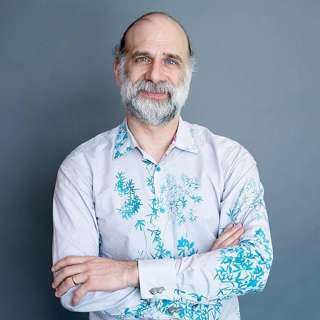
#64 – Bruce Schneier on how insecure electronic voting could break the United States — and surveillance without tyranny

#64 – Bruce Schneier on how insecure electronic voting could break the United States — and surveillance without tyranny

November 3 2020, 10:32PM: CNN, NBC, and FOX report that Donald Trump has narrowly won Florida, and with it, re-election.  November 3 2020, 11:46PM: The NY Times and Wall Street Journal report that so...

25 Loka 20192h 11min
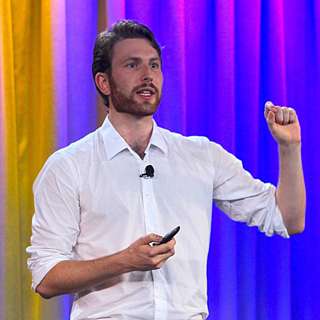
Rob Wiblin on plastic straws, nicotine, doping, & whether changing the long-term is really possible

Rob Wiblin on plastic straws, nicotine, doping, & whether changing the long-term is really possible

Today's episode is a compilation of interviews I recently recorded for two other shows, Love Your Work and The Neoliberal Podcast.  If you've listened to absolutely everything on this podcast feed, y...

25 Syys 20193h 14min

Have we helped you have a bigger social impact? Our annual survey, plus other ways we can help you.

Have we helped you have a bigger social impact? Our annual survey, plus other ways we can help you.

1. Fill out our annual impact survey here. 2. Find a great vacancy on our job board. 3. Learn about our key ideas, and get links to our top articles. 4. Join our newsletter for an email about what's n...

16 Syys 20193min

#63 – Vitalik Buterin on better ways to fund public goods, blockchain's failures, & effective giving

#63 – Vitalik Buterin on better ways to fund public goods, blockchain's failures, & effective giving

Historically, progress in the field of cryptography has had major consequences. It has changed the course of major wars, made it possible to do business on the internet, and enabled private communicat...

3 Syys 20193h 18min

#62 – Paul Christiano on messaging the future, increasing compute, & how CO2 impacts your brain

#62 – Paul Christiano on messaging the future, increasing compute, & how CO2 impacts your brain

Imagine that – one day – humanity dies out. At some point, many millions of years later, intelligent life might well evolve again. Is there any message we could leave that would reliably help them out...

5 Elo 20192h 11min

Suosittua kategoriassa Koulutus

rss-murhan-anatomia
psykopodiaa-podcast
rss-narsisti
voi-hyvin-meditaatiot-2
rss-liian-kuuma-peruna
rss-vapaudu-voimaasi
aamukahvilla
dear-ladies
leveli
rss-duodecim-lehti
rahapuhetta
kesken
psykologia
adhd-podi
ihminen-tavattavissa-tommy-hellsten-instituutti
avara-mieli
rss-uskonto-on-tylsaa
rss-ai-mita-siskopodcast
rss-tietoinen-yhteys-podcast-2
rss-monarch-talk-with-alexandra-alexis