

#162 – Mustafa Suleyman on getting Washington and Silicon Valley to tame AI

#162 – Mustafa Suleyman on getting Washington and Silicon Valley to tame AI

Mustafa Suleyman was part of the trio that founded DeepMind, and his new AI project is building one of the world's largest supercomputers to train a large language model on 10–100x the compute used to train ChatGPT.

But far from the stereotype of the incorrigibly optimistic tech founder, Mustafa is deeply worried about the future, for reasons he lays out in his new book The Coming Wave: Technology, Power, and the 21st Century's Greatest Dilemma (coauthored with Michael Bhaskar). The future could be really good, but only if we grab the bull by the horns and solve the new problems technology is throwing at us.

Links to learn more, summary and full transcript.

On Mustafa's telling, AI and biotechnology will soon be a huge aid to criminals and terrorists, empowering small groups to cause harm on previously unimaginable scales. Democratic countries have learned to walk a 'narrow path' between chaos on the one hand and authoritarianism on the other, avoiding the downsides that come from both extreme openness and extreme closure. AI could easily destabilise that present equilibrium, throwing us off dangerously in either direction. And ultimately, within our lifetimes humans may not need to work to live any more -- or indeed, even have the option to do so.

And those are just three of the challenges confronting us. In Mustafa's view, 'misaligned' AI that goes rogue and pursues its own agenda won't be an issue for the next few years, and it isn't a problem for the current style of large language models. But he thinks that at some point -- in eight, ten, or twelve years -- it will become an entirely legitimate concern, and says that we need to be planning ahead.

In The Coming Wave, Mustafa lays out a 10-part agenda for 'containment' -- that is to say, for limiting the negative and unforeseen consequences of emerging technologies:

1. Developing an Apollo programme for technical AI safety
2. Instituting capability audits for AI models
3. Buying time by exploiting hardware choke points
4. Getting critics involved in directly engineering AI models
5. Getting AI labs to be guided by motives other than profit
6. Radically increasing governments’ understanding of AI and their capabilities to sensibly regulate it
7. Creating international treaties to prevent proliferation of the most dangerous AI capabilities
8. Building a self-critical culture in AI labs of openly accepting when the status quo isn't working
9. Creating a mass public movement that understands AI and can demand the necessary controls
10. Not relying too much on delay, but instead seeking to move into a new somewhat-stable equilibria

As Mustafa put it, "AI is a technology with almost every use case imaginable" and that will demand that, in time, we rethink everything.

Rob and Mustafa discuss the above, as well as:

  • Whether we should be open sourcing AI models
  • Whether Mustafa's policy views are consistent with his timelines for transformative AI
  • How people with very different views on these issues get along at AI labs
  • The failed efforts (so far) to get a wider range of people involved in these decisions
  • Whether it's dangerous for Mustafa's new company to be training far larger models than GPT-4
  • Whether we'll be blown away by AI progress over the next year
  • What mandatory regulations government should be imposing on AI labs right now
  • Appropriate priorities for the UK's upcoming AI safety summit

Get this episode by subscribing to our podcast on the world’s most pressing problems and how to solve them: type ‘80,000 Hours’ into your podcasting app. Or read the transcript.

Producer and editor: Keiran Harris
Audio Engineering Lead: Ben Cordell
Technical editing: Milo McGuire
Transcriptions: Katy Moore

Jaksot(321)

#67 – David Chalmers on the nature and ethics of consciousness

#67 – David Chalmers on the nature and ethics of consciousness

What is it like to be you right now? You're seeing this text on the screen, smelling the coffee next to you, and feeling the warmth of the cup. There’s a lot going on in your head — your conscious exp...

16 Joulu 20194h 41min

#66 – Peter Singer on being provocative, effective altruism, & how his moral views have changed

#66 – Peter Singer on being provocative, effective altruism, & how his moral views have changed

In 1989, the professor of moral philosophy Peter Singer was all over the news for his inflammatory opinions about abortion. But the controversy stemmed from Practical Ethics — a book he’d actually rel...

5 Joulu 20192h 1min

#65 – Ambassador Bonnie Jenkins on 8 years pursuing WMD arms control, & diversity in diplomacy

#65 – Ambassador Bonnie Jenkins on 8 years pursuing WMD arms control, & diversity in diplomacy

"…it started when the Soviet Union fell apart and there was a real desire to ensure security of nuclear materials and pathogens, and that scientists with [WMD-related] knowledge could get paid so that...

19 Marras 20191h 40min
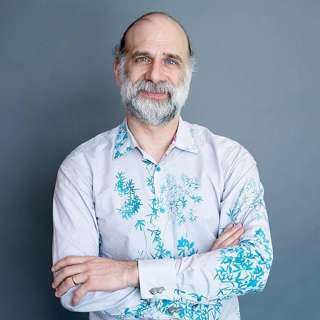
#64 – Bruce Schneier on how insecure electronic voting could break the United States — and surveillance without tyranny

#64 – Bruce Schneier on how insecure electronic voting could break the United States — and surveillance without tyranny

November 3 2020, 10:32PM: CNN, NBC, and FOX report that Donald Trump has narrowly won Florida, and with it, re-election.  November 3 2020, 11:46PM: The NY Times and Wall Street Journal report that so...

25 Loka 20192h 11min
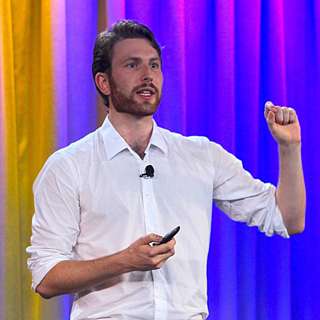
Rob Wiblin on plastic straws, nicotine, doping, & whether changing the long-term is really possible

Rob Wiblin on plastic straws, nicotine, doping, & whether changing the long-term is really possible

Today's episode is a compilation of interviews I recently recorded for two other shows, Love Your Work and The Neoliberal Podcast.  If you've listened to absolutely everything on this podcast feed, y...

25 Syys 20193h 14min

Have we helped you have a bigger social impact? Our annual survey, plus other ways we can help you.

Have we helped you have a bigger social impact? Our annual survey, plus other ways we can help you.

1. Fill out our annual impact survey here. 2. Find a great vacancy on our job board. 3. Learn about our key ideas, and get links to our top articles. 4. Join our newsletter for an email about what's n...

16 Syys 20193min

#63 – Vitalik Buterin on better ways to fund public goods, blockchain's failures, & effective giving

#63 – Vitalik Buterin on better ways to fund public goods, blockchain's failures, & effective giving

Historically, progress in the field of cryptography has had major consequences. It has changed the course of major wars, made it possible to do business on the internet, and enabled private communicat...

3 Syys 20193h 18min
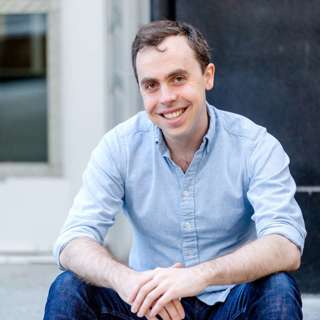
#62 – Paul Christiano on messaging the future, increasing compute, & how CO2 impacts your brain

#62 – Paul Christiano on messaging the future, increasing compute, & how CO2 impacts your brain

Imagine that – one day – humanity dies out. At some point, many millions of years later, intelligent life might well evolve again. Is there any message we could leave that would reliably help them out...

5 Elo 20192h 11min

Suosittua kategoriassa Koulutus

rss-murhan-anatomia
psykopodiaa-podcast
rss-narsisti
voi-hyvin-meditaatiot-2
rss-liian-kuuma-peruna
rss-vapaudu-voimaasi
aamukahvilla
dear-ladies
leveli
rss-duodecim-lehti
rahapuhetta
kesken
psykologia
adhd-podi
ihminen-tavattavissa-tommy-hellsten-instituutti
avara-mieli
rss-uskonto-on-tylsaa
rss-ai-mita-siskopodcast
rss-tietoinen-yhteys-podcast-2
rss-monarch-talk-with-alexandra-alexis