#163 – Toby Ord on the perils of maximising the good that you do

#163 – Toby Ord on the perils of maximising the good that you do

Effective altruism is associated with the slogan "do the most good." On one level, this has to be unobjectionable: What could be bad about helping people more and more?

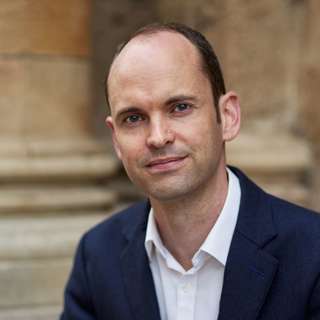
But in today's interview, Toby Ord — moral philosopher at the University of Oxford and one of the founding figures of effective altruism — lays out three reasons to be cautious about the idea of maximising the good that you do. He suggests that rather than “doing the most good that we can,” perhaps we should be happy with a more modest and manageable goal: “doing most of the good that we can.”

Links to learn more, summary and full transcript.

Toby was inspired to revisit these ideas by the possibility that Sam Bankman-Fried, who stands accused of committing severe fraud as CEO of the cryptocurrency exchange FTX, was motivated to break the law by a desire to give away as much money as possible to worthy causes.

Toby's top reason not to fully maximise is the following: if the goal you're aiming at is subtly wrong or incomplete, then going all the way towards maximising it will usually cause you to start doing some very harmful things.

This result can be shown mathematically, but can also be made intuitive, and may explain why we feel instinctively wary of going “all-in” on any idea, or goal, or way of living — even something as benign as helping other people as much as possible.

Toby gives the example of someone pursuing a career as a professional swimmer. Initially, as our swimmer takes their training and performance more seriously, they adjust their diet, hire a better trainer, and pay more attention to their technique. While swimming is the main focus of their life, they feel fit and healthy and also enjoy other aspects of their life as well — family, friends, and personal projects.

But if they decide to increase their commitment further and really go all-in on their swimming career, holding back nothing back, then this picture can radically change. Their effort was already substantial, so how can they shave those final few seconds off their racing time? The only remaining options are those which were so costly they were loath to consider them before.

To eke out those final gains — and go from 80% effort to 100% — our swimmer must sacrifice other hobbies, deprioritise their relationships, neglect their career, ignore food preferences, accept a higher risk of injury, and maybe even consider using steroids.

Now, if maximising one's speed at swimming really were the only goal they ought to be pursuing, there'd be no problem with this. But if it's the wrong goal, or only one of many things they should be aiming for, then the outcome is disastrous. In going from 80% to 100% effort, their swimming speed was only increased by a tiny amount, while everything else they were accomplishing dropped off a cliff.

The bottom line is simple: a dash of moderation makes you much more robust to uncertainty and error.

As Toby notes, this is similar to the observation that a sufficiently capable superintelligent AI, given any one goal, would ruin the world if it maximised it to the exclusion of everything else. And it follows a similar pattern to performance falling off a cliff when a statistical model is 'overfit' to its data.

In the full interview, Toby also explains the “moral trade” argument against pursuing narrow goals at the expense of everything else, and how consequentialism changes if you judge not just outcomes or acts, but everything according to its impacts on the world.

Toby and Rob also discuss:

  • The rise and fall of FTX and some of its impacts
  • What Toby hoped effective altruism would and wouldn't become when he helped to get it off the ground
  • What utilitarianism has going for it, and what's wrong with it in Toby's view
  • How to mathematically model the importance of personal integrity
  • Which AI labs Toby thinks have been acting more responsibly than others
  • How having a young child affects Toby’s feelings about AI risk
  • Whether infinities present a fundamental problem for any theory of ethics that aspire to be fully impartial
  • How Toby ended up being the source of the highest quality images of the Earth from space

Get this episode by subscribing to our podcast on the world’s most pressing problems and how to solve them: type ‘80,000 Hours’ into your podcasting app. Or read the transcript.

Producer and editor: Keiran Harris
Audio Engineering Lead: Ben Cordell
Technical editing: Simon Monsour
Transcriptions: Katy Moore

Jaksot(333)

'95% of AI Pilots Fail': The hidden agenda behind the viral stat that misled millions

'95% of AI Pilots Fail': The hidden agenda behind the viral stat that misled millions

You might have heard that '95% of corporate AI pilots' are failing. It was one of the most widely cited AI statistics of 2025, parroted by media outlets everywhere. It helped trigger a Nasdaq selloff ...

28 Huhti 10min

#242 – Will MacAskill on how we survive the 'intelligence explosion,' AI character, and the case for 'viatopia'

#242 – Will MacAskill on how we survive the 'intelligence explosion,' AI character, and the case for 'viatopia'

Hundreds of millions already turn to AI on the most personal of topics — therapy, political opinions, and how to treat others. And as AI takes over more of the economy, the character of these systems ...

22 Huhti 3h 9min

Risks from power-seeking AI systems (article narration by Zershaaneh Qureshi)

Risks from power-seeking AI systems (article narration by Zershaaneh Qureshi)

Hundreds of prominent AI scientists and other notable figures signed a statement in 2023 saying that mitigating the risk of extinction from AI should be a global priority. At 80,000 Hours, we’ve consi...

16 Huhti 1h 29min

How scary is Claude Mythos? 303 pages in 21 minutes

How scary is Claude Mythos? 303 pages in 21 minutes

With Claude Mythos we have an AI that knows when it's being tested, can obscure its reasoning when it wants, and is better at breaking into (and out of) computers than any human alive. Rob Wiblin work...

10 Huhti 21min

Village gossip, pesticide bans, and gene drives: 17 experts on the future of global health

Village gossip, pesticide bans, and gene drives: 17 experts on the future of global health

What does it really take to lift millions out of poverty and prevent needless deaths?In this special compilation episode, 17 past guests — including economists, nonprofit founders, and policy advisors...

7 Huhti 4h 6min

What everyone is missing about Anthropic vs the Pentagon. And: The Meta leaks are worse than you think.

What everyone is missing about Anthropic vs the Pentagon. And: The Meta leaks are worse than you think.

When the Pentagon tried to strong-arm Anthropic into dropping its ban on AI-only kill decisions and mass domestic surveillance, the company refused. Its critics went on the attack: Anthropic and its s...

3 Huhti 20min

#241 – Richard Moulange on how now AI codes viable genomes from scratch and outperforms virologists at lab work — what could go wrong?

#241 – Richard Moulange on how now AI codes viable genomes from scratch and outperforms virologists at lab work — what could go wrong?

Last September, scientists used an AI model to design genomes for entirely new bacteriophages (viruses that infect bacteria). They then built them in a lab. Many were viable. And despite being entirel...

31 Maalis 3h 7min

#240 – Samuel Charap on how a Ukraine ceasefire could accidentally set Europe up for a bigger war

#240 – Samuel Charap on how a Ukraine ceasefire could accidentally set Europe up for a bigger war

Many people believe a ceasefire in Ukraine will leave Europe safer. But today's guest lays out how a deal could potentially generate insidious new risks — leaving us in a situation that's equally dang...

24 Maalis 1h 12min

Suosittua kategoriassa Koulutus

rss-murhan-anatomia
psykopodiaa-podcast
voi-hyvin-meditaatiot-2
adhd-podi
rss-rahamania
rss-liian-kuuma-peruna
rss-niinku-asia-on
rss-arkea-ja-aurinkoa-podcast-espanjasta
kesken
rss-valo-minussa-2
rss-narsisti
rss-tietoinen-yhteys-podcast-2
rss-vapaudu-voimaasi
kehossa
jari-sarasvuo-podcast
psykologia
rss-duodecim-lehti
taytta-tavaraa
rahapuhetta
rss-mentalrace