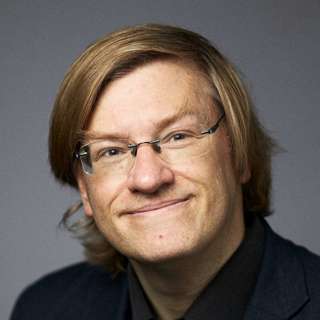

#165 – Anders Sandberg on war in space, whether civilisations age, and the best things possible in our universe

#165 – Anders Sandberg on war in space, whether civilisations age, and the best things possible in our universe

"Now, the really interesting question is: How much is there an attacker-versus-defender advantage in this kind of advanced future?

Right now, if somebody's sitting on Mars and you're going to war against them, it's very hard to hit them. You don't have a weapon that can hit them very well. But in theory, if you fire a missile, after a few months, it's going to arrive and maybe hit them, but they have a few months to move away. Distance actually makes you safer: if you spread out in space, it's actually very hard to hit you.

So it seems like you get a defence-dominant situation if you spread out sufficiently far. But if you're in Earth orbit, everything is close, and the lasers and missiles and the debris are a terrible danger, and everything is moving very fast.

So my general conclusion has been that war looks unlikely on some size scales but not on others." — Anders Sandberg

In today’s episode, host Rob Wiblin speaks with repeat guest and audience favourite Anders Sandberg about the most impressive things that could be achieved in our universe given the laws of physics.

Links to learn more, summary and full transcript.

They cover:

  • The epic new book Anders is working on, and whether he’ll ever finish it
  • Whether there's a best possible world or we can just keep improving forever
  • What wars might look like if the galaxy is mostly settled
  • The impediments to AI or humans making it to other stars
  • How the universe will end a million trillion years in the future
  • Whether it’s useful to wonder about whether we’re living in a simulation
  • The grabby aliens theory
  • Whether civilizations get more likely to fail the older they get
  • The best way to generate energy that could ever exist
  • Black hole bombs
  • Whether superintelligence is necessary to get a lot of value
  • The likelihood that life from elsewhere has already visited Earth
  • And plenty more.

Producer and editor: Keiran Harris
Audio Engineering Lead: Ben Cordell
Technical editing: Simon Monsour and Milo McGuire
Transcriptions: Katy Moore

Jaksot(326)

#13 - Claire Walsh on testing which policies work & how to get governments to listen to the results

#13 - Claire Walsh on testing which policies work & how to get governments to listen to the results

In both rich and poor countries, government policy is often based on no evidence at all and many programs don’t work. This has particularly harsh effects on the global poor - in some countries governm...

31 Loka 201752min
#12 - Beth Cameron works to stop you dying in a pandemic. Here’s what keeps her up at night.

#12 - Beth Cameron works to stop you dying in a pandemic. Here’s what keeps her up at night.

“When you're in the middle of a crisis and you have to ask for money, you're already too late.” That’s Dr Beth Cameron, who leads Global Biological Policy and Programs at the Nuclear Threat Initiative...

25 Loka 20171h 45min

#11 - Spencer Greenberg on speeding up social science 10-fold & why plenty of startups cause harm

#11 - Spencer Greenberg on speeding up social science 10-fold & why plenty of startups cause harm

Do most meat eaters think it’s wrong to hurt animals? Do Americans think climate change is likely to cause human extinction? What is the best, state-of-the-art therapy for depression? How can we make ...

17 Loka 20171h 29min
#10 - Nick Beckstead on how to spend billions of dollars preventing human extinction

#10 - Nick Beckstead on how to spend billions of dollars preventing human extinction

What if you were in a position to give away billions of dollars to improve the world? What would you do with it? This is the problem facing Program Officers at the Open Philanthropy Project - people l...

11 Loka 20171h 51min
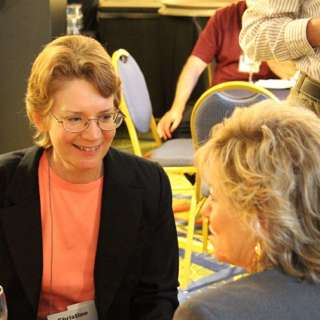
#9 - Christine Peterson on how insecure computers could lead to global disaster, and how to fix it

#9 - Christine Peterson on how insecure computers could lead to global disaster, and how to fix it

Take a trip to Silicon Valley in the 70s and 80s, when going to space sounded like a good way to get around environmental limits, people started cryogenically freezing themselves, and nanotechnology l...

4 Loka 20171h 45min
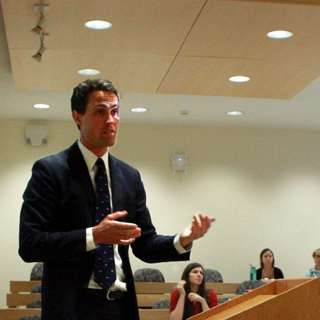
#8 - Lewis Bollard on how to end factory farming in our lifetimes

#8 - Lewis Bollard on how to end factory farming in our lifetimes

Every year tens of billions of animals are raised in terrible conditions in factory farms before being killed for human consumption. Over the last two years Lewis Bollard – Project Officer for Farm An...

27 Syys 20173h 16min

#7 - Julia Galef on making humanity more rational, what EA does wrong, and why Twitter isn’t all bad

#7 - Julia Galef on making humanity more rational, what EA does wrong, and why Twitter isn’t all bad

The scientific revolution in the 16th century was one of the biggest societal shifts in human history, driven by the discovery of new and better methods of figuring out who was right and who was wrong...

13 Syys 20171h 14min
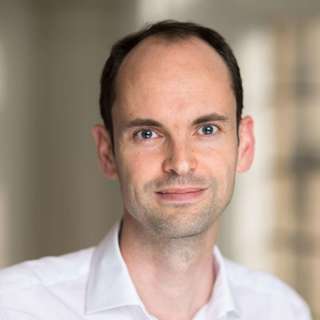
#6 - Toby Ord on why the long-term future matters more than anything else & what to do about it

#6 - Toby Ord on why the long-term future matters more than anything else & what to do about it

Of all the people whose well-being we should care about, only a small fraction are alive today. The rest are members of future generations who are yet to exist. Whether they’ll be born into a world th...

6 Syys 20172h 8min

Suosittua kategoriassa Koulutus

rss-murhan-anatomia
psykopodiaa-podcast
voi-hyvin-meditaatiot-2
rss-narsisti
adhd-podi
rahapuhetta
rss-rahamania
kesken
psykologia
rss-liian-kuuma-peruna
rss-vapaudu-voimaasi
rss-niinku-asia-on
esa-saarinen-filosofia-ja-systeemiajattelu
rss-arkea-ja-aurinkoa-podcast-espanjasta
filocast-filosofian-perusteet
rss-eron-alkemiaa
rss-valo-minussa-2
rss-luonnollinen-synnytys-podcast
rss-koira-haudattuna
rss-helppoa-suomea-learn-finnish-through-comprehensible-input