#112 Classic episode – Carl Shulman on the common-sense case for existential risk work and its practical implications

#112 Classic episode – Carl Shulman on the common-sense case for existential risk work and its practical implications

Preventing the apocalypse may sound like an idiosyncratic activity, and it sometimes is justified on exotic grounds, such as the potential for humanity to become a galaxy-spanning civilisation.

But the policy of US government agencies is already to spend up to $4 million to save the life of a citizen, making the death of all Americans a $1,300,000,000,000,000 disaster.

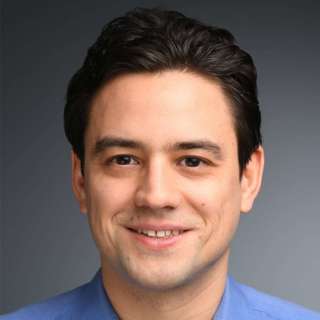
According to Carl Shulman, research associate at Oxford University’s Future of Humanity Institute, that means you don’t need any fancy philosophical arguments about the value or size of the future to justify working to reduce existential risk — it passes a mundane cost-benefit analysis whether or not you place any value on the long-term future.

Rebroadcast: this episode was originally released in October 2021.

Links to learn more, summary, and full transcript.

The key reason to make it a top priority is factual, not philosophical. That is, the risk of a disaster that kills billions of people alive today is alarmingly high, and it can be reduced at a reasonable cost. A back-of-the-envelope version of the argument runs:

  • The US government is willing to pay up to $4 million (depending on the agency) to save the life of an American.
  • So saving all US citizens at any given point in time would be worth $1,300 trillion.
  • If you believe that the risk of human extinction over the next century is something like one in six (as Toby Ord suggests is a reasonable figure in his book The Precipice), then it would be worth the US government spending up to $2.2 trillion to reduce that risk by just 1%, in terms of American lives saved alone.
  • Carl thinks it would cost a lot less than that to achieve a 1% risk reduction if the money were spent intelligently. So it easily passes a government cost-benefit test, with a very big benefit-to-cost ratio — likely over 1000:1 today.

This argument helped NASA get funding to scan the sky for any asteroids that might be on a collision course with Earth, and it was directly promoted by famous economists like Richard Posner, Larry Summers, and Cass Sunstein.

If the case is clear enough, why hasn’t it already motivated a lot more spending or regulations to limit existential risks — enough to drive down what any additional efforts would achieve?

Carl thinks that one key barrier is that infrequent disasters are rarely politically salient. Research indicates that extra money is spent on flood defences in the years immediately following a massive flood — but as memories fade, that spending quickly dries up. Of course the annual probability of a disaster was the same the whole time; all that changed is what voters had on their minds.

Carl suspects another reason is that it’s difficult for the average voter to estimate and understand how large these respective risks are, and what responses would be appropriate rather than self-serving. If the public doesn’t know what good performance looks like, politicians can’t be given incentives to do the right thing.

It’s reasonable to assume that if we found out a giant asteroid were going to crash into the Earth one year from now, most of our resources would be quickly diverted into figuring out how to avert catastrophe.

But even in the case of COVID-19, an event that massively disrupted the lives of everyone on Earth, we’ve still seen a substantial lack of investment in vaccine manufacturing capacity and other ways of controlling the spread of the virus, relative to what economists recommended.

Carl expects that all the reasons we didn’t adequately prepare for or respond to COVID-19 — with excess mortality over 15 million and costs well over $10 trillion — bite even harder when it comes to threats we’ve never faced before, such as engineered pandemics, risks from advanced artificial intelligence, and so on.

Today’s episode is in part our way of trying to improve this situation. In today’s wide-ranging conversation, Carl and Rob also cover:

  • A few reasons Carl isn’t excited by ‘strong longtermism’
  • How x-risk reduction compares to GiveWell recommendations
  • Solutions for asteroids, comets, supervolcanoes, nuclear war, pandemics, and climate change
  • The history of bioweapons
  • Whether gain-of-function research is justifiable
  • Successes and failures around COVID-19
  • The history of existential risk
  • And much more

Producer: Keiran Harris
Audio mastering: Ben Cordell
Transcriptions: Katy Moore

Jaksot(318)

#226 – Holden Karnofsky on unexploited opportunities to make AI safer — and all his AGI takes

#226 – Holden Karnofsky on unexploited opportunities to make AI safer — and all his AGI takes

For years, working on AI safety usually meant theorising about the ‘alignment problem’ or trying to convince other people to give a damn. If you could find any way to help, the work was frustrating an...

30 Loka 20254h 30min

#225 – Daniel Kokotajlo on what a hyperspeed robot economy might look like

#225 – Daniel Kokotajlo on what a hyperspeed robot economy might look like

When Daniel Kokotajlo talks to security experts at major AI labs, they tell him something chilling: “Of course we’re probably penetrated by the CCP already, and if they really wanted something, they c...

27 Loka 20252h 12min

#224 – There's a cheap and low-tech way to save humanity from any engineered disease | Andrew Snyder-Beattie

#224 – There's a cheap and low-tech way to save humanity from any engineered disease | Andrew Snyder-Beattie

Conventional wisdom is that safeguarding humanity from the worst biological risks — microbes optimised to kill as many as possible — is difficult bordering on impossible, making bioweapons humanity’s ...

2 Loka 20252h 31min

Inside the Biden admin’s AI policy approach | Jake Sullivan, Biden’s NSA | via The Cognitive Revolution

Inside the Biden admin’s AI policy approach | Jake Sullivan, Biden’s NSA | via The Cognitive Revolution

Jake Sullivan was the US National Security Advisor from 2021-2025. He joined our friends on The Cognitive Revolution podcast in August to discuss AI as a critical national security issue. We thought i...

26 Syys 20251h 5min

#223 – Neel Nanda on leading a Google DeepMind team at 26 – and advice if you want to work at an AI company (part 2)

#223 – Neel Nanda on leading a Google DeepMind team at 26 – and advice if you want to work at an AI company (part 2)

At 26, Neel Nanda leads an AI safety team at Google DeepMind, has published dozens of influential papers, and mentored 50 junior researchers — seven of whom now work at major AI companies. His secret?...

15 Syys 20251h 46min

#222 – Can we tell if an AI is loyal by reading its mind? DeepMind's Neel Nanda (part 1)

#222 – Can we tell if an AI is loyal by reading its mind? DeepMind's Neel Nanda (part 1)

We don’t know how AIs think or why they do what they do. Or at least, we don’t know much. That fact is only becoming more troubling as AIs grow more capable and appear on track to wield enormous cultu...

8 Syys 20253h 1min

#221 – Kyle Fish on the most bizarre findings from 5 AI welfare experiments

#221 – Kyle Fish on the most bizarre findings from 5 AI welfare experiments

What happens when you lock two AI systems in a room together and tell them they can discuss anything they want?According to experiments run by Kyle Fish — Anthropic’s first AI welfare researcher — som...

28 Elo 20252h 28min

How not to lose your job to AI (article by Benjamin Todd)

How not to lose your job to AI (article by Benjamin Todd)

About half of people are worried they’ll lose their job to AI. They’re right to be concerned: AI can now complete real-world coding tasks on GitHub, generate photorealistic video, drive a taxi more sa...

31 Heinä 202551min

Suosittua kategoriassa Koulutus

rss-murhan-anatomia
psykopodiaa-podcast
voi-hyvin-meditaatiot-2
rss-niinku-asia-on
kesken
rss-duodecim-lehti
adhd-podi
aamukahvilla
aloita-meditaatio
rss-liian-kuuma-peruna
rss-valo-minussa-2
ihminen-tavattavissa-tommy-hellsten-instituutti
rss-elamankoulu
rss-psykalab
rss-narsisti
rahapuhetta
salainen-paivakirja
rss-uskonto-on-tylsaa
rss-vapaudu-voimaasi
rss-hereilla