#185 – Lewis Bollard on the 7 most promising ways to end factory farming, and whether AI is going to be good or bad for animals

#185 – Lewis Bollard on the 7 most promising ways to end factory farming, and whether AI is going to be good or bad for animals

"The constraint right now on factory farming is how far can you push the biology of these animals? But AI could remove that constraint. It could say, 'Actually, we can push them further in these ways and these ways, and they still stay alive. And we’ve modelled out every possibility and we’ve found that it works.' I think another possibility, which I don’t understand as well, is that AI could lock in current moral values. And I think in particular there’s a risk that if AI is learning from what we do as humans today, the lesson it’s going to learn is that it’s OK to tolerate mass cruelty, so long as it occurs behind closed doors. I think there’s a risk that if it learns that, then it perpetuates that value, and perhaps slows human moral progress on this issue." —Lewis Bollard

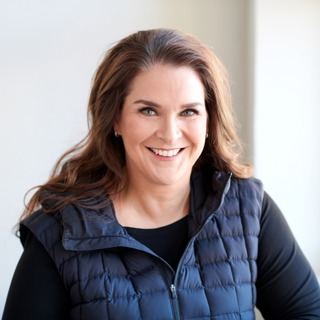
In today’s episode, host Luisa Rodriguez speaks to Lewis Bollard — director of the Farm Animal Welfare programme at Open Philanthropy — about the promising progress and future interventions to end the worst factory farming practices still around today.

Links to learn more, highlights, and full transcript.

They cover:

  • The staggering scale of animal suffering in factory farms, and how it will only get worse without intervention.
  • Work to improve farmed animal welfare that Open Philanthropy is excited about funding.
  • The amazing recent progress made in farm animal welfare — including regulatory attention in the EU and a big win at the US Supreme Court — and the work that still needs to be done.
  • The occasional tension between ending factory farming and curbing climate change
  • How AI could transform factory farming for better or worse — and Lewis’s fears that the technology will just help us maximise cruelty in the name of profit.
  • How Lewis has updated his opinions or grantmaking as a result of new research on the “moral weights” of different species.
  • Lewis’s personal journey working on farm animal welfare, and how he copes with the emotional toll of confronting the scale of animal suffering.
  • How listeners can get involved in the growing movement to end factory farming — from career and volunteer opportunities to impactful donations.
  • And much more.

Chapters:

  • Common objections to ending factory farming (00:13:21)
  • Potential solutions (00:30:55)
  • Cage-free reforms (00:34:25)
  • Broiler chicken welfare (00:46:48)
  • Do companies follow through on these commitments? (01:00:21)
  • Fish welfare (01:05:02)
  • Alternatives to animal proteins (01:16:36)
  • Farm animal welfare in Asia (01:26:00)
  • Farm animal welfare in Europe (01:30:45)
  • Animal welfare science (01:42:09)
  • Approaches Lewis is less excited about (01:52:10)
  • Will we end factory farming in our lifetimes? (01:56:36)
  • Effect of AI (01:57:59)
  • Recent big wins for farm animals (02:07:38)
  • How animal advocacy has changed since Lewis first got involved (02:15:57)
  • Response to the Moral Weight Project (02:19:52)
  • How to help (02:28:14)

Producer and editor: Keiran Harris
Audio engineering lead: Ben Cordell
Technical editing: Simon Monsour, Milo McGuire, and Dominic Armstrong
Additional content editing: Katy Moore and Luisa Rodriguez
Transcriptions: Katy Moore

Jaksot(325)

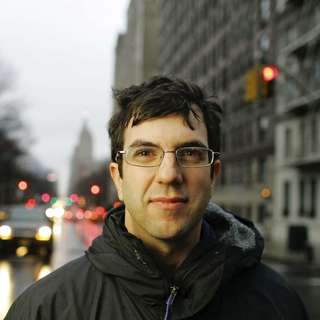
#79 – A.J. Jacobs on radical honesty, following the whole Bible, and reframing global problems as puzzles

#79 – A.J. Jacobs on radical honesty, following the whole Bible, and reframing global problems as puzzles

Today’s guest, New York Times bestselling author A.J. Jacobs, always hated Judge Judy. But after he found out that she was his seventh cousin, he thought, "You know what? She's not so bad." Hijacking ...

1 Kesä 20202h 38min

#78 – Danny Hernandez on forecasting and the drivers of AI progress

#78 – Danny Hernandez on forecasting and the drivers of AI progress

Companies use about 300,000 times more computation training the best AI systems today than they did in 2012 and algorithmic innovations have also made them 25 times more efficient at the same tasks.Th...

22 Touko 20202h 11min
#77 – Marc Lipsitch on whether we're winning or losing against COVID-19

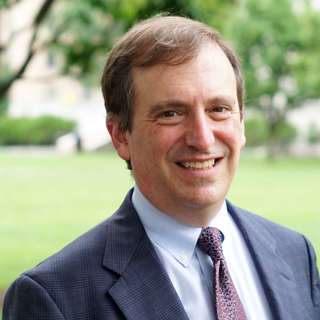
#77 – Marc Lipsitch on whether we're winning or losing against COVID-19

In March Professor Marc Lipsitch — Director of Harvard's Center for Communicable Disease Dynamics — abruptly found himself a global celebrity, his social media following growing 40-fold and journalist...

18 Touko 20201h 37min

Article: Ways people trying to do good accidentally make things worse, and how to avoid them

Article: Ways people trying to do good accidentally make things worse, and how to avoid them

Today’s release is the second experiment in making audio versions of our articles. The first was a narration of Greg Lewis’ terrific problem profile on ‘Reducing global catastrophic biological risks...

12 Touko 202026min
#76 – Tara Kirk Sell on misinformation, who's done well and badly, & what to reopen first

#76 – Tara Kirk Sell on misinformation, who's done well and badly, & what to reopen first

Amid a rising COVID-19 death toll, and looming economic disaster, we’ve been looking for good news — and one thing we're especially thankful for is the Johns Hopkins Center for Health Security (CHS). ...

8 Touko 20201h 53min

#75 – Michelle Hutchinson on what people most often ask 80,000 Hours

#75 – Michelle Hutchinson on what people most often ask 80,000 Hours

Since it was founded, 80,000 Hours has done one-on-one calls to supplement our online content and offer more personalised advice. We try to help people get clear on their most plausible paths, the key...

28 Huhti 20202h 13min
#74 – Dr Greg Lewis on COVID-19 & catastrophic biological risks

#74 – Dr Greg Lewis on COVID-19 & catastrophic biological risks

Our lives currently revolve around the global emergency of COVID-19; you’re probably reading this while confined to your house, as the death toll from the worst pandemic since 1918 continues to rise. ...

17 Huhti 20202h 37min

Article: Reducing global catastrophic biological risks

Article: Reducing global catastrophic biological risks

In a few days we'll be putting out a conversation with Dr Greg Lewis, who studies how to prevent global catastrophic biological risks at Oxford's Future of Humanity Institute. Greg also wrote a new ...

15 Huhti 20201h 4min

Suosittua kategoriassa Koulutus

rss-murhan-anatomia
voi-hyvin-meditaatiot-2
rss-narsisti
adhd-podi
psykopodiaa-podcast
rss-rahamania
rss-uskonto-on-tylsaa
rss-valo-minussa-2
rss-vapaudu-voimaasi
rss-duodecim-lehti
rss-niinku-asia-on
mielipaivakirja
rahapuhetta
aamukahvilla
ilona-rauhala
kesken
dear-ladies
rss-eron-alkemiaa
nakokulmia-rikollisuudesta-irrottautumiseen
rss-arkea-ja-aurinkoa-podcast-espanjasta