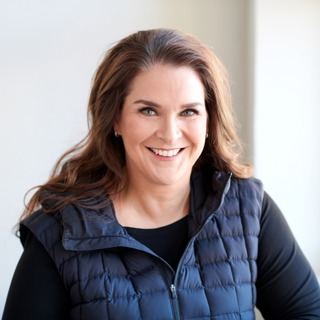

#188 – Matt Clancy on whether science is good

#188 – Matt Clancy on whether science is good

"Suppose we make these grants, we do some of those experiments I talk about. We discover, for example — I’m just making this up — but we give people superforecasting tests when they’re doing peer review, and we find that you can identify people who are super good at picking science. And then we have this much better targeted science, and we’re making progress at a 10% faster rate than we normally would have. Over time, that aggregates up, and maybe after 10 years, we’re a year ahead of where we would have been if we hadn’t done this kind of stuff.

"Now, suppose in 10 years we’re going to discover a cheap new genetic engineering technology that anyone can use in the world if they order the right parts off of Amazon. That could be great, but could also allow bad actors to genetically engineer pandemics and basically try to do terrible things with this technology. And if we’ve brought that forward, and that happens at year nine instead of year 10 because of some of these interventions we did, now we start to think that if that’s really bad, if these people using this technology causes huge problems for humanity, it begins to sort of wash out the benefits of getting the science a little bit faster." —Matt Clancy

In today’s episode, host Luisa Rodriguez speaks to Matt Clancy — who oversees Open Philanthropy’s Innovation Policy programme — about his recent work modelling the risks and benefits of the increasing speed of scientific progress.

Links to learn more, highlights, and full transcript.

They cover:

  • Whether scientific progress is actually net positive for humanity.
  • Scenarios where accelerating science could lead to existential risks, such as advanced biotechnology being used by bad actors.
  • Why Matt thinks metascience research and targeted funding could improve the scientific process and better incentivise outcomes that are good for humanity.
  • Whether Matt trusts domain experts or superforecasters more when estimating how the future will turn out.
  • Why Matt is sceptical that AGI could really cause explosive economic growth.
  • And much more.

Chapters:

  • Is scientific progress net positive for humanity? (00:03:00)
  • The time of biological perils (00:17:50)
  • Modelling the benefits of science (00:25:48)
  • Income and health gains from scientific progress (00:32:49)
  • Discount rates (00:42:14)
  • How big are the returns to science? (00:51:08)
  • Forecasting global catastrophic biological risks from scientific progress (01:05:20)
  • What’s the value of scientific progress, given the risks? (01:15:09)
  • Factoring in extinction risk (01:21:56)
  • How science could reduce extinction risk (01:30:18)
  • Are we already too late to delay the time of perils? (01:42:38)
  • Domain experts vs superforecasters (01:46:03)
  • What Open Philanthropy’s Innovation Policy programme settled on (01:53:47)
  • Explosive economic growth (02:06:28)
  • Matt’s favourite thought experiment (02:34:57)

Producer and editor: Keiran Harris
Audio engineering lead: Ben Cordell
Technical editing: Simon Monsour, Milo McGuire, and Dominic Armstrong
Additional content editing: Katy Moore and Luisa Rodriguez
Transcriptions: Katy Moore

Jaksot(324)

Serendipity, weird bets, & cold emails that actually work: Career advice from 16 former guests

Serendipity, weird bets, & cold emails that actually work: Career advice from 16 former guests

How do you navigate a career path when the future of work is uncertain? How important is mentorship versus immediate impact? Is it better to focus on your strengths or on the world’s most pressing pro...

24 Huhti 20252h 18min
#215 – Tom Davidson on how AI-enabled coups could allow a tiny group to seize power

#215 – Tom Davidson on how AI-enabled coups could allow a tiny group to seize power

Throughout history, technological revolutions have fundamentally shifted the balance of power in society. The Industrial Revolution created conditions where democracies could flourish for the first ti...

16 Huhti 20253h 22min
Guilt, imposter syndrome & doing good: 16 past guests share their mental health journeys

Guilt, imposter syndrome & doing good: 16 past guests share their mental health journeys

"We are aiming for a place where we can decouple the scorecard from our worthiness. It’s of course the case that in trying to optimise the good, we will always be falling short. The question is how mu...

11 Huhti 20251h 47min
#214 – Buck Shlegeris on controlling AI that wants to take over – so we can use it anyway

#214 – Buck Shlegeris on controlling AI that wants to take over – so we can use it anyway

Most AI safety conversations centre on alignment: ensuring AI systems share our values and goals. But despite progress, we’re unlikely to know we’ve solved the problem before the arrival of human-leve...

4 Huhti 20252h 16min
15 expert takes on infosec in the age of AI

15 expert takes on infosec in the age of AI

"There’s almost no story of the future going well that doesn’t have a part that’s like '…and no evil person steals the AI weights and goes and does evil stuff.' So it has highlighted the importance of...

28 Maalis 20252h 35min
#213 – Will MacAskill on AI causing a “century in a decade” – and how we're completely unprepared

#213 – Will MacAskill on AI causing a “century in a decade” – and how we're completely unprepared

The 20th century saw unprecedented change: nuclear weapons, satellites, the rise and fall of communism, third-wave feminism, the internet, postmodernism, game theory, genetic engineering, the Big Bang...

11 Maalis 20253h 57min

Emergency pod: Judge plants a legal time bomb under OpenAI (with Rose Chan Loui)

Emergency pod: Judge plants a legal time bomb under OpenAI (with Rose Chan Loui)

When OpenAI announced plans to convert from nonprofit to for-profit control last October, it likely didn’t anticipate the legal labyrinth it now faces. A recent court order in Elon Musk’s lawsuit agai...

7 Maalis 202536min

#139 Classic episode – Alan Hájek on puzzles and paradoxes in probability and expected value

#139 Classic episode – Alan Hájek on puzzles and paradoxes in probability and expected value

A casino offers you a game. A coin will be tossed. If it comes up heads on the first flip you win $2. If it comes up on the second flip you win $4. If it comes up on the third you win $8, the fourth y...

25 Helmi 20253h 41min

Suosittua kategoriassa Koulutus

rss-murhan-anatomia
voi-hyvin-meditaatiot-2
rss-narsisti
psykopodiaa-podcast
rss-niinku-asia-on
rss-vapaudu-voimaasi
adhd-podi
psykologia
rss-duodecim-lehti
rss-rahamania
rss-valo-minussa-2
kesken
rss-uskonto-on-tylsaa
aamukahvilla
koulu-podcast-2
rss-liian-kuuma-peruna
rss-koira-haudattuna
avara-mieli
rss-turun-yliopisto
rss-arkea-ja-aurinkoa-podcast-espanjasta