#189 – Rachel Glennerster on why we still don’t have vaccines that could save millions

#189 – Rachel Glennerster on why we still don’t have vaccines that could save millions

"You can’t charge what something is worth during a pandemic. So we estimated that the value of one course of COVID vaccine in January 2021 was over $5,000. They were selling for between $6 and $40. So nothing like their social value. Now, don’t get me wrong. I don’t think that they should have charged $5,000 or $6,000. That’s not ethical. It’s also not economically efficient, because they didn’t cost $5,000 at the marginal cost. So you actually want low price, getting out to lots of people.

"But it shows you that the market is not going to reward people who do the investment in preparation for a pandemic — because when a pandemic hits, they’re not going to get the reward in line with the social value. They may even have to charge less than they would in a non-pandemic time. So prepping for a pandemic is not an efficient market strategy if I’m a firm, but it’s a very efficient strategy for society, and so we’ve got to bridge that gap." —Rachel Glennerster

In today’s episode, host Luisa Rodriguez speaks to Rachel Glennerster — associate professor of economics at the University of Chicago and a pioneer in the field of development economics — about how her team’s new Market Shaping Accelerator aims to leverage market forces to drive innovations that can solve pressing world problems.

Links to learn more, highlights, and full transcript.

They cover:

  • How market failures and misaligned incentives stifle critical innovations for social goods like pandemic preparedness, climate change interventions, and vaccine development.
  • How “pull mechanisms” like advance market commitments (AMCs) can help overcome these challenges — including concrete examples like how one AMC led to speeding up the development of three vaccines which saved around 700,000 lives in low-income countries.
  • The challenges in designing effective pull mechanisms, from design to implementation.
  • Why it’s important to tie innovation incentives to real-world impact and uptake, not just the invention of a new technology.
  • The massive benefits of accelerating vaccine development, in some cases, even if it’s only by a few days or weeks.
  • The case for a $6 billion advance market commitment to spur work on a universal COVID-19 vaccine.
  • The shortlist of ideas from the Market Shaping Accelerator’s recent Innovation Challenge that use pull mechanisms to address market failures around improving indoor air quality, repurposing generic drugs for alternative uses, and developing eco-friendly air conditioners for a warming planet.
  • “Best Buys” and “Bad Buys” for improving education systems in low- and middle-income countries, based on evidence from over 400 studies.
  • Lessons from Rachel’s career at the forefront of global development, and how insights from economics can drive transformative change.
  • And much more.

Chapters:

  • The Market Shaping Accelerator (00:03:33)
  • Pull mechanisms for innovation (00:13:10)
  • Accelerating the pneumococcal and COVID vaccines (00:19:05)
  • Advance market commitments (00:41:46)
  • Is this uncertainty hard for funders to plan around? (00:49:17)
  • The story of the malaria vaccine that wasn’t (00:57:15)
  • Challenges with designing and implementing AMCs and other pull mechanisms (01:01:40)
  • Universal COVID vaccine (01:18:14)
  • Climate-resilient crops (01:34:09)
  • The Market Shaping Accelerator’s Innovation Challenge (01:45:40)
  • Indoor air quality to reduce respiratory infections (01:49:09)
  • Repurposing generic drugs (01:55:50)
  • Clean air conditioning units (02:02:41)
  • Broad-spectrum antivirals for pandemic prevention (02:09:11)
  • Improving education in low- and middle-income countries (02:15:53)
  • What’s still weird for Rachel about living in the US? (02:45:06)

Producer and editor: Keiran Harris
Audio Engineering Lead: Ben Cordell
Technical editing: Simon Monsour, Milo McGuire, and Dominic Armstrong
Additional content editing: Katy Moore and Luisa Rodriguez
Transcriptions: Katy Moore

Jaksot(325)

#12 - Beth Cameron works to stop you dying in a pandemic. Here’s what keeps her up at night.

#12 - Beth Cameron works to stop you dying in a pandemic. Here’s what keeps her up at night.

“When you're in the middle of a crisis and you have to ask for money, you're already too late.” That’s Dr Beth Cameron, who leads Global Biological Policy and Programs at the Nuclear Threat Initiative...

25 Loka 20171h 45min

#11 - Spencer Greenberg on speeding up social science 10-fold & why plenty of startups cause harm

#11 - Spencer Greenberg on speeding up social science 10-fold & why plenty of startups cause harm

Do most meat eaters think it’s wrong to hurt animals? Do Americans think climate change is likely to cause human extinction? What is the best, state-of-the-art therapy for depression? How can we make ...

17 Loka 20171h 29min
#10 - Nick Beckstead on how to spend billions of dollars preventing human extinction

#10 - Nick Beckstead on how to spend billions of dollars preventing human extinction

What if you were in a position to give away billions of dollars to improve the world? What would you do with it? This is the problem facing Program Officers at the Open Philanthropy Project - people l...

11 Loka 20171h 51min
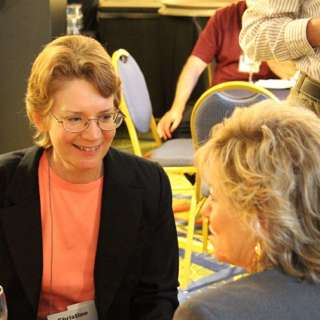
#9 - Christine Peterson on how insecure computers could lead to global disaster, and how to fix it

#9 - Christine Peterson on how insecure computers could lead to global disaster, and how to fix it

Take a trip to Silicon Valley in the 70s and 80s, when going to space sounded like a good way to get around environmental limits, people started cryogenically freezing themselves, and nanotechnology l...

4 Loka 20171h 45min
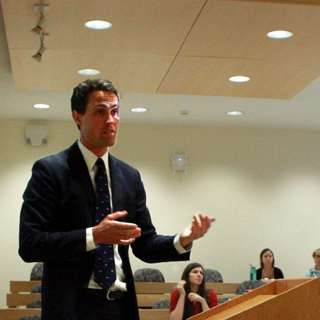
#8 - Lewis Bollard on how to end factory farming in our lifetimes

#8 - Lewis Bollard on how to end factory farming in our lifetimes

Every year tens of billions of animals are raised in terrible conditions in factory farms before being killed for human consumption. Over the last two years Lewis Bollard – Project Officer for Farm An...

27 Syys 20173h 16min

#7 - Julia Galef on making humanity more rational, what EA does wrong, and why Twitter isn’t all bad

#7 - Julia Galef on making humanity more rational, what EA does wrong, and why Twitter isn’t all bad

The scientific revolution in the 16th century was one of the biggest societal shifts in human history, driven by the discovery of new and better methods of figuring out who was right and who was wrong...

13 Syys 20171h 14min

#6 - Toby Ord on why the long-term future matters more than anything else & what to do about it

#6 - Toby Ord on why the long-term future matters more than anything else & what to do about it

Of all the people whose well-being we should care about, only a small fraction are alive today. The rest are members of future generations who are yet to exist. Whether they’ll be born into a world th...

6 Syys 20172h 8min

#5 - Alex Gordon-Brown on how to donate millions in your 20s working in quantitative trading

#5 - Alex Gordon-Brown on how to donate millions in your 20s working in quantitative trading

Quantitative financial trading is one of the highest paying parts of the world’s highest paying industry. 25 to 30 year olds with outstanding maths skills can earn millions a year in an obscure set of...

28 Elo 20171h 45min

Suosittua kategoriassa Koulutus

rss-murhan-anatomia
voi-hyvin-meditaatiot-2
rss-narsisti
adhd-podi
psykopodiaa-podcast
rss-rahamania
rss-uskonto-on-tylsaa
rss-valo-minussa-2
mielipaivakirja
rss-vapaudu-voimaasi
rss-niinku-asia-on
rss-duodecim-lehti
rahapuhetta
ilona-rauhala
aamukahvilla
aloita-meditaatio
kesken
dear-ladies
rss-eron-alkemiaa
rss-arkea-ja-aurinkoa-podcast-espanjasta