

#191 (Part 2) – Carl Shulman on government and society after AGI

#191 (Part 2) – Carl Shulman on government and society after AGI

This is the second part of our marathon interview with Carl Shulman. The first episode is on the economy and national security after AGI. You can listen to them in either order!

If we develop artificial general intelligence that's reasonably aligned with human goals, it could put a fast and near-free superhuman advisor in everyone's pocket. How would that affect culture, government, and our ability to act sensibly and coordinate together?

It's common to worry that AI advances will lead to a proliferation of misinformation and further disconnect us from reality. But in today's conversation, AI expert Carl Shulman argues that this underrates the powerful positive applications the technology could have in the public sphere.

Links to learn more, highlights, and full transcript.

As Carl explains, today the most important questions we face as a society remain in the "realm of subjective judgement" -- without any "robust, well-founded scientific consensus on how to answer them." But if AI 'evals' and interpretability advance to the point that it's possible to demonstrate which AI models have truly superhuman judgement and give consistently trustworthy advice, society could converge on firm or 'best-guess' answers to far more cases.

If the answers are publicly visible and confirmable by all, the pressure on officials to act on that advice could be great.

That's because when it's hard to assess if a line has been crossed or not, we usually give people much more discretion. For instance, a journalist inventing an interview that never happened will get fired because it's an unambiguous violation of honesty norms — but so long as there's no universally agreed-upon standard for selective reporting, that same journalist will have substantial discretion to report information that favours their preferred view more often than that which contradicts it.

Similarly, today we have no generally agreed-upon way to tell when a decision-maker has behaved irresponsibly. But if experience clearly shows that following AI advice is the wise move, not seeking or ignoring such advice could become more like crossing a red line — less like making an understandable mistake and more like fabricating your balance sheet.

To illustrate the possible impact, Carl imagines how the COVID pandemic could have played out in the presence of AI advisors that everyone agrees are exceedingly insightful and reliable. But in practice, a significantly superhuman AI might suggest novel approaches better than any we can suggest.

In the past we've usually found it easier to predict how hard technologies like planes or factories will change than to imagine the social shifts that those technologies will create — and the same is likely happening for AI.

Carl Shulman and host Rob Wiblin discuss the above, as well as:

  • The risk of society using AI to lock in its values.
  • The difficulty of preventing coups once AI is key to the military and police.
  • What international treaties we need to make this go well.
  • How to make AI superhuman at forecasting the future.
  • Whether AI will be able to help us with intractable philosophical questions.
  • Whether we need dedicated projects to make wise AI advisors, or if it will happen automatically as models scale.
  • Why Carl doesn't support AI companies voluntarily pausing AI research, but sees a stronger case for binding international controls once we're closer to 'crunch time.'
  • Opportunities for listeners to contribute to making the future go well.

Chapters:

  • Cold open (00:00:00)
  • Rob’s intro (00:01:16)
  • The interview begins (00:03:24)
  • COVID-19 concrete example (00:11:18)
  • Sceptical arguments against the effect of AI advisors (00:24:16)
  • Value lock-in (00:33:59)
  • How democracies avoid coups (00:48:08)
  • Where AI could most easily help (01:00:25)
  • AI forecasting (01:04:30)
  • Application to the most challenging topics (01:24:03)
  • How to make it happen (01:37:50)
  • International negotiations and coordination and auditing (01:43:54)
  • Opportunities for listeners (02:00:09)
  • Why Carl doesn't support enforced pauses on AI research (02:03:58)
  • How Carl is feeling about the future (02:15:47)
  • Rob’s outro (02:17:37)


Producer and editor: Keiran Harris

Audio engineering team: Ben Cordell, Simon Monsour, Milo McGuire, and Dominic Armstrong

Transcriptions: Katy Moore

Jaksot(325)

Emergency episode: Rob & Howie on the menace of COVID-19, and what both governments & individuals might do to help

Emergency episode: Rob & Howie on the menace of COVID-19, and what both governments & individuals might do to help

From home isolation Rob and Howie just recorded an episode on: 1. How many could die in the crisis, and the risk to your health personally. 2. What individuals might be able to do help tackle the coro...

19 Maalis 20201h 52min

#73 – Phil Trammell on patient philanthropy and waiting to do good

#73 – Phil Trammell on patient philanthropy and waiting to do good

To do good, most of us look to use our time and money to affect the world around us today. But perhaps that's all wrong. If you took $1,000 you were going to donate and instead put it in the stock mar...

17 Maalis 20202h 35min
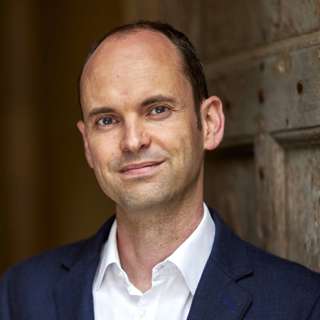
#72 - Toby Ord on the precipice and humanity's potential futures

#72 - Toby Ord on the precipice and humanity's potential futures

This week Oxford academic and 80,000 Hours trustee Dr Toby Ord released his new book The Precipice: Existential Risk and the Future of Humanity. It's about how our long-term future could be better tha...

7 Maalis 20203h 14min

#71 - Benjamin Todd on the key ideas of 80,000 Hours

#71 - Benjamin Todd on the key ideas of 80,000 Hours

The 80,000 Hours Podcast is about “the world’s most pressing problems and how you can use your career to solve them”, and in this episode we tackle that question in the most direct way possible. Las...

2 Maalis 20202h 57min

Arden & Rob on demandingness, work-life balance & injustice (80k team chat #1)

Arden & Rob on demandingness, work-life balance & injustice (80k team chat #1)

Today's bonus episode of the podcast is a quick conversation between me and my fellow 80,000 Hours researcher Arden Koehler about a few topics, including the demandingness of morality, work-life balan...

25 Helmi 202044min

#70 - Dr Cassidy Nelson on the 12 best ways to stop the next pandemic (and limit nCoV)

#70 - Dr Cassidy Nelson on the 12 best ways to stop the next pandemic (and limit nCoV)

nCoV is alarming governments and citizens around the world. It has killed more than 1,000 people, brought the Chinese economy to a standstill, and continues to show up in more and more places. But bad...

13 Helmi 20202h 26min

#69 – Jeffrey Ding on China, its AI dream, and what we get wrong about both

#69 – Jeffrey Ding on China, its AI dream, and what we get wrong about both

The State Council of China's 2017 AI plan was the starting point of China’s AI planning; China’s approach to AI is defined by its top-down and monolithic nature; China is winning the AI arms race; and...

6 Helmi 20201h 37min
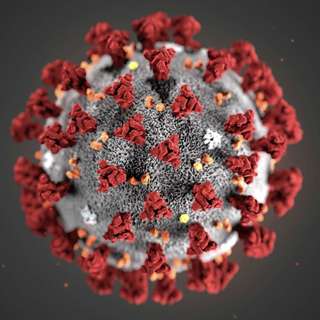
Rob & Howie on what we do and don't know about 2019-nCoV

Rob & Howie on what we do and don't know about 2019-nCoV

Two 80,000 Hours researchers, Robert Wiblin and Howie Lempel, record an experimental bonus episode about the new 2019-nCoV virus.See this list of resources, including many discussed in the episode, to...

3 Helmi 20201h 18min

Suosittua kategoriassa Koulutus

rss-murhan-anatomia
voi-hyvin-meditaatiot-2
rss-narsisti
adhd-podi
psykopodiaa-podcast
rss-rahamania
rss-uskonto-on-tylsaa
rss-valo-minussa-2
mielipaivakirja
rss-vapaudu-voimaasi
rss-niinku-asia-on
rss-duodecim-lehti
rahapuhetta
ilona-rauhala
aamukahvilla
aloita-meditaatio
kesken
dear-ladies
rss-eron-alkemiaa
rss-arkea-ja-aurinkoa-podcast-espanjasta