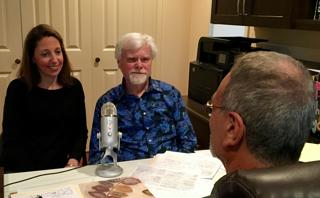

031: Live Session (Mark) — Agenda Setting Phase (Part 3)

031: Live Session (Mark) — Agenda Setting Phase (Part 3)

In the early days of my career, I (Dr. Burns) would have assumed that Mark definitely wanted to change--after all, he'd been in a lot of pain for a long time, and he came to the session because he wanted help. So, following the empathy phase of the session, I would have jumped in with a variety of cognitive therapy techniques to help Mark challenge his Negative Thoughts, such as "I've been a failure as a father," or "my brain is defective." Although this might have been effective, there's a good chance that it might not have worked. That's because Mark might have "yes-butted" me or insisted that he really was a failure and that I just wasn't "getting it."

In fact, the attempt to help the patient without first dealing with the patient's resistance is the cause of nearly all therapeutic failure. But most therapists make this mistake over and over--and don't realize that their well-intentioned efforts to help actually trigger and reinforce the patient's resistance.

Instead, TEAM Therapists use a number of Paradoxical Agenda Setting (PAS) techniques designed to bring the patient's subconscious resistance to conscious awareness. Then we melt the resistance away before attempting to change the way the patient is thinking and feeling. I (DB) have developed 15 or 20 PAS techniques, and Jill and I used several of them in our session with Mark:

  • The Invitation Step
  • The Miracle Cure Question
  • The Magic Button
  • Positive Reframing
  • The Acid Test
  • The Magic Dial

When Jill and I use Positive Reframing, we are hoping that Mark will make an unexpected discovery--that his negative thoughts and feelings, such as his sadness, shame, discouragement, and inadequacy actually reflect his core values and show what a positive, awesome human being he is. In other words, he will discover that his core values are actually the source of his symptoms as well as his resistance to change.

This approach represents a radical departure from the way many psychiatrists and psychologists think about psychiatric symptoms as well as resistance. When I was a psychiatric resident, I (DB) was trained to think about resistance as something negative. For example, we may tell ourselves that resistant patients cling to their feelings of depression and worthlessness because they want attention, because they want to feel sorry for themselves, because they fear change, or because they are afraid will lose their identity if they recover. While there's some truth in these formulations, they may not be helpful because they tend to cast the patient in a negative light, as if their symptoms and their resistance to change were somehow bad, or childish, or based on some kind of chemical imbalance in their brains. As you will see, the TEAM-CBT approach approaches resistance is radically different manner.

We will give you the chance to pause the podcast briefly and try your own hand at Positive Reframing before you hear it live during the session. Specifically, we will ask you to review Mark's Daily Mood Log, and ask yourself these two questions about each of his negative thoughts and feelings:

  • What does this negative thought or feeling show about Mark that is beautiful, positive, and awesome?
  • What are some benefits, or advantages, of this negative thought or feeling? Are there some ways that this thought or feeling is helping Mark?

As you so this, make a list of as many Positives as you can on a piece of paper. See what you can come up with.

I want to warn you that it may be difficult to come up with your list of Positives at first. If so, this is good, because when you hear the next podcast, you'll have many "ah ha!" moments and it will all become quite obvious to you. Then you will have a new and deeper understanding of resistance--an understanding that can help you greatly if you are a therapist or if you are struggling with your own feelings of depression and anxiety.

Jill gives a great overview of why the paradoxical approach is necessary during the Paradoxical Agenda Setting phase of the session.

To learn more about Paradoxical Agenda Setting, you can read David's featured article in the March / April 2017 issue of Psychotherapy Networker entitled "When Helping Doesn't Help." You will see how he helped a woman struggling with intense depression, anxiety and rage due to decades of horrific domestic rape and violence.

Jaksot(512)

030: Live Session (Mark) — Empathy Phase (Part 2)

030: Live Session (Mark) — Empathy Phase (Part 2)

After reviewing Mark's scores on the Brief Mood Survey, the Empathy phase of the session unfolds. During this phase of the session, David and Jill will not try to help, rescue, or save Mark. They will...

3 Huhti 201747min

029: Live Session (Mark) — Introduction & Testing Phase (Part 1)

029: Live Session (Mark) — Introduction & Testing Phase (Part 1)

This is the first in a series of podcasts that will feature live therapy. As you listen, you'll have the opportunity to peak behind closed doors to see how TEAM-CBT actually works in a real-world sett...

27 Maalis 201730min

028: Scared Stiff — The Motivational Model (Part 6)

028: Scared Stiff — The Motivational Model (Part 6)

The key is bringing the patient's subconscious resistance to conscious awareness, and melting it away with paradoxical techniques. This is absolutely critical if you are hoping to see a complete elimi...

20 Maalis 201746min

027: Scared Stiff — The Hidden Emotion Model (Part 5)

027: Scared Stiff — The Hidden Emotion Model (Part 5)

David reminds us about the differences between healthy fear and unhealthy, neurotic anxiety, or an anxiety "disorder" like a phobia, or OCD, and so forth. He explains that negative thoughts, and not e...

13 Maalis 201726min

026: Scared Stiff — The Exposure Model (Part 4)

026: Scared Stiff — The Exposure Model (Part 4)

We begin by describing the three different deaths of the ego that are required for recovery from depression, anxiety, or a relationship conflict, respectively. For depression recovery often results fr...

6 Maalis 201744min

025: Ask David — How do you handle a patient you don't like (or who bores you)?

025: Ask David — How do you handle a patient you don't like (or who bores you)?

David answers these questions: How do you deal with a patient (or friend) who is boring? How do you deal with a patient (or friend) you don't like? How do you get patients to do their psychotherapy ho...

27 Helmi 201737min

024: Scared Stiff — The Cognitive Model (Part 3)

024: Scared Stiff — The Cognitive Model (Part 3)

The cognitive model of anxiety is based on three powerful ideas: Anxiety always results from negative thought (NTs) that involve the prediction of danger. For example, if you have public speaking anx...

20 Helmi 201751min

Suosittua kategoriassa Koulutus

rss-murhan-anatomia
voi-hyvin-meditaatiot-2
rss-narsisti
psykopodiaa-podcast
rss-vapaudu-voimaasi
rss-niinku-asia-on
psykologia
rss-liian-kuuma-peruna
rss-duodecim-lehti
rss-uskonto-on-tylsaa
rss-valo-minussa-2
adhd-podi
aamukahvilla
kesken
koulu-podcast-2
adhd-tyylilla
jari-sarasvuo-podcast
rss-turun-yliopisto
rss-luonnollinen-synnytys-podcast
rss-laiska-joogi