047: Tools... not Schools of Therapy

047: Tools... not Schools of Therapy

The title of David's TEAM-CBT eBook for therapists is Tools, Not Schools, of Therapy. David explains that the field of psychotherapy is dominated by numerous schools of therapy that compete like religions, or even cults, each claiming to have the answer to emotional suffering. So you've got the psychodynamic school, and the psychoanalytic school, the Adlerian school, the Beckian cognitive therapy school, the Jungian school, and tons more, including EMDR, behavior therapy, humanistic therapy, ACT, TMT, EMT, and so forth. Wikipedia lists more than 50 major schools of psychotherapy, but there are way more than that, as new schools emerge almost on a weekly basis.

David describes several conversations with the late Dr. Albert Ellis, who argued that most schools of therapy were started by narcissistic and emotionally disturbed individuals. Ellis claimed that most were self-promoting, dishonest individuals who claimed to know the true "causes" of emotional distress and insisted they had the "best" treatment methods. And yet, research almost never supports these claims.

David, who is a medical doctor, points out that we don't have competing schools of medicine. Can you imagine what it would be like if we did? Let's say you broke your leg, and went to a doctor who prescribes penicillin. You ask why he's prescribing penicillin for a broken leg, and he explains that he's a member of the penicillin school. He says he always prescribes penicillin—it's good for whatever ails you!

That would be like an Alice in Wonderland world. And yet, that's precisely how psychiatry and psychotherapy are currently set up. If you're depressed and you go to a psychiatrist, you'll be treated with pills. If you go to a psychoanalytic therapist, you'll get psychoanalysis. Or if you go to a practitioner of EMDR, TFT, or Rational Emotive Therapy (RET), you'll get EMDR, TFT, or RET. David argues that this just doesn't make sense.

David argues that the fields needs to move from competing schools of therapy to a new, science-based, data-driven psychotherapy. He emphasizes that we've learned a lot from most of the schools of therapy, and that many have provided us with valuable insights about human nature as well as some useful treatment techniques. But now it's time to move on, leaving all the schools of therapy behind. David acknowledges that this message may seem harsh or upsetting to some listeners, and apologizes for that ahead of time.

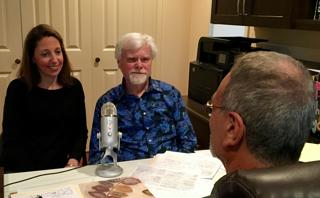
David and Fabrice also discuss the spiritual basis of effective psychotherapy, and David describes the reaction of his father, a Lutheran minister, on the day that David was born, as well as a tip his mother gave him when he was in third grade.

In the next Feeling Good Podcast, David and Fabrice will describe Relapse Prevention Training, since the likelihood of relapse after successful treatment is 100%. But if the patient knows what to do, the relapse doesn't have to be a problem.

Jaksot(512)

031: Live Session (Mark) — Agenda Setting Phase (Part 3)

031: Live Session (Mark) — Agenda Setting Phase (Part 3)

In the early days of my career, I (Dr. Burns) would have assumed that Mark definitely wanted to change--after all, he'd been in a lot of pain for a long time, and he came to the session because he wan...

10 Huhti 201731min
030: Live Session (Mark) — Empathy Phase (Part 2)

030: Live Session (Mark) — Empathy Phase (Part 2)

After reviewing Mark's scores on the Brief Mood Survey, the Empathy phase of the session unfolds. During this phase of the session, David and Jill will not try to help, rescue, or save Mark. They will...

3 Huhti 201747min

029: Live Session (Mark) — Introduction & Testing Phase (Part 1)

029: Live Session (Mark) — Introduction & Testing Phase (Part 1)

This is the first in a series of podcasts that will feature live therapy. As you listen, you'll have the opportunity to peak behind closed doors to see how TEAM-CBT actually works in a real-world sett...

27 Maalis 201730min
028: Scared Stiff — The Motivational Model (Part 6)

028: Scared Stiff — The Motivational Model (Part 6)

The key is bringing the patient's subconscious resistance to conscious awareness, and melting it away with paradoxical techniques. This is absolutely critical if you are hoping to see a complete elimi...

20 Maalis 201746min

027: Scared Stiff — The Hidden Emotion Model (Part 5)

027: Scared Stiff — The Hidden Emotion Model (Part 5)

David reminds us about the differences between healthy fear and unhealthy, neurotic anxiety, or an anxiety "disorder" like a phobia, or OCD, and so forth. He explains that negative thoughts, and not e...

13 Maalis 201726min

026: Scared Stiff — The Exposure Model (Part 4)

026: Scared Stiff — The Exposure Model (Part 4)

We begin by describing the three different deaths of the ego that are required for recovery from depression, anxiety, or a relationship conflict, respectively. For depression recovery often results fr...

6 Maalis 201744min

025: Ask David — How do you handle a patient you don't like (or who bores you)?

025: Ask David — How do you handle a patient you don't like (or who bores you)?

David answers these questions: How do you deal with a patient (or friend) who is boring? How do you deal with a patient (or friend) you don't like? How do you get patients to do their psychotherapy ho...

27 Helmi 201737min

024: Scared Stiff — The Cognitive Model (Part 3)

024: Scared Stiff — The Cognitive Model (Part 3)

The cognitive model of anxiety is based on three powerful ideas: Anxiety always results from negative thought (NTs) that involve the prediction of danger. For example, if you have public speaking anx...

20 Helmi 201751min

Suosittua kategoriassa Koulutus

rss-murhan-anatomia
voi-hyvin-meditaatiot-2
rss-narsisti
rss-uskonto-on-tylsaa
rss-vapaudu-voimaasi
psykologia
rss-liian-kuuma-peruna
psykopodiaa-podcast
rss-duodecim-lehti
adhd-podi
aamukahvilla
kesken
rss-valo-minussa-2
rss-tietoinen-yhteys-podcast-2
rss-hereilla
filocast-filosofian-perusteet
rss-taloustaito-podcast
rss-turun-yliopisto
rss-luonnollinen-synnytys-podcast
rss-synapselingo-opi-englantia