
050: Live Session (Marilyn) — Agenda Setting (Part 2)

050: Live Session (Marilyn) — Agenda Setting (Part 2)

The Hidden Side of Depression, Anxiety, Defectiveness, Hopelessness and Rage

We nearly always think about negative feelings, such as moderate or severe depression, as problems that an expert must try to fix, using drugs and / or psychotherapy. There are a multitude of theories about why humans become depressed, including, but not limited to:

  • We get depressed because reality sucks. We believe our mood slumps result from the circumstances in our lives, such as being alone following a rejection, experiencing the loss of a loved one, not having enough money, education or resources, social prejudice, or (as in Marilyn's case) facing some catastrophic circumstance, such as severe illness.
  • We get depressed because of insufficient love and nurturing in childhood, or because of traumatic childhood experiences.
  • Biological factors. We get depressed because of our genes, or diet, or because of a chemical imbalance in our brains.

Certainly, there can be some truth in all of these theories. Reality does kick us all in the stomach from time to time, and the pain we feel is understandable. My wife and I lost her father to Parkinson's Disease a few years ago. We loved him tremendously, and his loss was extremely painful for everyone in our family.

And most of us have experienced less than ideal circumstances when growing up, and many have even been victimized by horrific and tragic circumstances, such as child abuse. And clearly, some severe psychiatric illnesses, such as schizophrenia, do result from some kind of brain abnormality.

But the problem with all of these theories is that they put us at the mercy of forces that are largely beyond our control—since we often cannot do much to change reality, rewrite our childhoods, or modify our brains short of taking this or that medication.

In this podcast, Matt and David take a radically different approach, and argue that Marilyn's intense feelings of depression and anxiety are not "mental disorders" that reflect some defect in Marilyn, but rather the expression of what is most beautiful and awesome about her. They also argue that there are large numbers of advantages, or benefits, of feeling the way she does, using several Paradoxical Agenda Setting techniques such as the Miracle Cure Question, Magic Button, Positive Reframing, and Magic Dial. The results are stunning and unexpected. Or, as Marilyn put it, this portion of the session was "mind-blowing."

The third and final podcast next week will include the M = Methods phase of the session along with the end-of-session T = Testing and wrap-up, including Relapse Prevention Training.

Marilyn DML with goal column

Jaksot(512)

039: Uncovering Techniques (Part 1) — The Individual Downward Arrow

039: Uncovering Techniques (Part 1) — The Individual Downward Arrow

What are the root causes of depression? Anxiety? Relationship problems? In this, and the next two podcasts, you will discover the answer! Cognitive Therapists believe that negative thoughts, or cognit...

5 Kesä 201739min

038: Ask David — Negative Messages from Society

038: Ask David — Negative Messages from Society

A listener named Daisy describes her despair at being unable to have a baby, despite intensive efforts at a fertility clinic. She gets well-meaning messages from friends, family and support groups tha...

29 Touko 201725min

037: Ask David — "My negative thoughts aren't distorted!"

037: Ask David — "My negative thoughts aren't distorted!"

"My problems are real! The world really IS screwed up! And that's not a distortion. So what can I do about my severe depression and anxiety?" David and Fabrice discuss two questions submitted by Feeli...

22 Touko 201725min

036: Ask David — Empowering the Victim With the Five Secrets

036: Ask David — Empowering the Victim With the Five Secrets

A blog reader made a fairly strong and impassioned comment that sometimes asking the patient to examine ways she or he may be contributing to the problem may be a mistake when the patient really IS a ...

15 Touko 201739min

035: Live Session (Mark) — Final Testing, Wrap Up (Part 7)

035: Live Session (Mark) — Final Testing, Wrap Up (Part 7)

This is the last live therapy podcast with Mark, the physician who was convinced he was a failure as a father because of his difficulties forming a close, loving relationship with his oldest son. Alth...

8 Touko 201748min

034: Live Session (Mark) — Methods Phase, cont'd. (Part 6)

034: Live Session (Mark) — Methods Phase, cont'd. (Part 6)

Using the Externalization of Voices, which is arguably the most powerful Cognitive Therapy technique ever created, David & Jill continue encouraging mark to challenge his negative thoughts. The goal o...

1 Touko 201744min

033: Live Session (Mark) — Methods Phase (Part 5)

033: Live Session (Mark) — Methods Phase (Part 5)

David and Jill begin using M = Methods to challenge the Negative Thought Mark wants to work on first: "There must be something defective in my brain that prevents me from forming a loving relationship...

24 Huhti 201749min
032: Live Session (Mark) — Agenda Setting Phase (Part 4)

032: Live Session (Mark) — Agenda Setting Phase (Part 4)

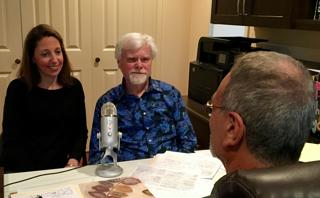
Jill and David encourage Mark to develop his list of positives. Mark draws a blank at first. This is very common among patients and therapists alike. Most of us have not been trained to think about de...

17 Huhti 201735min

Suosittua kategoriassa Koulutus

rss-murhan-anatomia
voi-hyvin-meditaatiot-2
rss-narsisti
psykopodiaa-podcast
rss-vapaudu-voimaasi
rss-niinku-asia-on
psykologia
rss-liian-kuuma-peruna
rss-duodecim-lehti
rss-uskonto-on-tylsaa
rss-valo-minussa-2
adhd-podi
aamukahvilla
kesken
koulu-podcast-2
adhd-tyylilla
jari-sarasvuo-podcast
rss-turun-yliopisto
rss-luonnollinen-synnytys-podcast
rss-laiska-joogi