100: The New Micro-Neurosurgery — A Remarkable Interview with Dr. Mark Noble

100: The New Micro-Neurosurgery — A Remarkable Interview with Dr. Mark Noble

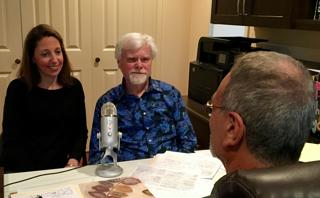
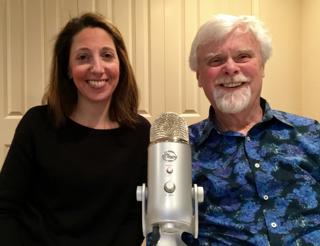
The famed neuroscientist, Dr. Mark Noble, from the University of Rochester, has developed a strong interest in TEAM-CBT and has visited our Tuesday group and Sunday hikes on three occasions this year. I (David) feel very fortunate to have his collaboration and interest!

Mark is a Stanford-trained geneticist and molecular biologist who is considered one of founders of the field of stem cell research. He has been developing a model of how TEAM-CBT affects the brain, and graciously agreed to present his model at our Tuesday evening Stanford TEAM-CBT seminar last week. Although his model is not yet fully polished and refined, and involves considerable speculation, it is an exciting first step, kind of like the time when astronomers broke away from the Catholic church and started trying to make sense of the universe. In this instance it is the "inner universe" Dr. Noble, all of us, are trying to understand. His model will evolve and get more and more refined over time.

The participants in the seminar really liked his concept that we are doing micro-neurosurgery for depressed patients with TEAM-CBT! He is convinced that the rapid recovery we see with TEAM-CBT will probably never be equaled by medication, since the brain circuits that modulate happiness and unhappiness tend to use the same neurotransmitters. But with language, you can affect brain circuits far more selectively and effectively, almost like a micro-neuro-surgeon.

Dr. Noble describes brain function in terms of the SNEFF model. This stands for Structures, Networks, Emotions, Frames and Filters, and links these concepts to the prefrontal cortex, amygdala and sympathetic nervous system. Then he describes the four steps of TEAM (T = Testing, E = Empathy, A = (Paradoxical) Agenda Setting, and M = Methods), and links each step to the SNEFF model, making interesting speculations on how TEAM works and what makes it so effective.

Dr. Noble also discusses David's "fractal" theory about psychotherapy and relates that to brain function as well as to the mathematics of complex structures. He describes how and why some people get stuck in the "homeostasis" of chronic, refractory depression and explains why TEAM-CBT is usually able to trigger sudden and dramatic changes in the brain, as well as in the way the depressed and anxious individual thinks, feels, and behaves. He also explains why conventional talk therapy is unlikely to be helpful for individuals struggling with depression and anxiety, and may, in some cases, make the depression worse.

This is because neurons that "fire together wire together." In other words, if you go to therapy and complain or emote about your life and your problems over and over, without taking action to change, the circuits in your brain that support complaining and feeling depressed will just get more and more intensely wired together.

Dr. Noble also speculates on why Paradoxical Agenda Setting is such an important key in ultra-rapid-recovery and in the sudden transformation of brain function as well.

Years ago, when I was kid on vacation in Minnesota, I saw an article in a small newspaper published in a rural area. A local scientist had speculated that one day we would have guided missiles and satellites and drew a simple diagram for the newspaper of how they would work. At the time it seemed a bit like science fiction, and I wondered if an unknown scientist from a small rural Minnesota town could actually predict a major scientific development. But now we see that he was right.

Will we someday think about Dr. Noble in the same way? Listen to this exciting podcast, and you can decide for yourself!

Jaksot(512)

031: Live Session (Mark) — Agenda Setting Phase (Part 3)

031: Live Session (Mark) — Agenda Setting Phase (Part 3)

In the early days of my career, I (Dr. Burns) would have assumed that Mark definitely wanted to change--after all, he'd been in a lot of pain for a long time, and he came to the session because he wan...

10 Huhti 201731min
030: Live Session (Mark) — Empathy Phase (Part 2)

030: Live Session (Mark) — Empathy Phase (Part 2)

After reviewing Mark's scores on the Brief Mood Survey, the Empathy phase of the session unfolds. During this phase of the session, David and Jill will not try to help, rescue, or save Mark. They will...

3 Huhti 201747min

029: Live Session (Mark) — Introduction & Testing Phase (Part 1)

029: Live Session (Mark) — Introduction & Testing Phase (Part 1)

This is the first in a series of podcasts that will feature live therapy. As you listen, you'll have the opportunity to peak behind closed doors to see how TEAM-CBT actually works in a real-world sett...

27 Maalis 201730min
028: Scared Stiff — The Motivational Model (Part 6)

028: Scared Stiff — The Motivational Model (Part 6)

The key is bringing the patient's subconscious resistance to conscious awareness, and melting it away with paradoxical techniques. This is absolutely critical if you are hoping to see a complete elimi...

20 Maalis 201746min

027: Scared Stiff — The Hidden Emotion Model (Part 5)

027: Scared Stiff — The Hidden Emotion Model (Part 5)

David reminds us about the differences between healthy fear and unhealthy, neurotic anxiety, or an anxiety "disorder" like a phobia, or OCD, and so forth. He explains that negative thoughts, and not e...

13 Maalis 201726min

026: Scared Stiff — The Exposure Model (Part 4)

026: Scared Stiff — The Exposure Model (Part 4)

We begin by describing the three different deaths of the ego that are required for recovery from depression, anxiety, or a relationship conflict, respectively. For depression recovery often results fr...

6 Maalis 201744min

025: Ask David — How do you handle a patient you don't like (or who bores you)?

025: Ask David — How do you handle a patient you don't like (or who bores you)?

David answers these questions: How do you deal with a patient (or friend) who is boring? How do you deal with a patient (or friend) you don't like? How do you get patients to do their psychotherapy ho...

27 Helmi 201737min

024: Scared Stiff — The Cognitive Model (Part 3)

024: Scared Stiff — The Cognitive Model (Part 3)

The cognitive model of anxiety is based on three powerful ideas: Anxiety always results from negative thought (NTs) that involve the prediction of danger. For example, if you have public speaking anx...

20 Helmi 201751min

Suosittua kategoriassa Koulutus

rss-murhan-anatomia
voi-hyvin-meditaatiot-2
rss-narsisti
psykopodiaa-podcast
rss-vapaudu-voimaasi
rss-uskonto-on-tylsaa
psykologia
rss-liian-kuuma-peruna
rss-duodecim-lehti
aamukahvilla
rss-valo-minussa-2
kesken
rss-niinku-asia-on
adhd-podi
koulu-podcast-2
jari-sarasvuo-podcast
rss-xamk-podcast
rss-luonnollinen-synnytys-podcast
rss-laiska-joogi
rss-opi-espanjaa