387: The Acceptance and Resistance Survey, Part 2 of 2

387: The Acceptance and Resistance Survey, Part 2 of 2

Why Do We Resist Accepting Ourselves Other People, and the World? The Five Most Common Reasons!

Rhonda and David are joined in today's podcast by Dr. Matt May, a super popular and loved guest on our show, to discuss the resistance findings in David's recent survey on acceptance and resistance. The following is a summary of some of the statistical findings, but the actual podcast dialogue was wide ranging and tremendously engaging, and won't require a lot of statistical smarts!

We also discussed the vitally important difference between healthy and unhealthy acceptance.

  • Healthy acceptance is accompanied by feelings of joy, lightness, and liberation. Unhealth acceptance is accompanied by feelings of unhappiness and despair.
  • Unhealthy acceptance is characterized by Should Statements and self-punishment for your failures and shortcomings.
  • Healthy acceptance is an expression of self-love.

The group brought the five most common reasons to life with engaging stories.

Why should you accept yourself? We are not saying that you "should," and it's really a decision. However, the statistical models the I (David) developed indicated that healthy acceptance can trigger a 49% reduction in negative feelings and a 39% boost in positive feelings, which is tremendous.

Matt told an inspiring story about two strategy for training the dolphins at SeaWorld. One strategy involved trying to shape the behavior of the dolphins with little shocks, in much the same way that some people train horses. Sadly, the dolphins went to the bottom of the pool and appeared depressed, not moving much. It was a complete failure.

Then they tried a radically different strategy--they gave a new group of dolphins fish to reward them for doing the things the trainers wanted them to do. This strategy was tremendously successful.

So, the question is whether you want to shape your own life with frequent shoulds and self-criticisms, which can have the effect of electric shocks every time you fail or screw up or fall short of your goals, or whether you want to shape your life with love and rewards. Some of us have discovered that acceptance is way more fun and vastly more effective!

Quick Bottom Line

The typical survey respondent endorsed 1/3 of the 12 Resistance Scale items, and seemed to believed that Acceptance would be foolish and lead to a life of misery and mediocrity. The actual causal impact of the Non-Acceptance and Resistance scales on positive and negative feelings was massive and appeared to be in the exact opposite direction.

Findings

The respondents in the Resistance survey endorsed an average of 33.8%. (+/- 0.1%) of the items, ranging from 0 to all 12. The most commonly endorsed was, "Acceptance is easy for rich and famous, but hard if you're struggling just to pay the bills." 47% (+/- 2%) endorsed this item.

The least endorsed was, "If I beat up on myself, people will love me more," although 25% (+/- 1%) of the people endorsed this item, so it was fairly popular. The high scores on the resistance scale items is also pretty consistent with my experiences over the years—the people in the study, and the people I've worked with, have expressed MANY reasons to beat up on themselves.

You can see the list of the 12 Resistance Scale items below. I have bolded the five most often endorsed. As you can see, many people surveyed believed that acceptance is fine for people who are rich and famous, but terribly painful and foolish for people who struggle with real problems. Many respondents were convinced that acceptance leads to pain, robs you of motivation and does not make sense in a the world that's falling apart.

  1. If I accept my flaws and shortcomings, I'll end up with a second-rate life.
  2. If I accept my flaws and shortcomings, I'll lose all my motivation to learn
  3. If I beat up on myself and work my ass off, people will love and admire me.
  4. It would be tremendously painful to accept my flaws and shortcomings. That would be like giving up and having to live with a heavy load of inadequacies.
  5. Life has many real disappointments and losses. I don't want to feel happy and chipper by "accepting" all those negatives when the world is falling apart all around me. That just doesn't make sense!
  6. I haven't achieved many of my goals in life. I think it would be kind of pathetic to suddenly accept myself and feel enormous joy that I haven't really earned or deserved.
  7. I've often fallen short, and I've made a lot of mistakes in my life. Are you saying that I should be happy about that? Hell NO!
  8. I am never going to accept myself as just another average or below-average person. That would be awful!
  9. If I accept my flaws, failures, and shortcomings, I'll just be like everyone else. I won't be special, and I won't have the chance to become special.
  10. If I admit that I often fail and screw up, people will think less of me.
  11. If I've done things that have hurt others or if I've violated my moral values, then I deserve to suffer.
  12. Acceptance is fine and easy for people who've enjoyed tremendous success, but it's really hard if you're struggling to pay the bills, or if you feel like you haven't succeeded at much.

What did the analyses show about the impact of resistance and non-acceptance on how we feel?

  • The Resistance scale had powerful direct causal effects on the Non-Acceptance scale and accounted for a whopping 46% of the variance is the Non-Acceptance scale. In other words, the more intense your resistance, the more you will fight against accepting your flaws.
  • The causal effects of the Acceptance and Resistance scales on negative and positive feelings were massive. They can reduce positive feelings by as much as -48% and increase negative feelings by as much as +47%. Or, to put it differently, the statistical models predict that healthy self-acceptance will not lead to misery and isolation, but can dramatically reduce unhappiness and boost feelings of joy and self-esteem.
  • The total effects of Singleness and Income on positive and negative feelings were relatively small, by comparison. In addition, about half of the causal effects of Singleness and Income are indirect and mediated by their causal effects on the Resistance and Non-Acceptance scales.
  • The direct effects of Singleness on the positive and negative feelings scales were -4% (positive feelings) and +6% (negative feelings).
  • The maximum direct effects of income on negative feelings were +4% (positive feelings) and -9% on negative feelings). To experience this boost if you're in the lowest income bracket (<$25,000), you'd need a massive increase in income (>$200,,000.)
  • Almost all of the 12 items were more strongly endorsed by younger individuals. Three items—Ri, R8 and R9—were more strongly endorsed by men at the p <.001 level or better. All three items had to do with the fear of not being "special" and ending up with a second-rate life if you accept yourself.
  • White and Heterosexual were not associated with any Resistance items. However, individuals with more income and education were less likely to endorse many of the items.
  • Higher educated respondents were less likely to endorse R1, 2, 4, 6, 7 and 12, and those with greater incomes were less likely to endorse R12. These were large effects.

Thanks for listening today1

Rhonda, Matt, and David

Jaksot(512)

039: Uncovering Techniques (Part 1) — The Individual Downward Arrow

039: Uncovering Techniques (Part 1) — The Individual Downward Arrow

What are the root causes of depression? Anxiety? Relationship problems? In this, and the next two podcasts, you will discover the answer! Cognitive Therapists believe that negative thoughts, or cognit...

5 Kesä 201739min

038: Ask David — Negative Messages from Society

038: Ask David — Negative Messages from Society

A listener named Daisy describes her despair at being unable to have a baby, despite intensive efforts at a fertility clinic. She gets well-meaning messages from friends, family and support groups tha...

29 Touko 201725min

037: Ask David — "My negative thoughts aren't distorted!"

037: Ask David — "My negative thoughts aren't distorted!"

"My problems are real! The world really IS screwed up! And that's not a distortion. So what can I do about my severe depression and anxiety?" David and Fabrice discuss two questions submitted by Feeli...

22 Touko 201725min

036: Ask David — Empowering the Victim With the Five Secrets

036: Ask David — Empowering the Victim With the Five Secrets

A blog reader made a fairly strong and impassioned comment that sometimes asking the patient to examine ways she or he may be contributing to the problem may be a mistake when the patient really IS a ...

15 Touko 201739min

035: Live Session (Mark) — Final Testing, Wrap Up (Part 7)

035: Live Session (Mark) — Final Testing, Wrap Up (Part 7)

This is the last live therapy podcast with Mark, the physician who was convinced he was a failure as a father because of his difficulties forming a close, loving relationship with his oldest son. Alth...

8 Touko 201748min

034: Live Session (Mark) — Methods Phase, cont'd. (Part 6)

034: Live Session (Mark) — Methods Phase, cont'd. (Part 6)

Using the Externalization of Voices, which is arguably the most powerful Cognitive Therapy technique ever created, David & Jill continue encouraging mark to challenge his negative thoughts. The goal o...

1 Touko 201744min

033: Live Session (Mark) — Methods Phase (Part 5)

033: Live Session (Mark) — Methods Phase (Part 5)

David and Jill begin using M = Methods to challenge the Negative Thought Mark wants to work on first: "There must be something defective in my brain that prevents me from forming a loving relationship...

24 Huhti 201749min
032: Live Session (Mark) — Agenda Setting Phase (Part 4)

032: Live Session (Mark) — Agenda Setting Phase (Part 4)

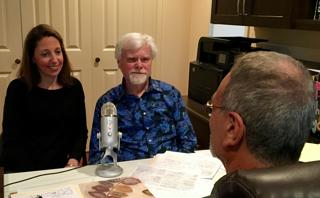
Jill and David encourage Mark to develop his list of positives. Mark draws a blank at first. This is very common among patients and therapists alike. Most of us have not been trained to think about de...

17 Huhti 201735min

Suosittua kategoriassa Koulutus

rss-murhan-anatomia
voi-hyvin-meditaatiot-2
rss-narsisti
psykopodiaa-podcast
rss-vapaudu-voimaasi
rss-niinku-asia-on
psykologia
rss-liian-kuuma-peruna
rss-duodecim-lehti
rss-uskonto-on-tylsaa
rss-valo-minussa-2
adhd-podi
aamukahvilla
kesken
koulu-podcast-2
adhd-tyylilla
jari-sarasvuo-podcast
rss-turun-yliopisto
rss-luonnollinen-synnytys-podcast
rss-laiska-joogi