[MINI] Sudoku \in NP
Data Skeptic10 Marras 2017

[MINI] Sudoku \in NP

Algorithms with similar runtimes are said to be in the same complexity class. That runtime is measured in the how many steps an algorithm takes relative to the input size.

The class P contains all algorithms which run in polynomial time (basically, a nested for loop iterating over the input). NP are algorithms which seem to require brute force. Brute force search cannot be done in polynomial time, so it seems that problems in NP are more difficult than problems in P. I say it "seems" this way because, while most people believe it to be true, it has not been proven. This is the famous P vs. NP conjecture. It will be discussed in more detail in a future episode.

Given a solution to a particular problem, if it can be verified/checked in polynomial time, that problem might be in NP. If someone hands you a completed Sudoku puzzle, it's not difficult to see if they made any mistakes. The effort of developing the solution to the Sudoku game seems to be intrinsically more difficult. In fact, as far as anyone knows, in the general case of all possible examples of the game, it seems no strategy can do better on average than just random guessing.

This notion of random guessing the solution is where the N in NP comes from: Non-deterministic. Imagine a machine with a random input already written in its memory. Given enough such machines, one of them will have the right answer. If they all ran in parallel, one of them could verify it's input in polynomial time. This guess / provided input is often called a witness string.

NP is an important concept for many reasons. To me, the most reason to know about NP is a practical one. Depending on your goals or the goals of your employer, there are many challenging problems you may attempt to solve. If a problem you are trying to solve happens to be in NP, then you should consider the implications very carefully. Perhaps you'll be lucky and discover that your particular instance of the problem is easy. Sudoku is pretty easy if only 2 remaining squares need to be filled in. The traveling salesman problem is easy to solve if you live in a country where all roads for a ring with exactly one road in and out.

If the problem you wish to solve is not trivial, or if you will face many instances of the problem and expect some will not be trivial, then it's unlikely you'll be able to find the exact solution. Sure, maybe you can grab a bunch of commodity servers and try to scale the heck out of your attempt. Depending on the problem you're solving, that might just work. If you can out-purchase your problem in computing power, then problems in NP will surrender to you. But if your input size ever grows, it's unlikely you'll be able to keep up.

If your problem is intractable in this way, all is not lost. You might be able to find an approximate solution to your problem. Good enough is better than no solution at all, right? Most of the time, probably. However, some tremendous work has also been done studying topics like this. Are there problems which are not even approximable in polynomial time? What approximation techniques work best? Alas, those answers lie elsewhere.

This episode avoids a discussion of a few key points in order to keep the material accessible. If you find this interesting, you should next familiarize yourself with the notions of NP-Complete, NP-Hard, and co-NP. These are topics we won't necessarily get to in future episodes. Michael Sipser's Introduction to the Theory of Computation is a good resource.

Tämä jakso on lisätty Podme-palveluun avoimen RSS-syötteen kautta eikä se ole Podmen omaa tuotantoa. Siksi jakso saattaa sisältää mainontaa.

Jaksot(601)

Bird Distribution Modeling with Satbird

Bird Distribution Modeling with Satbird

This episode features an interview with Mélisande Teng, a PhD candidate at Université de Montréal. Her research lies in the intersection of remote sensing and computer vision for biodiversity monitori...

10 Syys 202439min
Ant Encounters

Ant Encounters

In this interview with author Deborah Gordon, Kyle asks questions about the mechanisms at work in an ant colony and what ants might teach us about how to build artificial intelligence. Ants are surpri...

26 Elo 202431min
Computing Toolbox

Computing Toolbox

This season it's become clear that computing skills are vital for working in the natural sciences. In this episode, we were fortunate to speak with Madlen Wilmes, co-author of the book "Computing Skil...

19 Elo 202438min
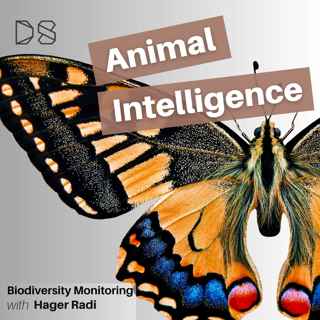
Biodiversity Monitoring

Biodiversity Monitoring

In this episode, we talked shop with Hager Radi about her biodiversity monitoring work. While biodiversity modeling may sound simple, count organisms and mark their location, there is a lot more to it...

14 Elo 202432min

Hacking the Colony

Hacking the Colony

Today, Ashay Aswale and Tony Lopez shared their work on swarm robotics and what they have learned from ants. Robotic swarms must solve the same problems that eusocial insects do. What if your pheromon...

8 Elo 202441min
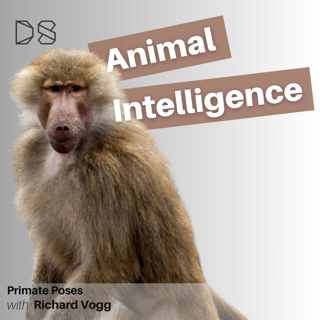
Primate Poses

Primate Poses

During this season we have talked with researchers working to utilize machine learning for behavioral observations. In previous episodes, you have heard about the software people like Richard use, but...

31 Heinä 202432min
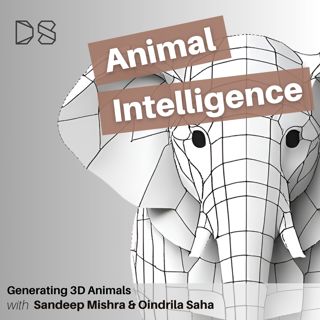
Generating 3D Animals with YouDream

Generating 3D Animals with YouDream

Generative AI can struggle to create realistic animals and 2D representations often have mistakes like extra limbs and tails. If 2D wasn't hard enough, there are researchers working on generative 3D m...

23 Heinä 20241h
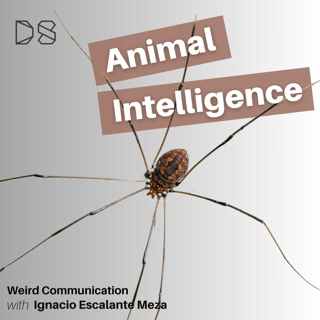
Weird Communication

Weird Communication

Today, we sat down with Dr. Ignacio Escalante Meza to learn about opiliones and treehoppers. Opiliones, known as "daddy long legs" in the US, are understudied arachnids known for their tenacious locom...

15 Heinä 202438min

Suosittua kategoriassa Tiede

rss-poliisin-mieli
tiedekulma-podcast
rss-mita-tulisi-tietaa
docemilia
filocast-filosofian-perusteet
menologeja-tutkimusmatka-vaihdevuosiin
rss-duodecim-lehti
sotataidon-ytimessa
rss-tiedetta-vai-tarinaa
utelias-mieli
radio-antro
rss-bios-podcast
rss-ranskaa-raakana
rss-kasvatuspsykologiaa-kaikille
rss-luontopodi-samuel-glassar-tutkii-luonnon-ihmeita
rss-lapsuuden-rakentajat-podcast
rss-sosiopodi