The Computational Complexity of Machine Learning
Data Skeptic3 Marras 2017

The Computational Complexity of Machine Learning

In this episode, Professor Michael Kearns from the University of Pennsylvania joins host Kyle Polich to talk about the computational complexity of machine learning, complexity in game theory, and algorithmic fairness. Michael's doctoral thesis gave an early broad overview of computational learning theory, in which he emphasizes the mathematical study of efficient learning algorithms by machines or computational systems.

When we look at machine learning algorithms they are almost like meta-algorithms in some sense. For example, given a machine learning algorithm, it will look at some data and build some model, and it's going to behave presumably very differently under different inputs. But does that mean we need new analytical tools? Or is a machine learning algorithm just the same thing as any deterministic algorithm, but just a little bit more tricky to figure out anything complexity-wise? In other words, is there some overlap between the good old-fashioned analysis of algorithms with the analysis of machine learning algorithms from a complexity viewpoint? And what is the difference between strategies for determining the complexity bounds on samples versus algorithms?

A big area of machine learning (and in the analysis of learning algorithms in general) Michael and Kyle discuss is the topic known as complexity regularization. Complexity regularization asks: How should one measure the goodness of fit and the complexity of a given model? And how should one balance those two, and how can one execute that in a scalable, efficient way algorithmically? From this, Michael and Kyle discuss the broader picture of why one should care whether a learning algorithm is efficiently learnable if it's learnable in polynomial time.

Another interesting topic of discussion is the difference between sample complexity and computational complexity. An active area of research is how one should regularize their models so that they're balancing the complexity with the goodness of fit to fit their large training sample size.

As mentioned, a good resource for getting started with correlated equilibria is: https://www.cs.cornell.edu/courses/cs684/2004sp/feb20.pdf

Thanks to our sponsors:

Mendoza College of Business - Get your Masters of Science in Business Analytics from Notre Dame.

brilliant.org - A fun, affordable, online learning tool. Check out their Computer Science Algorithms course.

Tämä jakso on lisätty Podme-palveluun avoimen RSS-syötteen kautta eikä se ole Podmen omaa tuotantoa. Siksi jakso saattaa sisältää mainontaa.

Jaksot(601)

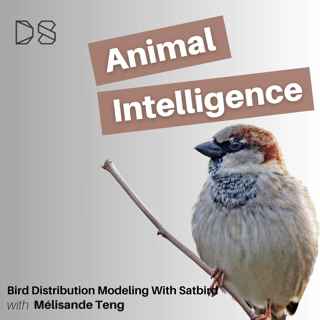
Bird Distribution Modeling with Satbird

Bird Distribution Modeling with Satbird

This episode features an interview with Mélisande Teng, a PhD candidate at Université de Montréal. Her research lies in the intersection of remote sensing and computer vision for biodiversity monitori...

10 Syys 202439min
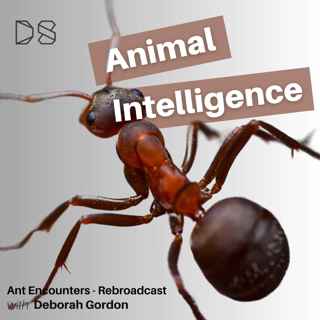
Ant Encounters

Ant Encounters

In this interview with author Deborah Gordon, Kyle asks questions about the mechanisms at work in an ant colony and what ants might teach us about how to build artificial intelligence. Ants are surpri...

26 Elo 202431min
Computing Toolbox

Computing Toolbox

This season it's become clear that computing skills are vital for working in the natural sciences. In this episode, we were fortunate to speak with Madlen Wilmes, co-author of the book "Computing Skil...

19 Elo 202438min
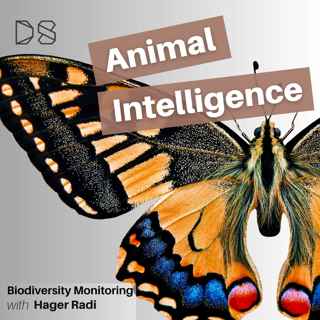
Biodiversity Monitoring

Biodiversity Monitoring

In this episode, we talked shop with Hager Radi about her biodiversity monitoring work. While biodiversity modeling may sound simple, count organisms and mark their location, there is a lot more to it...

14 Elo 202432min

Hacking the Colony

Hacking the Colony

Today, Ashay Aswale and Tony Lopez shared their work on swarm robotics and what they have learned from ants. Robotic swarms must solve the same problems that eusocial insects do. What if your pheromon...

8 Elo 202441min
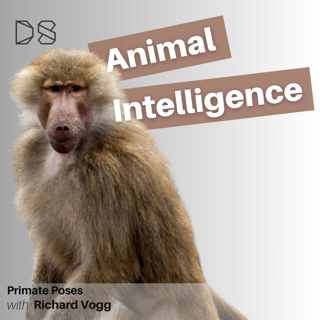
Primate Poses

Primate Poses

During this season we have talked with researchers working to utilize machine learning for behavioral observations. In previous episodes, you have heard about the software people like Richard use, but...

31 Heinä 202432min
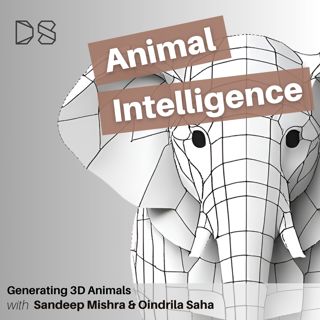
Generating 3D Animals with YouDream

Generating 3D Animals with YouDream

Generative AI can struggle to create realistic animals and 2D representations often have mistakes like extra limbs and tails. If 2D wasn't hard enough, there are researchers working on generative 3D m...

23 Heinä 20241h
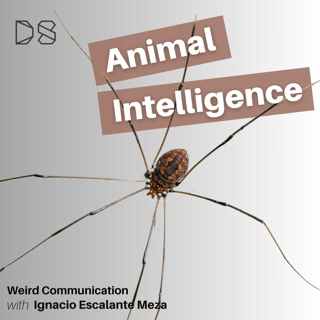
Weird Communication

Weird Communication

Today, we sat down with Dr. Ignacio Escalante Meza to learn about opiliones and treehoppers. Opiliones, known as "daddy long legs" in the US, are understudied arachnids known for their tenacious locom...

15 Heinä 202438min

Suosittua kategoriassa Tiede

rss-poliisin-mieli
tiedekulma-podcast
rss-mita-tulisi-tietaa
docemilia
filocast-filosofian-perusteet
menologeja-tutkimusmatka-vaihdevuosiin
rss-duodecim-lehti
sotataidon-ytimessa
rss-tiedetta-vai-tarinaa
utelias-mieli
radio-antro
rss-bios-podcast
rss-ranskaa-raakana
rss-kasvatuspsykologiaa-kaikille
rss-luontopodi-samuel-glassar-tutkii-luonnon-ihmeita
rss-lapsuuden-rakentajat-podcast
rss-sosiopodi