

#198 – Meghan Barrett on upending everything you thought you knew about bugs in 3 hours

#198 – Meghan Barrett on upending everything you thought you knew about bugs in 3 hours

"This is a group of animals I think people are particularly unfamiliar with. They are especially poorly covered in our science curriculum; they are especially poorly understood, because people don’t spend as much time learning about them at museums; and they’re just harder to spend time with in a lot of ways, I think, for people. So people have pets that are vertebrates that they take care of across the taxonomic groups, and people get familiar with those from going to zoos and watching their behaviours there, and watching nature documentaries and more. But I think the insects are still really underappreciated, and that means that our intuitions are probably more likely to be wrong than with those other groups." —Meghan Barrett

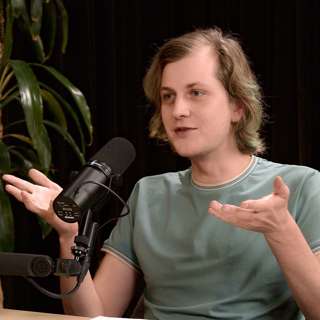
In today’s episode, host Luisa Rodriguez speaks to Meghan Barrett — insect neurobiologist and physiologist at Indiana University Indianapolis and founding director of the Insect Welfare Research Society — about her work to understand insects’ potential capacity for suffering, and what that might mean for how humans currently farm and use insects. If you're interested in getting involved with this work, check out Meghan's recent blog post: I’m into insect welfare! What’s next?

Links to learn more, highlights, and full transcript.

They cover:

  • The scale of potential insect suffering in the wild, on farms, and in labs.
  • Examples from cutting-edge insect research, like how depression- and anxiety-like states can be induced in fruit flies and successfully treated with human antidepressants.
  • How size bias might help explain why many people assume insects can’t feel pain.
  • Practical solutions that Meghan’s team is working on to improve farmed insect welfare, such as standard operating procedures for more humane slaughter methods.
  • Challenges facing the nascent field of insect welfare research, and where the main research gaps are.
  • Meghan’s personal story of how she went from being sceptical of insect pain to working as an insect welfare scientist, and her advice for others who want to improve the lives of insects.
  • And much more.

Chapters:

  • Cold open (00:00:00)
  • Luisa's intro (00:01:02)
  • The interview begins (00:03:06)
  • What is an insect? (00:03:22)
  • Size diversity (00:07:24)
  • How important is brain size for sentience? (00:11:27)
  • Offspring, parental investment, and lifespan (00:19:00)
  • Cognition and behaviour (00:23:23)
  • The scale of insect suffering (00:27:01)
  • Capacity to suffer (00:35:56)
  • The empirical evidence for whether insects can feel pain (00:47:18)
  • Nociceptors (01:00:02)
  • Integrated nociception (01:08:39)
  • Response to analgesia (01:16:17)
  • Analgesia preference (01:25:57)
  • Flexible self-protective behaviour (01:31:19)
  • Motivational tradeoffs and associative learning (01:38:45)
  • Results (01:43:31)
  • Reasons to be sceptical (01:47:18)
  • Meghan’s probability of sentience in insects (02:10:20)
  • Views of the broader entomologist community (02:18:18)
  • Insect farming (02:26:52)
  • How much to worry about insect farming (02:40:56)
  • Inhumane slaughter and disease in insect farms (02:44:45)
  • Inadequate nutrition, density, and photophobia (02:53:50)
  • Most humane ways to kill insects at home (03:01:33)
  • Challenges in researching this (03:07:53)
  • Most promising reforms (03:18:44)
  • Why Meghan is hopeful about working with the industry (03:22:17)
  • Careers (03:34:08)
  • Insect Welfare Research Society (03:37:16)
  • Luisa's outro (03:47:01)


Producer and editor: Keiran Harris
Audio engineering by Ben Cordell, Milo McGuire, Simon Monsour, and Dominic Armstrong
Additional content editing: Katy Moore and Luisa Rodriguez
Transcriptions: Katy Moore

Jaksot(327)

The case for and against AGI by 2030 (article by Benjamin Todd)

The case for and against AGI by 2030 (article by Benjamin Todd)

More and more people have been saying that we might have AGI (artificial general intelligence) before 2030. Is that really plausible? This article by Benjamin Todd looks into the cases for and against...

12 Touko 20251h

Emergency pod: Did OpenAI give up, or is this just a new trap? (with Rose Chan Loui)

Emergency pod: Did OpenAI give up, or is this just a new trap? (with Rose Chan Loui)

When attorneys general intervene in corporate affairs, it usually means something has gone seriously wrong. In OpenAI’s case, it appears to have forced a dramatic reversal of the company’s plans to si...

8 Touko 20251h 2min

#216 – Ian Dunt on why governments in Britain and elsewhere can't get anything done – and how to fix it

#216 – Ian Dunt on why governments in Britain and elsewhere can't get anything done – and how to fix it

When you have a system where ministers almost never understand their portfolios, civil servants change jobs every few months, and MPs don't grasp parliamentary procedure even after decades in office —...

2 Touko 20253h 14min

Serendipity, weird bets, & cold emails that actually work: Career advice from 16 former guests

Serendipity, weird bets, & cold emails that actually work: Career advice from 16 former guests

How do you navigate a career path when the future of work is uncertain? How important is mentorship versus immediate impact? Is it better to focus on your strengths or on the world’s most pressing pro...

24 Huhti 20252h 18min

#215 – Tom Davidson on how AI-enabled coups could allow a tiny group to seize power

#215 – Tom Davidson on how AI-enabled coups could allow a tiny group to seize power

Throughout history, technological revolutions have fundamentally shifted the balance of power in society. The Industrial Revolution created conditions where democracies could flourish for the first ti...

16 Huhti 20253h 22min

Guilt, imposter syndrome & doing good: 16 past guests share their mental health journeys

Guilt, imposter syndrome & doing good: 16 past guests share their mental health journeys

"We are aiming for a place where we can decouple the scorecard from our worthiness. It’s of course the case that in trying to optimise the good, we will always be falling short. The question is how mu...

11 Huhti 20251h 47min
#214 – Buck Shlegeris on controlling AI that wants to take over – so we can use it anyway

#214 – Buck Shlegeris on controlling AI that wants to take over – so we can use it anyway

Most AI safety conversations centre on alignment: ensuring AI systems share our values and goals. But despite progress, we’re unlikely to know we’ve solved the problem before the arrival of human-leve...

4 Huhti 20252h 16min

15 expert takes on infosec in the age of AI

15 expert takes on infosec in the age of AI

"There’s almost no story of the future going well that doesn’t have a part that’s like '…and no evil person steals the AI weights and goes and does evil stuff.' So it has highlighted the importance of...

28 Maalis 20252h 35min

Suosittua kategoriassa Koulutus

rss-murhan-anatomia
voi-hyvin-meditaatiot-2
psykopodiaa-podcast
rss-narsisti
rss-liian-kuuma-peruna
adhd-podi
rss-eron-alkemiaa
rahapuhetta
aamukahvilla
kesken
rss-duodecim-lehti
rss-koira-haudattuna
psykologia
rss-tietoinen-yhteys-podcast-2
rss-vapaudu-voimaasi
rss-finnish-daily-dialogues
rss-niinku-asia-on
rss-onks-ok
rss-luonnollinen-synnytys-podcast
rss-arkea-ja-aurinkoa-podcast-espanjasta