Is the industry taking the wrong approach to Scope 3 emissions reporting?

Is the industry taking the wrong approach to Scope 3 emissions reporting?

How can we reimagine Scope 3 in order to make faster progress?

The intention of the original framing of Scope 1, 2 & 3 emissions reporting was to support business understanding of their broader impact on the climate, so they would take responsibility for transformation to net zero and the impact of the complete value chain. Scope 3 emissions reporting in particular has become more of a focus of progressive companies that have developed robust plans for - and taken meaningful steps to address - scope 1 and 2 emissions. As they dig into scope 3, they are often overwhelmed by the accounting that’s required and struggle to develop strategies to meaningfully address impacts in their value chains, especially in ways they can quantify and count towards targets.

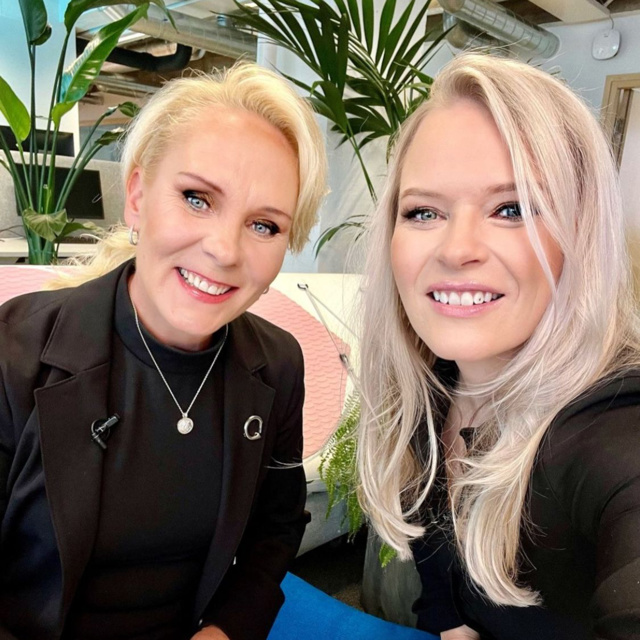
So how can the industry streamline this process? To find out we are joined by Jenny Ahlen, Managing Director at the We Mean Business Coalition. Jenny directs the strategy, coordination, and execution of their net zero programs and campaigns; these include a focus on improving the way scope 3 emissions are approached. We Mean Business were introduced to Ed Crooks - host of our sister podcast The Energy Gang - at COP28, where CEO Maria Mandiluce outlined their mission. That conversation, which also examined the pledge to phase out fossil fuels, you can find on The Energy Gang podcast, wherever you're listening to this.

The argument is that the reporting standards have created a huge amount of work for organisations without any real benefit to decarbonisation efforts. Companies need to draw up net zero plans, understand Scope 3, manage their supply chain emissions and so on, but to what goal? So, the key question we discuss in this week’s episode: is it possible that in focusing so much on the influence big corporations can have on their value chains, we’ve let many companies and stakeholders in the global north off the hook for proactively reducing emissions without that prompt from customers?

Jenny explains why the need for new, alternative approaches to reporting is crucial to accelerating the energy transition. Scope 3 is about global climate impacts and getting companies engaged to catalyse the system transformations needed. What would this then need to look like to incentivise that type of action at scale? And how do we create an ecosystem to reward those participating and making meaningful progress? Listen to find out.


Subscribe to the Interchange Recharged so you don’t miss an episode on Apple Podcasts or Spotify. Find us on X – we’re @interchangeshow.

To keep up to date with everything we talk about on the show, sign up for our weekly Inside Track newsletter. You’ll get extra analysis from Wood Mackenzie and be notified when a new episode of the podcast is out.

The Interchange Recharged is brought to you by Anza Renewables. Are you wasting valuable time tracking down solar module information that quickly goes stale? Anza’s revolutionary platform can help with up-to-date pricing, technical, risk, and domestic content data from 110 solar modules. Compare products in minutes and redirect your time to higher value work. Find out more

See Privacy Policy at https://art19.com/privacy and California Privacy Notice at https://art19.com/privacy#do-not-sell-my-info.

Tämä jakso on lisätty Podme-palveluun avoimen RSS-syötteen kautta eikä se ole Podmen omaa tuotantoa. Siksi jakso saattaa sisältää mainontaa.

Jaksot(353)

 Speed to power: Why data-center load growth is creating a new opening for C&I solar, storage, and microgrids

Speed to power: Why data-center load growth is creating a new opening for C&I solar, storage, and microgrids

After a decade of flat demand, power markets are being forced to absorb a very different problem: rapid load growth arriving faster than transmission, large-scale generation, and utility interconnecti...

8 Syys 49min

Thorium’s nuclear pitch: Can molten salt reactors cut cost, use waste, and scale faster than conventional designs?

Thorium’s nuclear pitch: Can molten salt reactors cut cost, use waste, and scale faster than conventional designs?

Electricity demand is rising, capital is tightening, and nuclear is back in the conversation as utilities, governments, and large power users look for firm low-carbon supply. But the central question ...

25 Elo 39min

The inverter security turn: How Europe and the US are redrawing solar procurement around Chinese hardware

The inverter security turn: How Europe and the US are redrawing solar procurement around Chinese hardware

Solar demand remains strong, storage is scaling fast, and inverter technology is becoming more central to how modern power systems actually function. But the conversation around inverters is no longer...

11 Elo 38min

Why biomining might finally work: How Endolith is using microbes and data to unlock more copper from low-grade ore

Why biomining might finally work: How Endolith is using microbes and data to unlock more copper from low-grade ore

Copper is moving from background commodity to frontline constraint. Demand is rising fast, high-grade deposits are getting harder to find, and the lead times for bringing new supply online remain brut...

28 Heinä 35min

Bigger turbines, bigger consequences: how wind is rethinking risk, insurance, and predictive maintenance

Bigger turbines, bigger consequences: how wind is rethinking risk, insurance, and predictive maintenance

Wind remains fundamentally healthy: electricity demand is rising, decarbonised power is still needed, and both Europe and the US continue to pull new projects forward, albeit for different reasons. Bu...

14 Heinä 45min

As racks scale, power must change: The AC-to-DC rethink inside AI factories

As racks scale, power must change: The AC-to-DC rethink inside AI factories

As AI systems scale, the infrastructure challenge is no longer just about chips, models, and software performance. It is increasingly about the physical systems that allow computation to happen at all...

30 Kesä 33min

Handing back the mic: Six months of data center reality, from Bragawatts to behind-the-meter, and the questions still open

Handing back the mic: Six months of data center reality, from Bragawatts to behind-the-meter, and the questions still open

A year ago the data centre conversation was about scale. Increasingly it is about what happens when the announcements meet the physical grid. New capacity is being announced at roughly 435 megawatts a...

16 Kesä 43min

The grid's missing operating system: Why a $100,000 AI controller could defer trillions in hardware and why utilities won't buy it

The grid's missing operating system: Why a $100,000 AI controller could defer trillions in hardware and why utilities won't buy it

The energy transition conversation focuses on what connects to the grid. Far less attention goes to whether anyone is coordinating what those assets do once connected. AI training runs swing hundreds ...

2 Kesä 43min

Suosittua kategoriassa Liike-elämä ja talous

sijotuskasti
rss-rahapodi
psykopodiaa-podcast
vallattomat
mimmit-sijoittaa
ostan-asuntoja-podcast
lakicast
rss-rahamania
hyva-paha-johtaminen
rss-sami-miettinen-neuvottelija
sijoituskaverit
rss-avaimet-menestykseen
herrasmieshakkerit
leadcast
rss-matkalla-johtajaksi-saija-aikas-petra-eratuli-powered-by-kauppakamari
rss-hilden-kaira
rss-esiintymisklinikka
rss-paasipodi
rss-oivalluksia-rahasta-elamasta
rss-rentotapaus