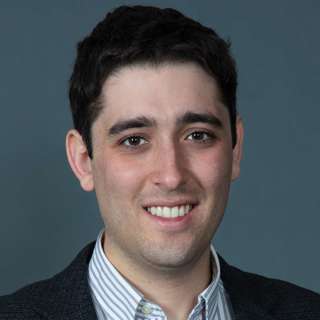

#200 – Ezra Karger on what superforecasters and experts think about existential risks

#200 – Ezra Karger on what superforecasters and experts think about existential risks

"It’s very hard to find examples where people say, 'I’m starting from this point. I’m starting from this belief.' So we wanted to make that very legible to people. We wanted to say, 'Experts think this; accurate forecasters think this.' They might both be wrong, but we can at least start from here and figure out where we’re coming into a discussion and say, 'I am much less concerned than the people in this report; or I am much more concerned, and I think people in this report were missing major things.' But if you don’t have a reference set of probabilities, I think it becomes much harder to talk about disagreement in policy debates in a space that’s so complicated like this." —Ezra Karger

In today’s episode, host Luisa Rodriguez speaks to Ezra Karger — research director at the Forecasting Research Institute — about FRI’s recent Existential Risk Persuasion Tournament to come up with estimates of a range of catastrophic risks.

Links to learn more, highlights, and full transcript.

They cover:

  • How forecasting can improve our understanding of long-term catastrophic risks from things like AI, nuclear war, pandemics, and climate change.
  • What the Existential Risk Persuasion Tournament (XPT) is, how it was set up, and the results.
  • The challenges of predicting low-probability, high-impact events.
  • Why superforecasters’ estimates of catastrophic risks seem so much lower than experts’, and which group Ezra puts the most weight on.
  • The specific underlying disagreements that superforecasters and experts had about how likely catastrophic risks from AI are.
  • Why Ezra thinks forecasting tournaments can help build consensus on complex topics, and what he wants to do differently in future tournaments and studies.
  • Recent advances in the science of forecasting and the areas Ezra is most excited about exploring next.
  • Whether large language models could help or outperform human forecasters.
  • How people can improve their calibration and start making better forecasts personally.
  • Why Ezra thinks high-quality forecasts are relevant to policymakers, and whether they can really improve decision-making.
  • And plenty more.

Chapters:

  • Cold open (00:00:00)
  • Luisa’s intro (00:01:07)
  • The interview begins (00:02:54)
  • The Existential Risk Persuasion Tournament (00:05:13)
  • Why is this project important? (00:12:34)
  • How was the tournament set up? (00:17:54)
  • Results from the tournament (00:22:38)
  • Risk from artificial intelligence (00:30:59)
  • How to think about these numbers (00:46:50)
  • Should we trust experts or superforecasters more? (00:49:16)
  • The effect of debate and persuasion (01:02:10)
  • Forecasts from the general public (01:08:33)
  • How can we improve people’s forecasts? (01:18:59)
  • Incentives and recruitment (01:26:30)
  • Criticisms of the tournament (01:33:51)
  • AI adversarial collaboration (01:46:20)
  • Hypotheses about stark differences in views of AI risk (01:51:41)
  • Cruxes and different worldviews (02:17:15)
  • Ezra’s experience as a superforecaster (02:28:57)
  • Forecasting as a research field (02:31:00)
  • Can large language models help or outperform human forecasters? (02:35:01)
  • Is forecasting valuable in the real world? (02:39:11)
  • Ezra’s book recommendations (02:45:29)
  • Luisa's outro (02:47:54)


Producer: Keiran Harris
Audio engineering: Dominic Armstrong, Ben Cordell, Milo McGuire, and Simon Monsour
Content editing: Luisa Rodriguez, Katy Moore, and Keiran Harris
Transcriptions: Katy Moore

Jaksot(321)

#142 Classic episode – John McWhorter on why the optimal number of languages might be one, and other provocative claims about language

#142 Classic episode – John McWhorter on why the optimal number of languages might be one, and other provocative claims about language

John McWhorter is a linguistics professor at Columbia University specialising in research on creole languages. He's also a content-producing machine, never afraid to give his frank opinion on anything...

6 Tammi 1h 35min

2025 Highlight-o-thon: Oops! All Bests

2025 Highlight-o-thon: Oops! All Bests

It’s that magical time of year once again — highlightapalooza! Stick around for one top bit from each episode we recorded this year, including:Kyle Fish explaining how Anthropic’s AI Claude descends i...

29 Joulu 20251h 40min

#232 – Andreas Mogensen on what we owe 'philosophical Vulcans' and unconscious beings

#232 – Andreas Mogensen on what we owe 'philosophical Vulcans' and unconscious beings

Most debates about the moral status of AI systems circle the same question: is there something that it feels like to be them? But what if that’s the wrong question to ask? Andreas Mogensen — a senior ...

19 Joulu 20252h 37min

#231 – Paul Scharre on how AI-controlled robots will and won't change war

#231 – Paul Scharre on how AI-controlled robots will and won't change war

In 1983, Stanislav Petrov, a Soviet lieutenant colonel, sat in a bunker watching a red screen flash “MISSILE LAUNCH.” Protocol demanded he report it to superiors, which would very likely trigger a ret...

17 Joulu 20252h 45min

AI might let a few people control everything — permanently (article by Rose Hadshar)

AI might let a few people control everything — permanently (article by Rose Hadshar)

Power is already concentrated today: over 800 million people live on less than $3 a day, the three richest men in the world are worth over $1 trillion, and almost six billion people live in countries ...

12 Joulu 20251h

#230 – Dean Ball on how AI is a huge deal — but we shouldn’t regulate it yet

#230 – Dean Ball on how AI is a huge deal — but we shouldn’t regulate it yet

Former White House staffer Dean Ball thinks it's very likely some form of 'superintelligence' arrives in under 20 years. He thinks AI being used for bioweapon research is "a real threat model, obvious...

10 Joulu 20252h 54min

#229 – Marius Hobbhahn on the race to solve AI scheming before models go superhuman

#229 – Marius Hobbhahn on the race to solve AI scheming before models go superhuman

We often worry about AI models “hallucinating” or making honest mistakes. But what happens when a model knows the truth, but decides to deceive you anyway to achieve a goal of its own? This isn’t sci-...

3 Joulu 20253h 3min

Rob & Luisa chat kids, the 2016 fertility crash, and how the 50s invented parenting that makes us miserable

Rob & Luisa chat kids, the 2016 fertility crash, and how the 50s invented parenting that makes us miserable

Global fertility rates aren’t just falling: the rate of decline is accelerating. From 2006 to 2016, fertility dropped gradually, but since 2016 the rate of decline has increased 4.5-fold. In many weal...

25 Marras 20251h 59min

Suosittua kategoriassa Koulutus

rss-murhan-anatomia
rss-narsisti
psykopodiaa-podcast
voi-hyvin-meditaatiot-2
rss-liian-kuuma-peruna
rss-vapaudu-voimaasi
rss-hereilla
rss-valo-minussa-2
rss-uskonto-on-tylsaa
psykologia
kesken
dear-ladies
rss-luonnollinen-synnytys-podcast
rahapuhetta
rss-niinku-asia-on
ihminen-tavattavissa-tommy-hellsten-instituutti
leveli
rss-duodecim-lehti
rss-tietoinen-yhteys-podcast-2
rss-arkea-ja-aurinkoa-podcast-espanjasta