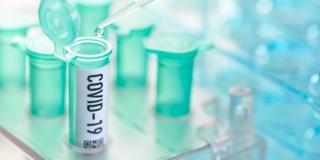

Podcast 557:  COVID-19 Lab Trends

Podcast 557: COVID-19 Lab Trends

Contributor: Don Stader, MD

Educational Pearls:

  • COVID-19 is diagnosed with a nasopharyngeal swab (q-tip). This unfortunately can be painful, but if the swab doesn't go deep into the nasal cavity the sample can be inadequate leading to false negatives (missed infections).
  • The sensitivity of the COVID-19 RT PCR test is low, ranging from 66-80% in various studies. Another study has shown 23% of patients who initially tested negative but had COVID-19 symptoms will test positive when re-tested. So test highly suspicious patients twice.

  • COVID has shown to have an effect on CBC. White blood cell counts are often normal (no leukocytosis), but there is often lymphopenia, or low lymphocytes, and thrombocytopenia. Interestingly, low platelets have appeared to have prognostic value in that lower platelets often indicate worse patient outcomes.
  • Coagulation studies are showing very elevated D-Dimers which has sparked the debate as to whether COVID-19 causes a hypercoagulable state. The increased incidence of MI/heart attacks and strokes in COVID patients supports this argument.
  • While D-Dimers can help point towards a diagnosis of pulmonary embolism, in the setting of highly likely COVID-19 infections, getting a CTA looking for a PE is probably unnecessary unless there's also suspicion for PE.
  • C-reactive protein (CRP) and procalcitonin are two common inflammatory markers. A CRP can help indicate how sick a patient is and procalcitonin can help determine if the infection is bacterial or viral in nature.
  • CRP levels are often elevated in COVID patients, and studies are showing a high CRP is linked to worse patient outcomes.
  • Elevations in procalcitonin can be used to see if there's a concomitant bacterial infection, meaning patients need antibiotics in addition to supportive care for the COVID-19.
  • Flu season is coming to a close, but data has shown a 5-10% co-infection rate of COVID-19 with influenza. As expected patient outcomes have been worse in those with both infections.

References

1) Farkas, Josh. "COVID-19." EMCrit Project, 21 Apr. 2020, emcrit.org/ibcc/covid19/#labs.

2) Guan W. et al. Clinical Characteristics of Coronavirus Disease 2019 in China. February 28, 2020, updated on March 6, 2020, at NEJM.org. DOI: 10.1056/NEJMoa2002032

3)Young BE, Ong SWX, Kalimuddin S, et al. Epidemiologic Features and Clinical Course of Patients Infected With SARS-CoV-2 in Singapore. JAMA. 2020;323(15):1488–1494. doi:10.1001/jama.2020.3204

4) Wang M. et al. Clinical diagnosis of 8274 samples with 2019-novel coronavirus in Wuhan. medRxiv 2020.02.12.20022327; doi: https://doi.org/10.1101/2020.02.12.20022327

Summarized by Jackson Roos, MS4 | Edited by Erik Verzemnieks, MD

Jaksot(1145)

Episode 928: Neutropenic Fever

Episode 928: Neutropenic Fever

Contributor: Taylor Lynch, MD Educational Pearls: What is neutropenic fever? Specific type of fever that is seen in cancer patients and other patients with impaired immune systems These patients a...

28 Loka 20245min

Episode 927: Functional Gallbladder Syndrome

Episode 927: Functional Gallbladder Syndrome

Contributor: Jorge Chalit-Hernandez, OMS3 Typically presents with biliary colic Right upper quadrant abdominal pain lasting more than 30 minutes and subsiding over several hours Often associate...

22 Loka 20245min

Episode 926: Supraventricular Tachycardia

Episode 926: Supraventricular Tachycardia

Contributor: Taylor Lynch MD Supraventricular tachycardias (SVTs) arise above the bundle of His The term SVT includes AV nodal reentrant tachycardia (AVNRT), atrioventricular reentrant tachycardi...

21 Loka 20246min

Episode 925: Table Sugar for Tongue Entrapment

Episode 925: Table Sugar for Tongue Entrapment

Contributor: Aaron Lessen, MD Educational Pearls: Pediatric case study where the child's tongue was stuck in the opening of a hard plastic drink lid Entrapment restricts circulation which causes f...

14 Loka 20241min

Episode 924: Pregnancy Cold Remedies

Episode 924: Pregnancy Cold Remedies

Contributor: Megan Hurley, MD Educational Pearls: Fevers Tylenol Up until 20 weeks NSAIDs are ok but after 20 weeks they are contraindicated Can limit the amount of amniotic fluid produced Ca...

7 Loka 20245min

Episode 923: Blunt Cerebrovascular Injury

Episode 923: Blunt Cerebrovascular Injury

Contributor: Travis Barlock MD Educational Pearls: Assessment of head and neck vascular injury due to blunt trauma Symptomatic patients require screening head and neck CT angiography EAST guid...

30 Syys 20243min

Episode 922: Chest Tube Irrigation

Episode 922: Chest Tube Irrigation

Contributor: Aaron Lessen, MD Educational Pearls: Hemothorax: blood in the pleural cavity, most commonly due to chest trauma Treatment: thoracostomy tube for blood drainage helps to avoid clott...

23 Syys 20242min

Episode 921: Pediatric Hypoglycemia

Episode 921: Pediatric Hypoglycemia

Contributor: Taylor Lynch, MD Educational Pearls: When it comes to hypoglycemia, the age dictates possible causes Neonate: Hormonal deficiency Congenital Adrenal Hyperplasia (21-hydroxylase de...

22 Syys 20244min

Suosittua kategoriassa Tiede

tiedekulma-podcast
rss-mita-tulisi-tietaa
rss-poliisin-mieli
rss-duodecim-lehti
docemilia
radio-antro
filocast-filosofian-perusteet
rss-ammamafia
rss-luontopodi-samuel-glassar-tutkii-luonnon-ihmeita
rss-sosiopodi
utelias-mieli
rss-astetta-parempi-elama-podcast
rss-tiedetta-vai-tarinaa













