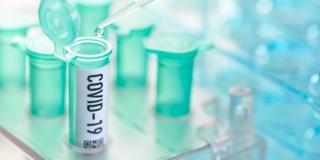

Podcast 557:  COVID-19 Lab Trends

Podcast 557: COVID-19 Lab Trends

Contributor: Don Stader, MD

Educational Pearls:

  • COVID-19 is diagnosed with a nasopharyngeal swab (q-tip). This unfortunately can be painful, but if the swab doesn't go deep into the nasal cavity the sample can be inadequate leading to false negatives (missed infections).
  • The sensitivity of the COVID-19 RT PCR test is low, ranging from 66-80% in various studies. Another study has shown 23% of patients who initially tested negative but had COVID-19 symptoms will test positive when re-tested. So test highly suspicious patients twice.

  • COVID has shown to have an effect on CBC. White blood cell counts are often normal (no leukocytosis), but there is often lymphopenia, or low lymphocytes, and thrombocytopenia. Interestingly, low platelets have appeared to have prognostic value in that lower platelets often indicate worse patient outcomes.
  • Coagulation studies are showing very elevated D-Dimers which has sparked the debate as to whether COVID-19 causes a hypercoagulable state. The increased incidence of MI/heart attacks and strokes in COVID patients supports this argument.
  • While D-Dimers can help point towards a diagnosis of pulmonary embolism, in the setting of highly likely COVID-19 infections, getting a CTA looking for a PE is probably unnecessary unless there's also suspicion for PE.
  • C-reactive protein (CRP) and procalcitonin are two common inflammatory markers. A CRP can help indicate how sick a patient is and procalcitonin can help determine if the infection is bacterial or viral in nature.
  • CRP levels are often elevated in COVID patients, and studies are showing a high CRP is linked to worse patient outcomes.
  • Elevations in procalcitonin can be used to see if there's a concomitant bacterial infection, meaning patients need antibiotics in addition to supportive care for the COVID-19.
  • Flu season is coming to a close, but data has shown a 5-10% co-infection rate of COVID-19 with influenza. As expected patient outcomes have been worse in those with both infections.

References

1) Farkas, Josh. "COVID-19." EMCrit Project, 21 Apr. 2020, emcrit.org/ibcc/covid19/#labs.

2) Guan W. et al. Clinical Characteristics of Coronavirus Disease 2019 in China. February 28, 2020, updated on March 6, 2020, at NEJM.org. DOI: 10.1056/NEJMoa2002032

3)Young BE, Ong SWX, Kalimuddin S, et al. Epidemiologic Features and Clinical Course of Patients Infected With SARS-CoV-2 in Singapore. JAMA. 2020;323(15):1488–1494. doi:10.1001/jama.2020.3204

4) Wang M. et al. Clinical diagnosis of 8274 samples with 2019-novel coronavirus in Wuhan. medRxiv 2020.02.12.20022327; doi: https://doi.org/10.1101/2020.02.12.20022327

Summarized by Jackson Roos, MS4 | Edited by Erik Verzemnieks, MD

Jaksot(1145)

Tox Talks 2025 Recap 1, Digoxin and Beta Blockers

Tox Talks 2025 Recap 1, Digoxin and Beta Blockers

Contributors: Preeya Prakash MD, Adam Greenhaw PharmD, Travis Barlock MD, and Jeffrey Olson MS4 In this episode, cardiologist Preeya Prakash and medical student Jeffrey Olson listen in as two cases ar...

29 Loka 202557min

Episode 980: Brain Injury Guidelines (BIG)

Episode 980: Brain Injury Guidelines (BIG)

Contributor: Aaron Lessen, MD Educational Pearls: Traumatic Brain Injuries are a frequent complaint in the Emergency Department and have increased in recent years. The American Association for Surgery...

27 Loka 20253min

Episode 979: Oral vs Temporal Thermometers

Episode 979: Oral vs Temporal Thermometers

Contributor: Taylor Lynch, MD Educational Pearls: A recent study published in a pediatric journal in April 2025 compared temporal and oral thermometers Paired temperature measurements (temporal and o...

20 Loka 20253min

Episode 978: Delusional Parasitosis

Episode 978: Delusional Parasitosis

Contributor: Taylor Lynch, MD Educational Pearls: Delusional parasitosis is a subtype of the psychiatric condition delusional disorder Defined as a fixed, false belief of infestation by parasites or...

13 Loka 20253min

Episode 977: Amyloid Therapy and Stroke-like Events

Episode 977: Amyloid Therapy and Stroke-like Events

Contributor: Aaron Lessen, MD Educational Pearls: The cause of Alzheimer's disease is multifactorial, but the most widely suspected mechanism is the amyloid cascade hypothesis: Beta-amyloid proteins ...

6 Loka 20253min

Episode 976: Improvised Burr Hole in an Epidural Hematoma

Episode 976: Improvised Burr Hole in an Epidural Hematoma

Contributor: Alec Coston, MD Case Report Summary: A 17-year-old female involved in a motor vehicle collision presented to a rural emergency facility via personally operated vehicle. During workup and ...

29 Syys 20254min

Episode 975: Nursemaid's Elbow

Episode 975: Nursemaid's Elbow

Contributor: Aaron Lessen, MD Educational Pearls: What is a Nursemaid's Elbow? A condition in which an elbow gets partially pulled out of place (a radial head subluxation) Usually happens in kids und...

22 Syys 20253min

Episode 974: ACE Inhibitor Angioedema

Episode 974: ACE Inhibitor Angioedema

Contributor: Ricky Dhaliwal, MD Educational Pearls: Angioedema in anaphylaxis Histamine and mast cell-mediated pathway Treatment: First line: epinephrine for vasoconstriction and bronchodilation Se...

15 Syys 20255min

Suosittua kategoriassa Tiede

tiedekulma-podcast
rss-mita-tulisi-tietaa
rss-poliisin-mieli
rss-duodecim-lehti
docemilia
radio-antro
filocast-filosofian-perusteet
rss-ammamafia
rss-luontopodi-samuel-glassar-tutkii-luonnon-ihmeita
rss-sosiopodi
utelias-mieli
rss-astetta-parempi-elama-podcast
rss-tiedetta-vai-tarinaa