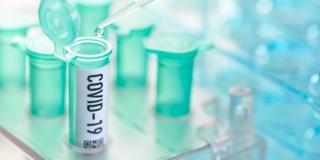

Podcast 557:  COVID-19 Lab Trends

Podcast 557: COVID-19 Lab Trends

Contributor: Don Stader, MD

Educational Pearls:

  • COVID-19 is diagnosed with a nasopharyngeal swab (q-tip). This unfortunately can be painful, but if the swab doesn't go deep into the nasal cavity the sample can be inadequate leading to false negatives (missed infections).
  • The sensitivity of the COVID-19 RT PCR test is low, ranging from 66-80% in various studies. Another study has shown 23% of patients who initially tested negative but had COVID-19 symptoms will test positive when re-tested. So test highly suspicious patients twice.

  • COVID has shown to have an effect on CBC. White blood cell counts are often normal (no leukocytosis), but there is often lymphopenia, or low lymphocytes, and thrombocytopenia. Interestingly, low platelets have appeared to have prognostic value in that lower platelets often indicate worse patient outcomes.
  • Coagulation studies are showing very elevated D-Dimers which has sparked the debate as to whether COVID-19 causes a hypercoagulable state. The increased incidence of MI/heart attacks and strokes in COVID patients supports this argument.
  • While D-Dimers can help point towards a diagnosis of pulmonary embolism, in the setting of highly likely COVID-19 infections, getting a CTA looking for a PE is probably unnecessary unless there's also suspicion for PE.
  • C-reactive protein (CRP) and procalcitonin are two common inflammatory markers. A CRP can help indicate how sick a patient is and procalcitonin can help determine if the infection is bacterial or viral in nature.
  • CRP levels are often elevated in COVID patients, and studies are showing a high CRP is linked to worse patient outcomes.
  • Elevations in procalcitonin can be used to see if there's a concomitant bacterial infection, meaning patients need antibiotics in addition to supportive care for the COVID-19.
  • Flu season is coming to a close, but data has shown a 5-10% co-infection rate of COVID-19 with influenza. As expected patient outcomes have been worse in those with both infections.

References

1) Farkas, Josh. "COVID-19." EMCrit Project, 21 Apr. 2020, emcrit.org/ibcc/covid19/#labs.

2) Guan W. et al. Clinical Characteristics of Coronavirus Disease 2019 in China. February 28, 2020, updated on March 6, 2020, at NEJM.org. DOI: 10.1056/NEJMoa2002032

3)Young BE, Ong SWX, Kalimuddin S, et al. Epidemiologic Features and Clinical Course of Patients Infected With SARS-CoV-2 in Singapore. JAMA. 2020;323(15):1488–1494. doi:10.1001/jama.2020.3204

4) Wang M. et al. Clinical diagnosis of 8274 samples with 2019-novel coronavirus in Wuhan. medRxiv 2020.02.12.20022327; doi: https://doi.org/10.1101/2020.02.12.20022327

Summarized by Jackson Roos, MS4 | Edited by Erik Verzemnieks, MD

Jaksot(1148)

Podcast #377: Endocarditis

Podcast #377: Endocarditis

Author: Nick Tsipis, MD Educational Pearls: Persistent fever or positive blood cultures should raise suspicion for endocarditis Patients with recent dental procedures, recent cardiac surgeries a...

10 Syys 20183min
Podcast #376: Alcohol Intoxication

Podcast #376: Alcohol Intoxication

Educational Pearls: Blood concentrations over 0.4 mg/dL is associated with respiratory depression and possible death in alcohol naive patients Alcohol overdose accounts to 2,200 deaths per year ...

8 Syys 20184min
Podcast #375: Retrograde Urethrogram

Podcast #375: Retrograde Urethrogram

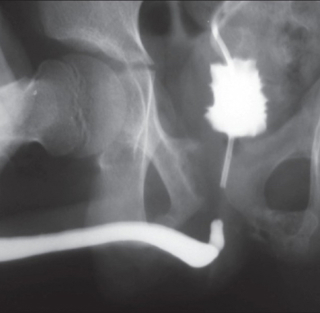
Author: Jared Scott, MD Educational Pearls: Blood at urethral meatus in trauma can be a sign of bladder/urethral injury Blind placement of a Foley catheter can make an undiagnosed urethral injur...

6 Syys 20185min

Podcast #374:  Iliac Artery Endofibrosis

Podcast #374: Iliac Artery Endofibrosis

Author:  Sue Chilton, MD Educational Pearls:   An unusual cause of leg pain that can mimic sciatica/claudication Predominantly occurring in high endurance athletes, particularly cyclists and runner...

4 Syys 20183min
Podcast # 373: Legionnaires Disease

Podcast # 373: Legionnaires Disease

Author: Gretchen Hinson, MD Educational Pearls: Legionnaires disease refers to a severe pneumonia caused by Legionella pneumophilia and occurs typically at the extremes of age Associated gastroi...

1 Syys 20183min
Podcast # 372:  The Latest on Epinephrine in Cardiac Arrest

Podcast # 372: The Latest on Epinephrine in Cardiac Arrest

Author: Don Stader, MD Educational Pearls: 8014 patients with out-of-hospital cardiac arrest randomized to epinephrine vs placebo 30-day survival was not dramatically better between groups (3.2%...

30 Elo 20183min
Podcast # 371: EKG changes of Hyperkalemia

Podcast # 371: EKG changes of Hyperkalemia

Author: Jared Scott, MD Educational Pearls: EKG changes do not necessarily correlate to degree of hyperkalemia Traditional progression through peaked T-waves, flattened p-waves, QRS widening, an...

28 Elo 20183min
Podcast # 370:  Rapid Fire Neonatal Resuscitation

Podcast # 370: Rapid Fire Neonatal Resuscitation

Author:  Erik Verzemnieks, MD Educational Pearls:   In the panic of a precipitous ED delivery, remember: Warm. Dry. Stim.  It will solve most of your problems in most scenarios Start compressions i...

24 Elo 20181min

Suosittua kategoriassa Tiede

rss-mita-tulisi-tietaa
rss-poliisin-mieli
utelias-mieli
tiedekulma-podcast
docemilia
rss-luontopodi-samuel-glassar-tutkii-luonnon-ihmeita
rss-duodecim-lehti
rss-tervetuloa-tervemenoa
rss-ylistys-elaimille
rss-tervetta-skeptisyytta