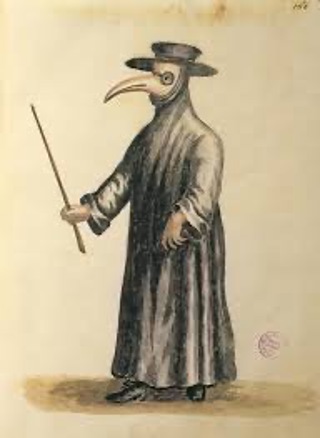

Podcast 579:  Yersinia Pestis

Podcast 579: Yersinia Pestis

Contributor: Don Stader, MD

Educational Pearls:

  • Yersinia Pestis is the bacteria that caused the black plague. It was first discovered to be the cause of the bubonic plague in 1800s in China during the 3rd bubonic plague where 10-20 million people died
  • Causes 3 types of plague:
    • Bubonic plague: characterized by severe swelling of lymph nodes called buboes, most commonly in the groin, also axillary and olecranon lymph nodes.
    • Septicemic plague: characterized by severe sepsis, no lymphadenopathy. This strain famously causes disseminated intravascular coagulopathy (DIC) and can lead to limb necrosis and fingers turning black. Hence the name the Black Death.
    • Pneumonic: most dangerous of the plagues and characterized by PNA on CXR with pronounced mediastinal lymphadenopathy
  • Fleas are the largest reservoir, although prairie dogs and squirrels have been known to carry the bacteria as well.
  • Yersinia Pestis creates a microfilm inside the stomach of fleas and renders them incapable of digesting your blood when they try to eat it and they vomit the bacteria into your blood.
  • Doxycycline and Ciprofloxacin are the mainstay of treatment.

References

Achtman M, Zurth K, Morelli G, Torrea G, Guiyoule A. Carniel E. Yersinia pestis, the cause of plague, is a recently emerged clone of Yersinia pseudotuberculosis. Proc Natl Acad Sci U S A. 1999. doi:10.1073/pnas.96.24.14043

Galimand M, Carniel E, Courvalin P. Resistance of Yersinia pestis to Antimicrobial Agents. Antimicrob Agents Chemother. 2006;50(10):3233 LP - 3236. doi:10.1128/AAC.00306-06

Sexton D, Stout J. Clinical Manifestations, Diagnosis, And Treatment Of Plague (Yersinia Pestis Infection). Waltham, MA: UpToDate; 2020.

Summarized by Mason Tuttle & Jackson Roos, MS4 | Edited by Erik Verzemnieks, MD


Jaksot(1145)

Episode 951: Pediatric Febrile Seizures

Episode 951: Pediatric Febrile Seizures

Contributor: Taylor Lynch, MD Educational Pearls: Pediatric febrile seizures are defined as seizures that occur between the ages of six months to five years in the presence of a fever greater than o...

7 Huhti 20256min

Episode 950: Ultrasound Pulse Check During Cardiac Arrest

Episode 950: Ultrasound Pulse Check During Cardiac Arrest

Contributor: Aaron Lessen, MD Educational Pearls: Point-of-care ultrasound (POCUS) is used to assess cardiac activity during cardiac arrest and can identify potential reversible causes such as peric...

31 Maalis 20252min

Episode 949: Hoover's Sign

Episode 949: Hoover's Sign

Contributor: Travis Barlock, MD Educational Pearls: What is Hoover's sign used to identify? This physical exam maneuver differentiates between organic vs. functional (previously known as psychogenic...

24 Maalis 20251min

Episode 948: CYP Inducers and Inhibitors

Episode 948: CYP Inducers and Inhibitors

Contributor: Jorge Chalit-Hernandez, OMS3 Educational Pearls: CYP enzymes are responsible for the metabolism of many medications, drugs, and other substances CYP3A4 is responsible for the majorit...

17 Maalis 20253min

Episode 947: Hypercapnia

Episode 947: Hypercapnia

Educational Pearls: Physiologic stimulation of ventilation occurs through changes in levels of: Arterial carbon dioxide (PaCO2) Arterial oxygen (PaO2) Hypercapnia is an elevated level of CO2...

10 Maalis 20253min

Episode 946: Time to Defibrillation

Episode 946: Time to Defibrillation

Contributor: Aaron Lessen, MD Educational Pearls: Quick background info Cardiac arrest is when the heart stops pumping blood for any reason. This is different from a heart attack in which the heart ...

3 Maalis 20252min

Episode 945: Ketorolac vs. Ibuprofen

Episode 945: Ketorolac vs. Ibuprofen

Contributor: Ricky Dhaliwal, MD Educational Pearls:  Ketorolac and ibuprofen are NSAIDs with equivalent efficacy for pain in the emergency department Oral ibuprofen provides the same relief as in...

24 Helmi 20253min

Episode 944: Colchicine Overdose

Episode 944: Colchicine Overdose

Contributor: Aaron Lessen, MD Educational Pearls: Colchicine is most commonly used for the prevention and treatment of gout There is research investigating the anti-inflammatory and cardioprotect...

17 Helmi 20253min

Suosittua kategoriassa Tiede

tiedekulma-podcast
rss-mita-tulisi-tietaa
rss-poliisin-mieli
docemilia
radio-antro
utelias-mieli
filocast-filosofian-perusteet
rss-sosiopodi
ihanat-ipanat
mielipaivakirja
rss-bios-podcast
rss-duodecim-lehti
rss-ammamafia
rss-laakaripodi
rss-opeklubi