Podcast 579:  Yersinia Pestis

Podcast 579: Yersinia Pestis

Contributor: Don Stader, MD

Educational Pearls:

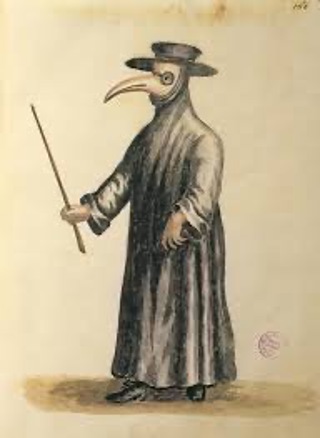
  • Yersinia Pestis is the bacteria that caused the black plague. It was first discovered to be the cause of the bubonic plague in 1800s in China during the 3rd bubonic plague where 10-20 million people died
  • Causes 3 types of plague:
    • Bubonic plague: characterized by severe swelling of lymph nodes called buboes, most commonly in the groin, also axillary and olecranon lymph nodes.
    • Septicemic plague: characterized by severe sepsis, no lymphadenopathy. This strain famously causes disseminated intravascular coagulopathy (DIC) and can lead to limb necrosis and fingers turning black. Hence the name the Black Death.
    • Pneumonic: most dangerous of the plagues and characterized by PNA on CXR with pronounced mediastinal lymphadenopathy
  • Fleas are the largest reservoir, although prairie dogs and squirrels have been known to carry the bacteria as well.
  • Yersinia Pestis creates a microfilm inside the stomach of fleas and renders them incapable of digesting your blood when they try to eat it and they vomit the bacteria into your blood.
  • Doxycycline and Ciprofloxacin are the mainstay of treatment.

References

Achtman M, Zurth K, Morelli G, Torrea G, Guiyoule A. Carniel E. Yersinia pestis, the cause of plague, is a recently emerged clone of Yersinia pseudotuberculosis. Proc Natl Acad Sci U S A. 1999. doi:10.1073/pnas.96.24.14043

Galimand M, Carniel E, Courvalin P. Resistance of Yersinia pestis to Antimicrobial Agents. Antimicrob Agents Chemother. 2006;50(10):3233 LP - 3236. doi:10.1128/AAC.00306-06

Sexton D, Stout J. Clinical Manifestations, Diagnosis, And Treatment Of Plague (Yersinia Pestis Infection). Waltham, MA: UpToDate; 2020.

Summarized by Mason Tuttle & Jackson Roos, MS4 | Edited by Erik Verzemnieks, MD


Jaksot(1146)

Podcast # 423: Blunt Cardiac Injuries

Podcast # 423: Blunt Cardiac Injuries

Author: Mike Hunt, MD Educational Pearls: Blunt cardiac injuries most commonly occur in motor vehicle collisions, auto-pedestrian collisions, and from sports injuries The more anterior right ventri...

14 Tammi 20194min

Podcast # 422: ED Opioid Prescription Trends

Podcast # 422: ED Opioid Prescription Trends

Author: Jared Scott, MD Educational Pearls: From 1996 to 2012, the total quantity of opioids prescribed increased 647% for non-cancer pain Office based prescriptions accounted for 84% of the total ...

11 Tammi 20194min
Podcast # 421: Sweet DKA Pearls

Podcast # 421: Sweet DKA Pearls

Author: Gretchen Hinson, MD Educational Pearls:   Diabetic ketoacidosis patients are subject to electrolyte derangements Potassium should be monitored closely: K 3.3 K > 5.3 = delay potassium repl...

9 Tammi 20194min

Podcast # 420: CT Contrast and the Kidneys

Podcast # 420: CT Contrast and the Kidneys

Author: Don Stader, MD Educational Pearls: Recent meta-analysis has demonstrated that there is no significant risk for kidney injury from CT contrast Most kidney injury seen after contrast CTs wer...

7 Tammi 20192min

Podcast # 419: Etripamil

Podcast # 419: Etripamil

Author: Don Stader, MD Educational Pearls: Etripamil is an intranasal calcium channel blocker in development for use in SVT A recent study showed that etripamil has an SVT conversion rate of arou...

20 Joulu 20183min

Podcast # 418: Vertebral Artery Dissection

Podcast # 418: Vertebral Artery Dissection

Author: Don Stader, MD Educational Pearls: Vertebral artery dissection (VAD) contributes to just 2% of strokes overall but ~25% of strokes for patients VAD is associated with minor trauma (chiroprac...

17 Joulu 20183min

Podcast # 417: Water Balance

Podcast # 417: Water Balance

Author: Katie Sprinkle, MD Educational Pearls: Hyponatremia results when patients over hydrate and dilute their sodium with too much free water Symptoms of hyponatremia can mimic symptoms of dehydrat...

15 Joulu 20183min

Podcast # 416: Wide Complex Tachycardia

Podcast # 416: Wide Complex Tachycardia

Author: Aaron Lessen, MD Educational Pearls: Defined as QRS over 120 ms and rate over 120 Two major rhythms = Vetricular tachycardia (VT) or SVT with aberrancy Safest approach is to assume it is VT S...

12 Joulu 20183min

Suosittua kategoriassa Tiede

rss-poliisin-mieli
tiedekulma-podcast
rss-mita-tulisi-tietaa
docemilia
rss-luontopodi-samuel-glassar-tutkii-luonnon-ihmeita
rss-duodecim-lehti
utelias-mieli
radio-antro
rss-astetta-parempi-elama-podcast
rss-lapsuuden-rakentajat-podcast
rss-lihavuudesta-podcast
rss-sosiopodi