
Podcast 582:  Gadolinium - The Contrast of MRI

Podcast 582: Gadolinium - The Contrast of MRI

Contributor: Michael Hunt, MD

Educational Pearls:

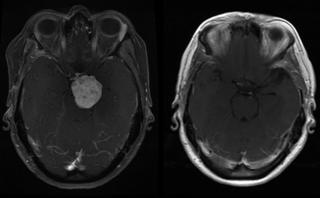
  • Contrast agents are commonly used for X-rays and CT's to better characterize disease, but contrast doesn't work with MRI. That's where the element Gadolinium comes into play.
  • Gadolinium, element 64, is ferromagnetic (attracted to iron) below 68 degrees and above that temperature it's paramagnetic which makes it useful in MRI (Magnetic Resonance Imaging).
  • Gadolinium is toxic alone, but when paired with chelators it can be used in humans and allows for better characterization of tumors or abnormal tissue on MRI.
  • It helps identify this abnormal tissue because when MRI causes polarization of our body's cells, the gadolinium, which has the maximum number of unpaired electrons in its orbital shells, alters the rate of decay in abnormal tissue highlighting abnormalities on imaging.
  • Gadolinium can also be used in the treatment of cancers because it collects in the cells of abnormal tissue, allowing for more targeted therapies.
  • In people exposed to gadolinium, the anaphylaxis rate is low, below 1/1000, and in rare cases there are reports of kidney injury and nephrogenic systemic fibrosis which is why it's not recommended in renal failure patients.

References

1)Ibrahim MA, Hazhirkarzar B, Dublin AB. Magnetic Resonance Imaging (MRI) Gadolinium. [Updated 2020 Mar 9]. In: StatPearls [Internet]. Treasure Island (FL): StatPearls Publishing; 2020 Jan-. Available from: https://www.ncbi.nlm.nih.gov/books/NBK482487/

2)Pasquini L, Napolitano A, Visconti E, et al. Gadolinium-Based Contrast Agent-Related Toxicities [published correction appears in CNS Drugs. 2018 May 15;:]. CNS Drugs. 2018;32(3):229-240. doi:10.1007/s40263-018-0500-1

Summarized by Jackson Roos, MS4 | Edited by Erik Verzemnieks, MD

Jaksot(1146)

Podcast 647: INR and Liver Failure

Podcast 647: INR and Liver Failure

Contributor: Erik Verzemnieks, MD Educational Pearls: INR measures the clotting cascade including factors II, VII, IX, and X Coumadin most commonly elevates the INR, and it is used to monitor the an...

9 Maalis 20213min

Podcast 646: Thunderclap Headache, Think...RCVS?

Podcast 646: Thunderclap Headache, Think...RCVS?

Contributor: Aaron Lessen, MD Educational Pearls: When evaluating a thunderclap headache, don't forget RCVS! RCVS: reversible cerebral vasoconstriction syndrome Due to reversible spasms of cerebra...

8 Maalis 20213min

Podcast 645: Necrotizing Enterocolitis and More

Podcast 645: Necrotizing Enterocolitis and More

Contributor:  Peter Bakes, MD Educational Pearls: Necrotizing Enterocolitis (NEC) Presents in the first few days of life (often in the NICU) to 3 weeks old Risk factors include prematurity, excess ...

2 Maalis 20219min
Podcast 644: Covid Outcomes

Podcast 644: Covid Outcomes

Contributor: Aaron Lessen, MD Educational Pearls: Meta-analysis of 57,420 COVID+ patients evaluated mortality after intubation 45% mortality rate for all patients in the study 84.4% mortality in p...

1 Maalis 20213min
Podcast 643: Convulsions with Gastroenteritis

Podcast 643: Convulsions with Gastroenteritis

Contributor: Jared Scott, MD Educational Pearls: Differential Diagnosis: non-accidental trauma, febrile seizure, meningitis, hyponatremia, epilepsy Convulsions with gastroenteritis is a known entity...

23 Helmi 20215min

Podcast 642: Vasopressors

Podcast 642: Vasopressors

Contributor: Nick Tsipis, MD Educational Pearls: Epinephrine: alpha-1, alpha-2, beta-1, and beta 2 agonist - used in cardiac arrest with positive effects on ROSC in prehospital and peri-hopsital set...

22 Helmi 20218min
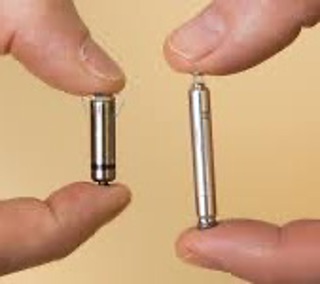
Podcast 641: Leadless Intracardiac Pacemaker

Podcast 641: Leadless Intracardiac Pacemaker

Contributor: Jared Scott, MD Educational Pearls: Small capsule pacemaker (2.5 cm, 1 ml volume) resides in the heart without any associated wires or leads like a traditional pacemaker The new version ...

16 Helmi 20216min
Podcast 640: Kawasaki's Disease

Podcast 640: Kawasaki's Disease

Contributor: Peter Bakes , MD Educational Pearls: Pediatric Fever + Rash Differential: scarlet fever, measles, rubella, chicken pox, fifth's disease, HHV-6, adenovirus, anaphylaxis, Kawasaki's diseas...

15 Helmi 20215min

Suosittua kategoriassa Tiede

tiedekulma-podcast
rss-mita-tulisi-tietaa
rss-poliisin-mieli
docemilia
rss-duodecim-lehti
utelias-mieli
rss-astetta-parempi-elama-podcast
rss-luontopodi-samuel-glassar-tutkii-luonnon-ihmeita
filocast-filosofian-perusteet
rss-ammamafia
rss-tiedetta-vai-tarinaa
rss-lapsuuden-rakentajat-podcast
rss-sosiopodi