
Pharmacy Friday #1: Antibiotic Alternatives to Fluoroquinolones for Infectious Disease

Pharmacy Friday #1: Antibiotic Alternatives to Fluoroquinolones for Infectious Disease

Welcome to EMM's first Pharmacy Friday where we dive deeper on a certain pharmacological topic as it pertains to emergency medicine. Dr. Rachael Duncan, emergency medicine clinical Pharmacist, joins us today to talk about antibiotics use for infectious disease, specifically fluoroquinolones. Special thanks to Dr. Nichole Neville, infectious disease pharmacist, for much of the information presented in this podcast.

Educational Pearls:

  • Levofloxacin and other fluoroquinolones used to be relied upon heavily due to key upsides including ease of use and wide spectrum coverage of common bacteria. Overuse over the past decade has resulted in the discovery of 3 concerns that have led to their use being advised against in most patients These concerns are patient adverse reactions, safety concerns and drug resistance.
  • Patient adverse reactions include potential QTc prolongation, neurologic symptoms including worsening of myasthenia gravis or peripheral neuropathy and severe hypoglycemia.
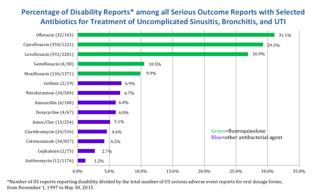
  • Due to these adverse effects, a new term was coined: fluoroquinolone-associated disability. In an FDA report, they looked at the percentage of disability reports among all serious outcome reports of selected antibiotics and found that the top 5 antibiotics that led to disability reports were fluoroquinolones. Safety concerns have led to several black box warnings as well.
  • Drug resistance due to overuse has also severely decreased the susceptibility rates of fluoroquinolones at many institutions. Check out your facility's antibiograms to get an idea of what susceptibility rates are for different drugs.
  • Common infections that are inappropriately given fluoroquinolones when other options would be better suited are PNA, UTI and intra-abdominal infections.

Tune in next week for more on cross-reactivity of cephalosporins and penicillins

References:

Fda.gov. 2017. Fluoroquinolone Safety Labeling Changes. [online] Available at: <https://www.fda.gov/media/104060/download> [Accessed 21 August 2020].

Idsociety.org. 2018. Practice Guidelines. [online] Available at: <https://www.idsociety.org/practice-guideline/practice-guidelines/#/date_na_dt/DESC/0/+/> [Accessed 18 August 2020].

U.S. Food and Drug Administration. 2018. FDA Updates Warnings For Oral And Injectable Fluoroquinolone. [online] Available at: <https://www.fda.gov/drugs/drug-safety-and-availability/fda-drug-safety-communication-fda-updates-warnings-oral-and-injectable-fluoroquinolone-antibiotics> [Accessed 18 August 2020].

Jaksot(1145)

Episode 951: Pediatric Febrile Seizures

Episode 951: Pediatric Febrile Seizures

Contributor: Taylor Lynch, MD Educational Pearls: Pediatric febrile seizures are defined as seizures that occur between the ages of six months to five years in the presence of a fever greater than o...

7 Huhti 20256min

Episode 950: Ultrasound Pulse Check During Cardiac Arrest

Episode 950: Ultrasound Pulse Check During Cardiac Arrest

Contributor: Aaron Lessen, MD Educational Pearls: Point-of-care ultrasound (POCUS) is used to assess cardiac activity during cardiac arrest and can identify potential reversible causes such as peric...

31 Maalis 20252min

Episode 949: Hoover's Sign

Episode 949: Hoover's Sign

Contributor: Travis Barlock, MD Educational Pearls: What is Hoover's sign used to identify? This physical exam maneuver differentiates between organic vs. functional (previously known as psychogenic...

24 Maalis 20251min

Episode 948: CYP Inducers and Inhibitors

Episode 948: CYP Inducers and Inhibitors

Contributor: Jorge Chalit-Hernandez, OMS3 Educational Pearls: CYP enzymes are responsible for the metabolism of many medications, drugs, and other substances CYP3A4 is responsible for the majorit...

17 Maalis 20253min

Episode 947: Hypercapnia

Episode 947: Hypercapnia

Educational Pearls: Physiologic stimulation of ventilation occurs through changes in levels of: Arterial carbon dioxide (PaCO2) Arterial oxygen (PaO2) Hypercapnia is an elevated level of CO2...

10 Maalis 20253min

Episode 946: Time to Defibrillation

Episode 946: Time to Defibrillation

Contributor: Aaron Lessen, MD Educational Pearls: Quick background info Cardiac arrest is when the heart stops pumping blood for any reason. This is different from a heart attack in which the heart ...

3 Maalis 20252min

Episode 945: Ketorolac vs. Ibuprofen

Episode 945: Ketorolac vs. Ibuprofen

Contributor: Ricky Dhaliwal, MD Educational Pearls:  Ketorolac and ibuprofen are NSAIDs with equivalent efficacy for pain in the emergency department Oral ibuprofen provides the same relief as in...

24 Helmi 20253min

Episode 944: Colchicine Overdose

Episode 944: Colchicine Overdose

Contributor: Aaron Lessen, MD Educational Pearls: Colchicine is most commonly used for the prevention and treatment of gout There is research investigating the anti-inflammatory and cardioprotect...

17 Helmi 20253min

Suosittua kategoriassa Tiede

tiedekulma-podcast
rss-mita-tulisi-tietaa
rss-poliisin-mieli
docemilia
radio-antro
utelias-mieli
filocast-filosofian-perusteet
rss-sosiopodi
ihanat-ipanat
mielipaivakirja
rss-bios-podcast
rss-duodecim-lehti
rss-ammamafia
rss-laakaripodi
rss-opeklubi