
On the Streets #9: Advanced Applications of Capnography

On the Streets #9: Advanced Applications of Capnography

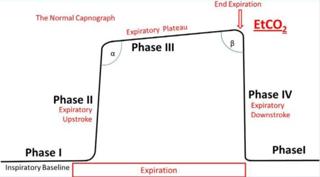
Capnography is the measurement of the partial pressure of exhaled CO2 and is an indirect measurement of your cellular respiration. It is displayed visually as a block-like waveform during the exhalation phase of respiration and monitors ventilation in real-time. Capnography is the gold standard for monitoring sedated and intubated patients in the hospital and the field and can be used in many other situations to discern more information about your patient.

Our host Jordan Ourada is joined by Dr. Eric Hill who is a board certified Emergency Physician, EMS Director for 9 agencies around Colorado, a retired military physician with the Army, former paramedic firefighter and combat veteran to discuss advanced applications of capnography to monitor a range of different patients in the pre-hospital setting. Tune in to learn how to apply capnography to monitor your patients and detect serious conditions like sepsis and DKA and initiate time-sensitive interventions that reduce mortality in patients.

Quick Educational Pearls:

  1. Normal range is between 35 - 45 mmHg
  2. Low capnography indicates they are blowing off CO2
  3. High capnography indicates they are retaining CO2
  4. Normal waveform morphology is box-like with gradual expiratory plateau after expiratory upstroke
  5. Monitor your patient's status and interpret the capnography numbers, rate and waveforms accordingly

Time Stamps

1:32 Capnography definition

6:36 Normal range

7:40 Reading capnography waveforms

12:36 Capnography monitoring in sedated/intubated patients

13:36 Intubation monitoring

18:03 VQ match vs mismatch

21:42 Asthmatic patients

24:30 Capnography cannula

26:24 Cardiac arrest uses

31:28 Acid-base physiology

37:28 Diabetic patients

40:15 COPD patients

41:42 CHF patients

45:18 Head injury patients

52:07 Sepsis detection and subsequent prehospital management

1:08:15 Closing thoughts on using capnography in the field

REFERENCES

  • Brandt, P. "Current Capnography Field Uses." JEMS. 2010, Nov.

  • DiCorpo,P.,etal."CapnographyProvidesBiggerPhysiological

    Picture to Maximize Patient Care." JEMS. 2015, Nov.

  • Eckstein,M.,etal."End-tidalCO2asapredictorofsurvivalinout-of- hospital cardiac arrest." Prehosp Disaster Med. 2011 Jun;26(3):148-50

  • Kodali,B."Physicsofcapnography."2014

  • Poste,J.,etal."Airmedicaltransportofseverelyhead-injured patients undergoing paramedic rapid sequence intubation." Air Med J. 2004 Jul-Aug;23(4):36-40

  • Davis, D., et al. "Predictors of Intubation Success and Therapeutic Value of Paramedic Airway Management in a Large, Urban EMS System." Prehospital Emergency Care. 2006: Vol. 10, Iss. 3.

  • Grmec, S. "Comparison of three different methods to confirm endotracheal tube placement in emergency intubation." Intensive Care Medicine. 2002; 28: 701-4.

  • Silvestri, et al. "The Effectiveness of out of hospital use of continuous end-tidal carbon dioxide monitoring on the rate of unrecognized misplaced intubation within a regional emergency medical services system." Ann Emerg Med. 2005; 45: 497- 503.

  • Hartman, et al. "Systematic Review and Meta- Analysis of End-Tidal Carbon Dioxide Values Associated With Return of Spontaneous Circulation During Cardiopulmonary Resuscitation." Journal Intensive Care Med. 2015, Oct;30 (7) 426-35.

  • Levine, et al. "End-tidal carbon dioxide and outcome of out-of-hospital cardiac arrest." N England J Med. 1997, Jul 31; 337(5): 301-6.

  • AHA 2015 Guidelines Update for Cardiopulmonary Resuscitation and Emergency Cardiovascular Care Science With Treatment Recommendations

  • Hunter CL, et al. "A prehospital screening tool utilizing end-tidal carbon dioxide predicts sepsis and severe sepsis." American Journal of Emergency Medicine. 2016 May; 34(5):813-819.

  • Bou Chebi, R, et al. "Diagnostic value of end tidal capnography in patients with hyperglycemia in the emergency department." BMC Emerg Med. 2016 Jan 29; 16:7

  • Soleimanpour, H, et al. "Predictive value of capnography for suspected diabetic ketoacidosis in the emergency department." West J Emerg Med. 2013;14(6): 590-4.

The Emergency Medical Minute is excited to announce that we are now offering AMA PRA Category 1 credits™ via online course modules. To access these and for more information, visit our website at www.emergencymedicalminute.com/cme-courses/ and create an account.

Jaksot(1146)

Podcast 532:  SVC Syndrome

Podcast 532: SVC Syndrome

Contributor: Jared Scott, MD Educational Pearls: Superior vena cava (SVC) syndrome is caused by physical compression of the SVC and can present with facial swelling, upper extremity swelling, flushin...

14 Tammi 20204min

Podcast 531:  Migraine Cocktail

Podcast 531: Migraine Cocktail

Contributor: Don Stader, MD Educational Pearls: The classic migraine cocktail includes: Reglan (or other dopamine antagonist), Benadryl, Toradol, Decadron, and IV fluids.  The most effective agent in...

13 Tammi 20203min
Podcast 530: Anion Gap Acidosis + Metformin Toxicity

Podcast 530: Anion Gap Acidosis + Metformin Toxicity

Contributor: Don Stader, MD Educational Pearls: The common causes of anion gap metabolic acidosis include (MUDPILES) Metformin, Methanol Uremia DKA Paraldehyde INH/Iron Lactate Ethylene Glycol ...

8 Tammi 20204min
Podcast 529: Hemophilia

Podcast 529: Hemophilia

Contributor: Aaron Lessen, MD Educational Pearls: Hemophilia is characterized by bleeding (A /B) A is is 8, B (chrstmas, 9) Hemophilia refers to a group of bleeding disorders caused by a deficiency ...

8 Tammi 20203min
Podcast 528:  Decompensated Liver Failure

Podcast 528: Decompensated Liver Failure

Contributor: Michael Hunt, MD Educational Pearls: Cirrhosis is the end stage of chronic structural damage to the liver. This is most commonly due to  alcohol but other causes viral hepatitis and hepa...

6 Tammi 20204min
Podcast 527: Knee Dislocations

Podcast 527: Knee Dislocations

Contributor:  Erik Verzemnieks, MD Educational Pearls: Knee dislocations are most common in high energy trauma, such as a motor vehicle accident The knee may appear grossly normal on initial inspecti...

3 Tammi 20202min
Podcast 526:  Desmopressin for Intracranial Hemorrhage

Podcast 526: Desmopressin for Intracranial Hemorrhage

Contributor: Charleen Melton, PharmD Educational Pearls: Desmopressin (DDAVP) is an analogue of anti-diuretic hormone (ADH) that has been used for the treatment of intracranial hemorrhage. It works b...

30 Joulu 20193min
Podcast 525:  Enjoyable Epistaxis?

Podcast 525: Enjoyable Epistaxis?

Contributor: Jared Scott, MD Educational Pearls: The ED is full of painful procedures. One of the most commonly dreaded procedures is nasal packing for epistaxis, as it is quite uncomfortable for the...

24 Joulu 20193min

Suosittua kategoriassa Tiede

tiedekulma-podcast
rss-poliisin-mieli
rss-mita-tulisi-tietaa
docemilia
rss-duodecim-lehti
rss-luontopodi-samuel-glassar-tutkii-luonnon-ihmeita
utelias-mieli
radio-antro
rss-astetta-parempi-elama-podcast
rss-lapsuuden-rakentajat-podcast
rss-lihavuudesta-podcast
rss-sosiopodi