

Mental Health Monthly #5: Borderline Personality Disorder

Mental Health Monthly #5: Borderline Personality Disorder

For this episode of Mental Health Monthly, EMM is honored to collaborate with the hosts of Millennial Mental Health Channel podcast to explain Borderline Personality Disorder and tips to manage patients with this diagnosis in the Emergency Department. Dr. Justin Romano is a third year psychiatry resident in Omaha, Nebraska and Eddie Carrillo is a licensed mental health therapist currently working at partial hospitalization and IOP eating disorder program in Portland, Oregon. Their podcast Millennial Mental Health Channel seeks to explore the world of mental health from their two professional perspectives.

You can listen to their podcast on all major streaming platforms including Apple Podcasts, Spotify and Google Podcasts.

Follow them on Twitter and Instagram @millennialmhc

Contributors: Dr. Justin Romano and Eddie Carrillo, M.A., LPC

Educational Pearls:

  • 4% of the general population has Bipolar Personality Disorder (BPD) and 9% of all emergency room visits involve patients with BPD.
  • BPD is defined as a pervasive pattern of instability of interpersonal relationships, self-image, affect and marked impulsivity beginning by early adulthood and present in a variety of contexts.
  • There are 9 symptoms of BPD. In order to meet criteria for diagnosis you need 5 of the 9.
  • Symptoms include:
    • Frantic efforts to avoid real or imagined abandonment
    • Pattern of unstable and intense interpersonal relationships, characterized by alternating between extremes of idealization and devaluation
    • Identity disturbance: markedly and persistently unstable self-image or sense of self
    • Impulsivity in at least two areas that are potentially self-damaging
    • Recurrent suicidal behaviors, gestures, threats or self-mutilating behavior
    • Affect instability due to marked reactivity of mood
    • Chronic feelings of emptiness
    • Inappropriate intense anger or difficulty controlling anger
    • Transient stress related paranoid ideation or severe dissociative symptoms
  • Pathophysiology behind BPD: Overactivation of the amygdala within the limbic system which controls fear, anxiety and anger.
  • Often patients with BPD have dealt with an increased amount of trauma in their lives. They have one of the highest suicide rates at 10%.
  • Behaviors in individuals with BPD are often due to an invalidating environment in an attempt to reconnect with people they love.
  • Tips to managing patients in the emergency room with BPD.
  • Stay calm, consistent and caring and validate their feelings with:
    • Body language: sit at eye level, make good eye contact, nod your head when they talk, and use repeat back clarification questions.
    • Facial expressions: be cognizant of your facial expressions. Patients with BPD are more likely to interpret a neutral face as angry.
    • Set boundaries and stick to your word. Patients with BPD can be described as manipulative, but often they are unaware they are doing this.
    • Give validating statements. This will ensure the patient you are listening and working with them to solve their problems.

Summarized by Emily Mack, OMSIII

Jaksot(1146)

Podcast # 489: Bats & Rabies

Podcast # 489: Bats & Rabies

Contributor: Jared Scott, MD Educational Pearls: The CDC recommends rabies prophylaxis if there was a direct encounter with a possibly rabid animal except... Bats are treated differently since their ...

18 Heinä 20193min

Podcast # 488: Dalbavancin

Podcast # 488: Dalbavancin

Contributor: Nick Hatch, MD Educational Pearls: Dalbavancin (Dalvance®) is an antibiotic that can be used for skin and soft tissue infections, providing MRSA coverage It cannot be used in other infec...

15 Heinä 20193min

Podcast # 487: Hunting for Epiglottitis

Podcast # 487: Hunting for Epiglottitis

Contributor: Michael Hunt, MD Educational Pearls: Due to the efficacy of vaccination, epiglottitis is now more common in adults than children Risk factors include smoking and other immunocompromising...

10 Heinä 20193min

Podcast # 486: Morel Mushrooms

Podcast # 486: Morel Mushrooms

Contributor: Nick Hatch, MD Educational Pearls: True morel mushrooms are commonly foraged The false morel mushroom (Gyromitra esculenta) looks similar to the true morel, but is toxic False morel mush...

8 Heinä 20194min
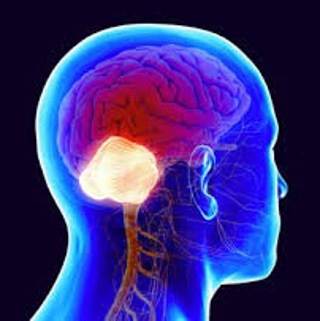
Podcast # 485: Cerebellar Stroke

Podcast # 485: Cerebellar Stroke

Contributor: Jared Scott, MD Educational Pearls: Cerebellar strokes make up a disproportionate number of missed or delayed diagnosis for stroke likely due to the subtle nature of the presentation Cer...

6 Heinä 20195min
Podcast # 484: Elevated ICP

Podcast # 484: Elevated ICP

Contributor: Charleen Gnisci, PharmD Educational Pearls: Causes of increased intracranial pressure may include intracranial hemorrhage, malignancy, and trauma. While definite treatment is to remove ...

4 Heinä 20196min

Podcast # 483: Dual Antiplatelet Therapy in TIA

Podcast # 483: Dual Antiplatelet Therapy in TIA

Contributor: Don Stader, MD Educational Pearls: Antiplatelets include aspirin and clopidogrel, and are generally used for arterial clotting (MI, stroke) Anticoagulants such as coumadin, Xarelto, Eliq...

28 Kesä 20192min

Podcast # 482: Tetracyclines and Hyperpigmentation

Podcast # 482: Tetracyclines and Hyperpigmentation

Contributor: Michael Hunt, MD Educational Pearls: Tetracycline antibiotics such as minocycline can cause greyish hyperpigmentation This hyperpigmentation can sometimes be reversible but not always Mi...

26 Kesä 20193min

Suosittua kategoriassa Tiede

tiedekulma-podcast
rss-mita-tulisi-tietaa
rss-poliisin-mieli
docemilia
rss-duodecim-lehti
rss-luontopodi-samuel-glassar-tutkii-luonnon-ihmeita
utelias-mieli
rss-astetta-parempi-elama-podcast
filocast-filosofian-perusteet
rss-lapsuuden-rakentajat-podcast
rss-sosiopodi











