
Mental Health Monthly #6: Suicide Assessment

Mental Health Monthly #6: Suicide Assessment

EMM is excited to welcome back the hosts of Millennial Mental Health Channel podcast to explain the key points of a robust suicide assessment in the ED. Dr. Justin Romano is a third year psychiatry resident in Omaha, Nebraska and Eddie Carrillo is a licensed mental health therapist currently working at partial hospitalization and IOP eating disorder program in Portland, Oregon. Their podcast Millennial Mental Health Channel seeks to explore the world of mental health from their two professional perspectives.

You can listen to their podcast on all major streaming platforms including Apple Podcasts, Spotify and Google Podcasts.

Follow them on Twitter and Instagram @millennialmhc

Contributors: Dr. Justin Romano and Eddie Carrillo, M.A., LPC

Educational Pearls:

  • Suicide is 10th most common cause in U.S. and the rate rose by 30% from 2000-2016 and the CDC reports that there was a 25% increase in ED visits for SI from January 2017 - December 2018

  • Use an objective screening tool like Columbia-Suicide Severity Rating Scale (C-SSRS) when assessing patients as they can help detect SI although ultimately it is up to your clinical impression to make a decision

  • Suicide reduction measures and strategies work! Take advantage of social workers when setting up outpatient resources for patients i.e. gun locks

  • Risk Factors include: prior attempts, substance use/abuse, mental disorders (especially depression and bipolar disorder), access to lethal means (most modifiable by risk reduction strategies), knowing someone who has died by suicide, social isolation, chronic disease or disability, lack of access to mental health resources, recent changes in social status and being a member of a high risk demographic (older caucasian men, LGBTQ+, Native Americans and Alaskan Natives)

  • Protective Factors include: good followup as an outpatient, good social support, life skills, purpose in life, cultural beliefs, children and sense of responsibility in the family

  • Sober up and reassess suicidality

  • If not medically cleared, admit to hospital to address these complaints and then address suicidality

  • If they have suicidal thoughts, plan and are reaching out for help because they don't want to do it then send to inpatient facility

  • Consult psychiatry to explain inpatient psych or when you're worried about patient safety to have them weigh in

  • Get collateral by talking to a family member to verify that the patient is telling the truth

  • At the end of the day, thorough documentation of risk and protective factors and results of screening tool in Assessment and Plan is essential to protecting yourself as a professional

References

Betz ME, Boudreaux ED. Managing Suicidal Patients in the Emergency Department. Ann Emerg Med. 2016;67(2):276-282. doi:10.1016/j.annemergmed.2015.09.001

Suicide. National Institute of Mental Health. https://www.nimh.nih.gov/health/statistics/suicide.shtml. Published September 2020. Accessed December 30, 2020.

Zwald ML, Holland KM, Annor FB, et al. Syndromic Surveillance of Suicidal Ideation and Self-Directed Violence — United States, January 2017–December 2018. MMWR Morb Mortal Wkly Rep 2020;69:103–108. DOI: http://dx.doi.org/10.15585/mmwr.mm6904a3.

Summarized by Mason Tuttle

Jaksot(1145)

Podcast 795: Lithium Toxicity

Podcast 795: Lithium Toxicity

Contributor: Peter Bakes, MD Educational Pearls: Lithium remains a commonly used medication for treating bipolar disorder Lithium toxicity can be acute, acute-on-chronic, or chronic Measuring blood ...

5 Heinä 20224min

Podcast 793: Postintubation Sedation and Analgesia

Podcast 793: Postintubation Sedation and Analgesia

Contributor: Peter Bakes, MD Educational Pearls: When intubating a patient, it is important to consider what medications will be used for post-intubation sedation and analgesia The common non-benzodi...

27 Kesä 20226min
Podcast 792: Rectal Prolapse

Podcast 792: Rectal Prolapse

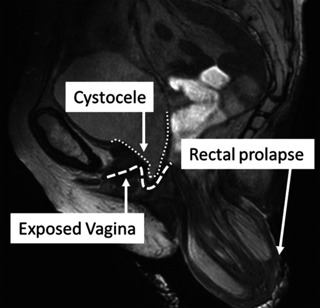
Contributor: Jarod Scott, MD Educational Pearls: Rectal prolapse is an evagination of the rectal tissue through the anal opening Factors that weaken the pelvic floor muscles increase the risk of rect...

21 Kesä 20224min

Podcast 791: Hyperglycemic Hyperosmolar State

Podcast 791: Hyperglycemic Hyperosmolar State

Contributor: Aaron Lessen, MD Educational Pearls: Hyperglycemic Hyperosmolar State (HHS) is less common than Diabetic Ketoacidosis (DKA) but is associated with a mortality rate up to 10 times greater...

20 Kesä 20223min

On the Streets #14: Trauma Activations in the Field

On the Streets #14: Trauma Activations in the Field

The Emergency Medical Minute is excited to announce that we our upcoming event, Palliative. Check out our event page for more information and to buy tickets: Palliative Eventbrite Page

15 Kesä 202218min
Podcast 790: Opioids vs OTC Pain Meds

Podcast 790: Opioids vs OTC Pain Meds

Contributor: Aaron Lessen, MD Educational Pearls: NSAIDs are a potential alternative to opioids for pain management and are associated with decreased rates of adverse effects A recent study evaluated...

14 Kesä 20223min

Podcast 789: DOAC

Podcast 789: DOAC

Contributor: Aaron Lessen, MD Educational Pearls: Direct Oral Anticoagulants (DOACs) have surpassed Warfarin and Lovenox® for anticoagulation as they do not require injection and allow for easier di...

13 Kesä 20223min

Mental Health Monthly #13: Substance-Induced Psychosis (Part I)

Mental Health Monthly #13: Substance-Induced Psychosis (Part I)

Substance-Induced Psychosis (Part I) In this first episode of a two-part mini-series, we feature Dr. Nadia Haddad, a Colorado psychiatrist, and Dr. Ricky Dhaliwal, an emergency medicine physician, a...

8 Kesä 202216min

Suosittua kategoriassa Tiede

tiedekulma-podcast
rss-mita-tulisi-tietaa
rss-poliisin-mieli
rss-duodecim-lehti
docemilia
radio-antro
filocast-filosofian-perusteet
rss-ammamafia
rss-luontopodi-samuel-glassar-tutkii-luonnon-ihmeita
rss-sosiopodi
utelias-mieli
rss-astetta-parempi-elama-podcast
rss-tiedetta-vai-tarinaa