Mental Health Monthly #6: Suicide Assessment

Mental Health Monthly #6: Suicide Assessment

EMM is excited to welcome back the hosts of Millennial Mental Health Channel podcast to explain the key points of a robust suicide assessment in the ED. Dr. Justin Romano is a third year psychiatry resident in Omaha, Nebraska and Eddie Carrillo is a licensed mental health therapist currently working at partial hospitalization and IOP eating disorder program in Portland, Oregon. Their podcast Millennial Mental Health Channel seeks to explore the world of mental health from their two professional perspectives.

You can listen to their podcast on all major streaming platforms including Apple Podcasts, Spotify and Google Podcasts.

Follow them on Twitter and Instagram @millennialmhc

Contributors: Dr. Justin Romano and Eddie Carrillo, M.A., LPC

Educational Pearls:

  • Suicide is 10th most common cause in U.S. and the rate rose by 30% from 2000-2016 and the CDC reports that there was a 25% increase in ED visits for SI from January 2017 - December 2018

  • Use an objective screening tool like Columbia-Suicide Severity Rating Scale (C-SSRS) when assessing patients as they can help detect SI although ultimately it is up to your clinical impression to make a decision

  • Suicide reduction measures and strategies work! Take advantage of social workers when setting up outpatient resources for patients i.e. gun locks

  • Risk Factors include: prior attempts, substance use/abuse, mental disorders (especially depression and bipolar disorder), access to lethal means (most modifiable by risk reduction strategies), knowing someone who has died by suicide, social isolation, chronic disease or disability, lack of access to mental health resources, recent changes in social status and being a member of a high risk demographic (older caucasian men, LGBTQ+, Native Americans and Alaskan Natives)

  • Protective Factors include: good followup as an outpatient, good social support, life skills, purpose in life, cultural beliefs, children and sense of responsibility in the family

  • Sober up and reassess suicidality

  • If not medically cleared, admit to hospital to address these complaints and then address suicidality

  • If they have suicidal thoughts, plan and are reaching out for help because they don't want to do it then send to inpatient facility

  • Consult psychiatry to explain inpatient psych or when you're worried about patient safety to have them weigh in

  • Get collateral by talking to a family member to verify that the patient is telling the truth

  • At the end of the day, thorough documentation of risk and protective factors and results of screening tool in Assessment and Plan is essential to protecting yourself as a professional

References

Betz ME, Boudreaux ED. Managing Suicidal Patients in the Emergency Department. Ann Emerg Med. 2016;67(2):276-282. doi:10.1016/j.annemergmed.2015.09.001

Suicide. National Institute of Mental Health. https://www.nimh.nih.gov/health/statistics/suicide.shtml. Published September 2020. Accessed December 30, 2020.

Zwald ML, Holland KM, Annor FB, et al. Syndromic Surveillance of Suicidal Ideation and Self-Directed Violence — United States, January 2017–December 2018. MMWR Morb Mortal Wkly Rep 2020;69:103–108. DOI: http://dx.doi.org/10.15585/mmwr.mm6904a3.

Summarized by Mason Tuttle

Jaksot(1146)

Podcast #383: Prehospital Tubes

Podcast #383: Prehospital Tubes

Author: Sam Killian, MD Educational Pearls: Two high quality randomized control trials published in 2018 demonstrated no difference in mortality or neurologic outcomes when using a supraglottic ai...

24 Syys 20184min

Podcast #382: Shoulder Separations

Podcast #382: Shoulder Separations

Author: Ryan Circh, MD Educational Pearls: A "shoulder separation" is when the clavicle separates from the scapula - also referred to as an acromio-clavicular (AC) separation Diagnosis is clinic...

21 Syys 20183min
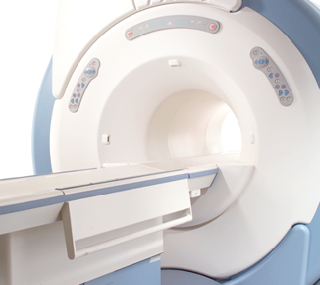
Podcast #381: MRI... Burns?

Podcast #381: MRI... Burns?

Author: Sam Killian, MD Educational Pearls: MRI machines can generate enough heat from the radiofrequency to cause thermal burns Patients with EKG stickers, medication patches, clothing impregna...

19 Syys 20183min
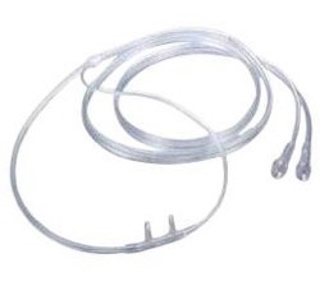
Podcast #380: Oxygen for the kill

Podcast #380: Oxygen for the kill

Author: Ryan Circh, MD Educational Pearls: Review of 25 randomized control trials encompassing 16,037 acutely ill hospitalized patients Patients given oxygen with saturations > 94% on room air wer...

17 Syys 20183min

Podcast #379: Patient Perspectives of the Flu

Podcast #379: Patient Perspectives of the Flu

Author: Sam Killian, MD Educational Pearls: Patients may have certain fears or expectations about the flu based on hearsay and other less reliable sources Taking extra time explaining the risks ...

14 Syys 20184min

Podcast #378: Is That a Brown Recluse Spider Bite?

Podcast #378: Is That a Brown Recluse Spider Bite?

Author: Michael Hunt, MD Educational Pearls: Use the mnemonic NOT RECLUSE to rule out a brown recluse spider bite: Numerous bites (recluse spiders will bite once) Occurence (recluse bites betw...

12 Syys 20184min

Podcast #377: Endocarditis

Podcast #377: Endocarditis

Author: Nick Tsipis, MD Educational Pearls: Persistent fever or positive blood cultures should raise suspicion for endocarditis Patients with recent dental procedures, recent cardiac surgeries a...

10 Syys 20183min

Podcast #376: Alcohol Intoxication

Podcast #376: Alcohol Intoxication

Educational Pearls: Blood concentrations over 0.4 mg/dL is associated with respiratory depression and possible death in alcohol naive patients Alcohol overdose accounts to 2,200 deaths per year ...

8 Syys 20184min

Suosittua kategoriassa Tiede

tiedekulma-podcast
rss-mita-tulisi-tietaa
rss-poliisin-mieli
docemilia
rss-duodecim-lehti
utelias-mieli
rss-astetta-parempi-elama-podcast
rss-luontopodi-samuel-glassar-tutkii-luonnon-ihmeita
filocast-filosofian-perusteet
rss-ammamafia
rss-tiedetta-vai-tarinaa
rss-lapsuuden-rakentajat-podcast
rss-sosiopodi