
Mental Health Monthly #7: Urine Toxicology in the ED

Mental Health Monthly #7: Urine Toxicology in the ED

This episode of Mental Health Monthly we will be discussing drugs screens in the Emergency Department with Dr. Justin Romano and Eddie Carillo. Dr. Justin Romano is a current psychiatry resident and Eddie Carillo is a licensed mental health therapist. Check out their podcast Millennial Mental Health Channel on all major podcast platforms. Shout out to Dr. Dave Marshall whose grand round presentation this was based on.

Key Points:

  • Try not to judge your patient based on the results of their drug screen
  • Drug screens are used a lot; they are not always accurate
  • Based on one study there was no significant change in outcome, treatment, disposition or psychiatric course when a drug screen was obtained
  • Specific good uses for drug screens include new onset of psychiatric symptoms

Educational Pearls:

  • 1 in 8 ED visits are due to psychiatric complaints which is up 44% since mid 2000's
  • 63% of new psychiatric complaints had a medical cause
  • Physicians use drug screens commonly in the Emergency Department, but often do not understand their limitations and are often not using them in the most clinically effective manner
  • Urine is by far the most commonly used in the Emergency Department
  • UA drug screens are notorious for having false positives and false negatives
  • Length of clearance from the urine:
    • Alcohol 12 hours
    • Methamphetamines/Amphetamines 48 hours
    • Benzodiazepines 3 days
    • Opiates 2-3 days
    • Cocaine 2-4 days
    • Marijuana dependent on use: 3- 15 days
    • Phencyclidine (PCP) 8 days
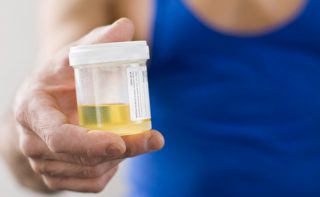
  • Urine drug screens have a false positive rate of 5-10 % and a false negative rate of 10-15%
  • False Positive; urine drug screen positive, but drug is not in their body
    • False positives for amphetamines: bupropion, trazodone, metformin, promethazine, pseudoephedrine, phentermine and atomoxetine
    • False positives for benzodiazepines: sertraline
    • False positives for cannabis: ibuprofen, naproxen, proton pump inhibitors
    • False positives for opiates: poppy seeds, antibiotics, Benadryl
    • False positives for PCP: venlafaxine, ibuprofen and Ambien
    • False positives for cocaine: amoxicillin
  • False Negative; urine drug screen negative, but drug is in the body
    • Benzodiazepines: such as alprazolam, clonazepam, lorazepam or triazolam
    • Cannabinoids: CBD, synthetic marijuana such as K2
    • Opiates: oxycodone, fentanyl, methadone and tramadol
  • If you get a test that you don't think is accurate you can always send off for a confirmatory test

References

Summarized by Emily Mack OMSIII | Edited by Mason Tuttle

The Emergency Medical Minute is excited to announce that we are now offering AMA PRA Category 1 credits™ via online course modules. To access these and for more information, visit our website at www.emergencymedicalminute.com/cme-courses/ and create an account.

Tämä jakso on lisätty Podme-palveluun avoimen RSS-syötteen kautta eikä se ole Podmen omaa tuotantoa. Siksi jakso saattaa sisältää mainontaa.

Jaksot(1177)

Podcast 1022: Emergent Dialysis

Podcast 1022: Emergent Dialysis

Contributor: Taylor Lynch, MD Educational Pearls: When a patient who missed dialysis presents to the emergency department, our clinical concern is who needs to be admitted to the hospital for emerge...

21 Syys 4min

Podcast 1021: Pulmonary Edema From Naloxone Administration

Podcast 1021: Pulmonary Edema From Naloxone Administration

Contributor: Travis Barlock, MD Educational Pearls: What is pulmonary edema?  Pulmonary edema is the accumulation of fluid initially in the interstitium of the lungs, that when severe enough can als...

14 Syys 4min

Podcast 1020: Benign Paroxysmal Positional Vertigo (BPPV)

Podcast 1020: Benign Paroxysmal Positional Vertigo (BPPV)

Contributor: Alec Coston, MD Educational Pearls: Benign Paroxysmal Positional Vertigo (BPPV) Common inner ear condition that can cause dizziness Diagnosis of BPPV can help to avoid admissions and ...

7 Syys 6min

Podcast 1019: Trauma Blunt Cardiovascular Injuries (BCVI)

Podcast 1019: Trauma Blunt Cardiovascular Injuries (BCVI)

Contributor: Aaron Lessen, MD Educational Pearls:  Blunt cerebrovascular injury (BCVI) BCVI is a traumatic injury to the carotid or vertebral arteries Patients may initially have no neurologic sy...

31 Elo 3min

Podcast 1018: Occult Ventricular Fibrillation on Echocardiography

Podcast 1018: Occult Ventricular Fibrillation on Echocardiography

Contributor: Aaron Lessen, MD Educational Pearls: Big question in cardiac arrest: is the rhythm shockable? Shockable: ventricular fibrillation (VF) and pulseless ventricular tachycardia Non-sho...

24 Elo 2min

Podcast 1017: CPR Hand Placement

Podcast 1017: CPR Hand Placement

Contributor: Taylor Lynch, MD Educational Pearls:  CPR is an important life-saving measure designed for anyone to perform. Chest compressions works by two mechanisms:  Cardiac pump: Direct squ...

17 Elo 2min

Podcast 1016: Hypokalemia

Podcast 1016: Hypokalemia

Contributor: Meghan Hurley, MD Educational Pearls: What is hypokalemia? Hypokalemia is when the measured blood level of potassium falls below 3.5 mEq/L (normal 3.5 - 5.2 mEq/L).  Can generally be ...

10 Elo 6min

Podcast 1015: Calcium in Hyperkalemia

Podcast 1015: Calcium in Hyperkalemia

Contributor: Meghan Hurley, MD Educational Pearls: What is hyperkalemia? Hyperkalemia is when the measured blood level of potassium reaches above 5.2 - 5.5 mEq/L (normal 3.5 - 5.2 mEq/L).  What ar...

3 Elo 7min

Suosittua kategoriassa Tiede

utelias-mieli
rss-mita-tulisi-tietaa
tiedekulma-podcast
rss-poliisin-mieli
rss-duodecim-lehti
rss-hereilla
rss-luontopodi-samuel-glassar-tutkii-luonnon-ihmeita
mielipaivakirja
rss-miljonaarien-tasavalta
rss-politiikasta-podcast
rss-lihavuudesta-podcast
docemilia