
Podcast 731: Fluid Resuscitation in Burns

Podcast 731: Fluid Resuscitation in Burns

Contributor: Chris Holmes, MD

Educational Pearls:

  • Parkland Formula: 4 mL x [Total Body Surface Area Burned (%)] x [body weight (kg)] given in 24 hours
    • 50% given over 8 hours and 50% given over the next 16 hours
  • Brooke Formula: 2 mL x [Total Body Surface Area Burned (%)] x [body weight (kg)] given in 24 hours
    • 50% given over 8 hours and 50% given over the next 16 hours
  • 2009 military study evaluated Parkland vs. Brooke formulas for severe burn patients and found the outcomes were the same
  • Guidelines are in flux on which formula to use, but reducing the overall volume using the Brooke formula can be done without significant change in morbidity or mortality
  • Using fluid responsiveness by measuring urine output and signs of fluid overload can help guide overall resuscitative approach in burn patients

References

Chung KK, Wolf SE, Cancio LC, et al. Resuscitation of severely burned military casualties: fluid begets more fluid. J Trauma. 2009;67(2):231-237. doi:10.1097/TA.0b013e3181ac68cf

Schaefer TJ, Nunez Lopez O. Burn Resuscitation And Management. [Updated 2021 Aug 11]. In: StatPearls [Internet]. Treasure Island (FL): StatPearls Publishing; 2021 Jan-. Available from: https://www.ncbi.nlm.nih.gov/books/NBK430795/

Summarized by John Spartz, MS4 | Edited by Erik Verzemnieks, MD

*********************

The Emergency Medical Minute is excited to announce that we are now offering AMA PRA Category 1 credits™ via online course modules. To access these and for more information, visit our website at https://emergencymedicalminute.org/cme-courses/ and create an account.

Donate to EMM today!

Diversity and Inclusion Award


Jaksot(1146)

Mental Health Monthly #3: Maintaining Mental Health and Wellness for Healthcare Professionals

Mental Health Monthly #3: Maintaining Mental Health and Wellness for Healthcare Professionals

In this timely installment of Mental Health Monthly, mental health expert Lexi Eliades shares useful tips for identifying burnout and mental health decline as well as ways to maintain mental wellness ...

6 Touko 202010min
Podcast 559: Metabolic Acidosis

Podcast 559: Metabolic Acidosis

Contributor: Dylan Luyten, MD Educational Pearls Acidosis can be caused by a respiratory, metabolic, or mixed source A respiratory acidosis will have a low serum pH and elevated bicarbonate if it's c...

5 Touko 20203min
Podcast 558:  Rapid ARDS Review

Podcast 558: Rapid ARDS Review

Contributor: Don Stader, MD Educational Pearls: Acute respiratory distress syndrome (ARDS) is a catch all term for when lung injury leads to fluid collection in the air spaces of the lungs  Ventila...

4 Touko 20204min
COVID-19 Digest: Strokes in Young People with COVID

COVID-19 Digest: Strokes in Young People with COVID

Last week we looked at neurologic presentations of COVID-19; this week we'll look more closely at strokes in young people with COVID. A letter published 2 days ago in the NEJM with lead author Thomas ...

1 Touko 20208min
Podcast 557:  COVID-19 Lab Trends

Podcast 557: COVID-19 Lab Trends

Contributor: Don Stader, MD Educational Pearls: COVID-19 is diagnosed with a nasopharyngeal swab (q-tip). This unfortunately can be painful, but if the swab doesn't go deep into the nasal cavity th...

29 Huhti 20207min
Podcast 556:  CSF - What is it good for?

Podcast 556: CSF - What is it good for?

Contributor: Eric Miller, MD Educational Pearls: A cell count is performed on tubes 1 and 4 to account for changes that may occur from blood entering the first sample from the needle insertion Tube 2...

28 Huhti 20206min

Podcast 555:  Anticoagulation vs. Antiplatelet

Podcast 555: Anticoagulation vs. Antiplatelet

Contributor: Don Stader, MD Educational Pearls: When do we give antiplatelet drugs or anti-coagulation drugs? Arterial issues get antiplatelet therapy Venous issues, or slow flow states, get antico...

27 Huhti 20203min
COVID-19 Digest: Neurological Manifestations of COVID-19

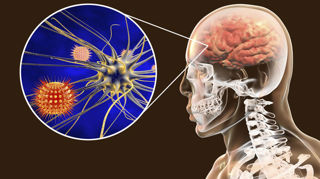
COVID-19 Digest: Neurological Manifestations of COVID-19

Accumulating clinical evidence suggests that many patients with COVID have neurological symptoms and that some may even present with neurologic manifestations of the disease. Most COVID patients have ...

23 Huhti 202014min

Suosittua kategoriassa Tiede

tiedekulma-podcast
rss-mita-tulisi-tietaa
rss-poliisin-mieli
docemilia
rss-duodecim-lehti
rss-luontopodi-samuel-glassar-tutkii-luonnon-ihmeita
utelias-mieli
rss-astetta-parempi-elama-podcast
filocast-filosofian-perusteet
rss-lapsuuden-rakentajat-podcast
rss-sosiopodi











